Noise Detectors, Sensors, and Meters for Industrial Pollution
In today’s world, noise pollution is now the third-largest type of pollution. It comes after pollution of air and water. It is important to keep noise levels below 50 decibels for good sleep. For work and study, keep it under 70 decibels.
At 80 decibels, human ears start to feel discomfort. If you are exposed to sounds over 120 decibels for a long time, it can cause permanent hearing damage. It is important for construction projects and industrial work to use noise detectors. These detectors measure sound levels based on standard rules.
The impact of noise pollution extends beyond physical health due to what is known as the masking effect. This effect occurs when one sound makes another sound harder to hear. This can make the second sound seem silent.
In factories, this common issue can stop workers from noticing important warnings. These warnings include alerts for driving and hazards.
They can help stop accidents. Noise can lead to misunderstandings. It can also make it difficult to hear commands. This can make work safety more risky.
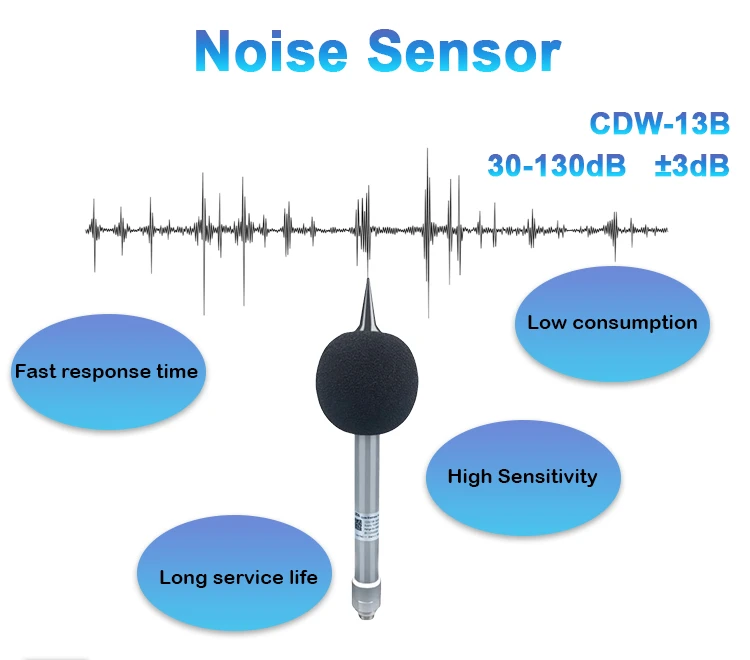
Understanding Industrial Noise Pollution
Industrial noise pollution is the loud sounds made by machines in factories. Mechanical vibrations, friction, and airflow problems often cause these noises. Here are some examples:
– **Airflow noise**:
Produced by air compressors, blowers, and boiler exhaust systems in chemical plants.
– **Mechanical noise**:
Vibrations or friction in solid parts can come from machines like ball mills, shredders, and looms.
It is important to provide industries with the right tools to detect noise and solve these problems.
Categories of Industrial Noise Detectors
**1. Portable Noise Detectors**
The portable noise detector measures sound levels in decibels (dB). It works within a range of 30 to 130 dB. Key features include a bar graph display, selectable A/C frequency weighting, and fast or slow response modes. There is also a maximum hold function.
This device has great anti-interference and power-saving features. It also comes with a digital display. Its backlight lets you collect data at night. It also has an auto power-off feature to save battery life.
This handheld design is made from a strong composite material. It is both durable and easy to carry.
This sound level meter is simple to use and small. It is great for checking noise in offices, homes, schools, construction sites, and factories. It also supports various uses, such as research and noise pollution studies.
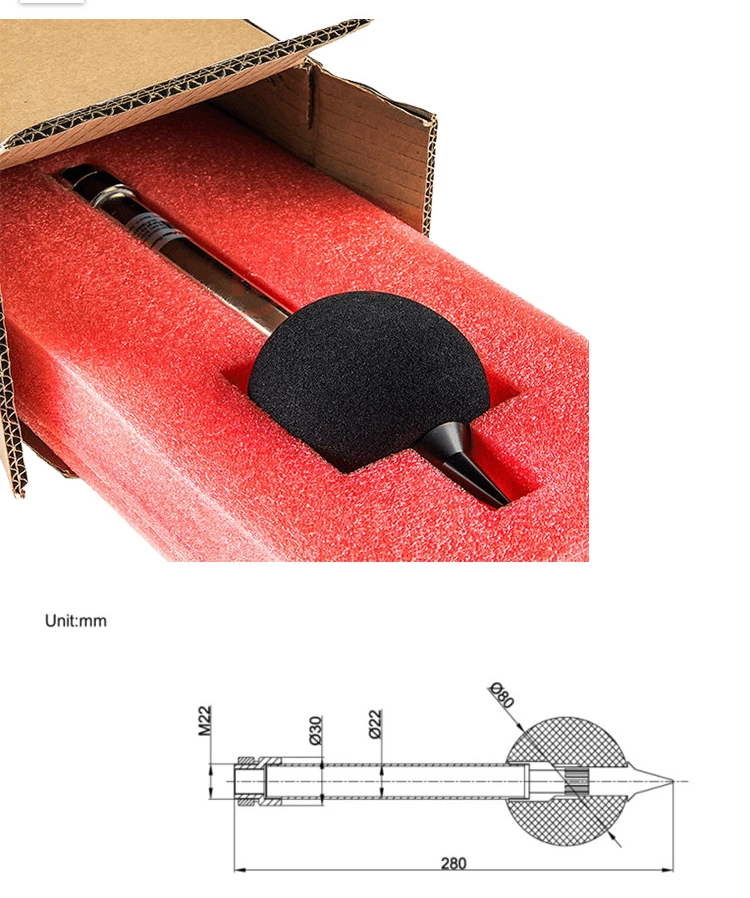
**2. Long Rod Noise Detectors**
The noise sensor is a device that measures how loud sounds are. It can measure sounds from 30 to 120 dB. It has a ssitive microphone. This ensures clear signal transmission and reliable accuracy.
Features include a wide measurement range, strong linearity, and long-distance signal transmission. This sensor is made from 304 stainless steel. It is weather-resistant, so it can be used outdoors.
It has three output modes: TTL, RS485, and analog. This allows for flexible data processing and communication to meet different industrial needs. These sensors have a sleek design and are easy to use. They are used in homes, offices, workshops, car inspections, and large industrial monitoring systems.
3. Wall-mounted noise sensor
The wall-mounted noise sensor has a special microphone that can pick up sounds easily. The device has an electret film placed in front of a back electrode.
There is a small air gap between them that serves as an insulator. The electret works with the back electrode and its metal layer. They work together like two flat capacitor plates. An output electrode is placed between them.
Free charges are spread out on the electret film. When sound waves cause vibrations or movement, they change the distance between the capacitor plates. This change affects the capacitance.
The sensor is made of ABS material. It is both waterproof and dustproof. This allows for long-term noise monitoring in certain places.
It allows monitoring from different locations using a central platform. You can easily install multiple sensors in various areas.
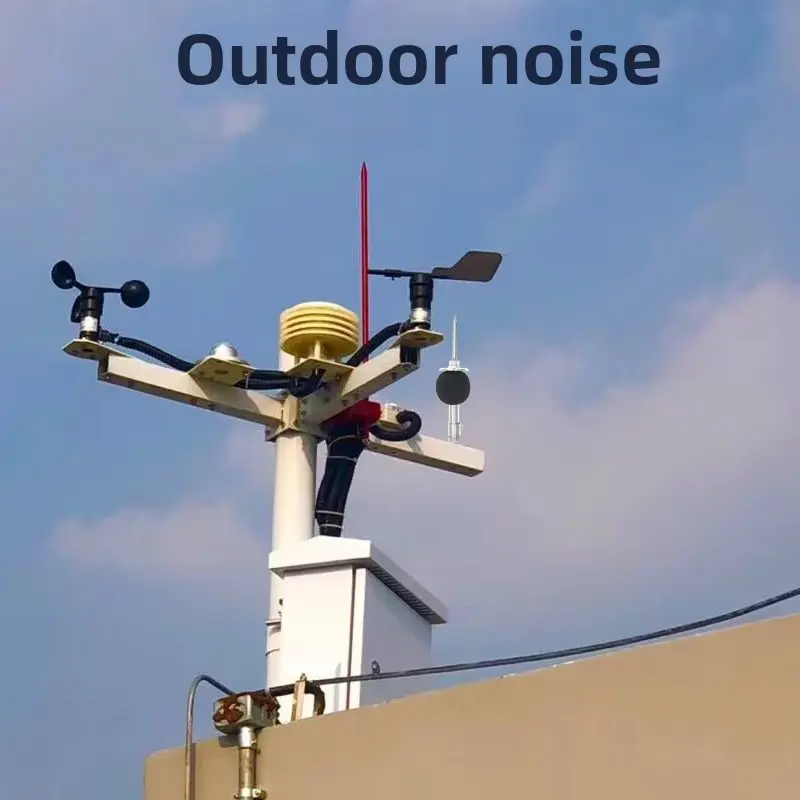
4. Outdoor noise sensor
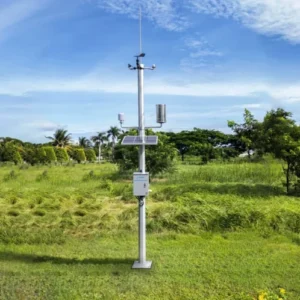
The outdoor noise sensor detects noise outside. It works with weather station monitoring systems. And it has a strong solar radiation shield. It has an IP68 protection rating.
This rating keeps you safe from rain, snow, and harmful UV rays. This strength makes it good for long outdoor use in tough conditions.
The outdoor model works like the wall-mounted version. However, it has a strong shell to handle tough conditions. This makes it a great outdoor noise sensor for professionals.
These detectors can easily work with weather stations. They are good for outdoor places like factories and engineering projects.