The Significance of Solar Radiation Sensors in Climate and Environmental Research
Solar radiation sensors are essential tools in climate and environmental studies. They provide key insights into the solar energy reaching Earth’s surface. This data is vital for studying the planet’s energy balance.
It helps reveal climate dynamics and track environmental changes. Let’s explore how these sensors help us better understand Earth’s climate system and changing environment.
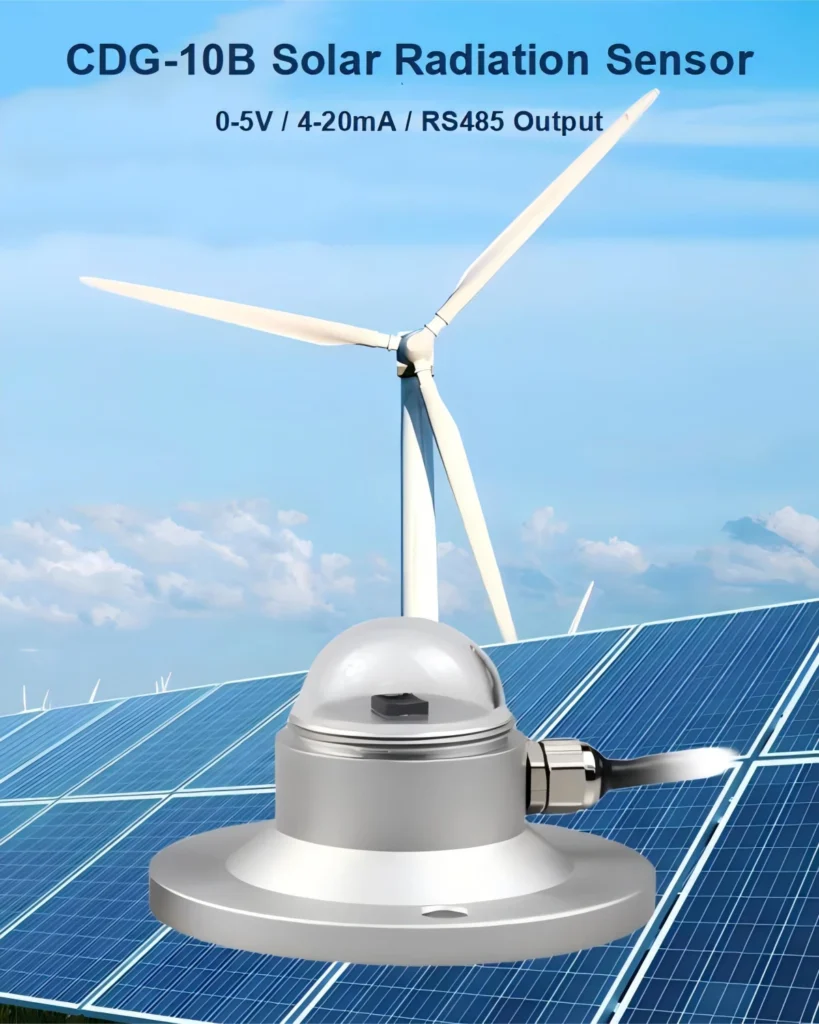
An Overview of Solar Radiation Sensors
Solar radiation sensors measure how strong sunlight is at specific locations. They use parts like photodiodes or photovoltaic cells to turn light into electrical signals. These signals are then logged for analysis.
Deployed across many regions, these sensors collect large datasets on solar radiation levels. This supports climate forecasting, environmental monitoring, and weather prediction.
These instruments come in various types to address specific needs. Pyranometers measure total solar radiation from all directions.
Pyrheliometers measure only direct solar radiation hitting a surface at a right angle. Radiometers have two main roles. They measure incoming sunlight and outgoing radiation. This helps scientists understand Earth’s energy balance.
Given how much sunlight affects temperature, weather patterns, and ecosystems, these sensors are vital. They help track changes over time. The information they provide helps scientists understand global energy patterns. It also helps scientists understand how the relationship between natural climate changes and human-caused climate changes is changing.
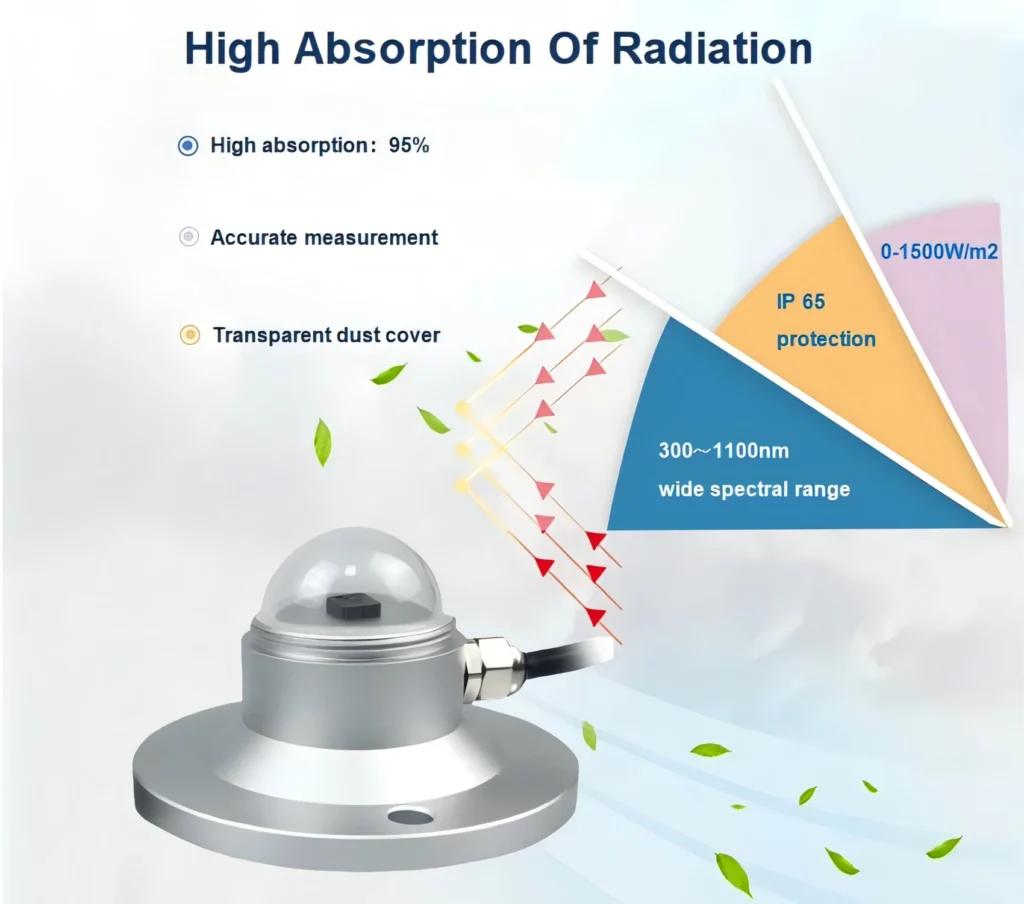
Contributions to Climate Studies
In climate research, solar radiation sensors help us understand how much solar energy reaches Earth’s surface. This is a key variable for assessing Earth’s energy balance. This mix of absorbed, reflected, and emitted solar energy is shaped by clouds, aerosols, and greenhouse gases.
By measuring changes in radiation levels, researchers can assess how these factors affect climate systems. They can also track trends influenced by human activity.
A key use case for these sensors is tracking surface solar radiation to build models of Earth’s energy balance. These models help scientists track changes over time. They also link shifts in solar radiation to wider climate patterns.
Greater knowledge in this area helps us better understand energy flow in Earth’s atmosphere. It also explains effects on global temperatures, rainfall patterns, and ecosystems.
In addition, data from solar radiation sensors is key to predictive climate models. By adding real-time radiation data to simulations, researchers can better predict future changes in global climate conditions. These improved projections help us understand long-term effects. They show how changes in how a planet absorbs and releases solar energy can affect planetary systems over time.
By measuring, analyzing, and using data from solar radiation sensors, climate and environmental studies gain stronger insights. These insights show how Earth’s systems work. They also help us get ready for challenges from ongoing environmental change.