Remote Sensor for Weather Station
**I. Understanding Remote Sensors for Weather Stations**
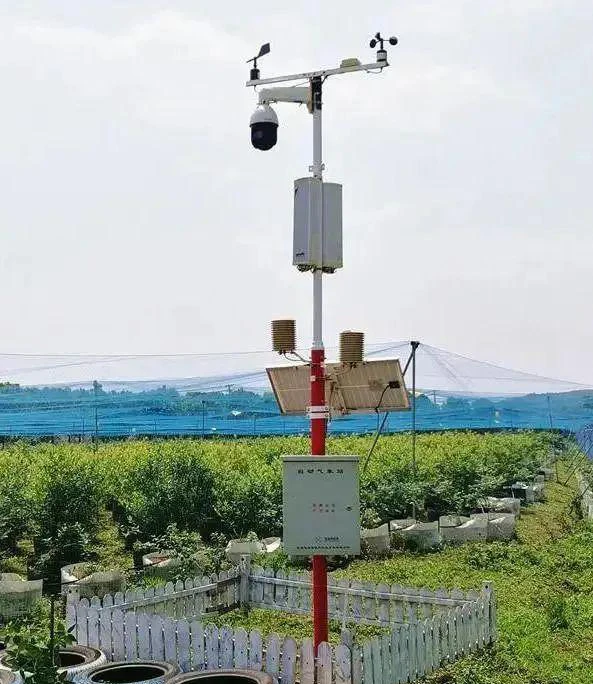
A remote sensor for a weather station is a smart device. It collects environmental data and sends it wirelessly to servers or control centers. This data is then used for analysis and decision-making.
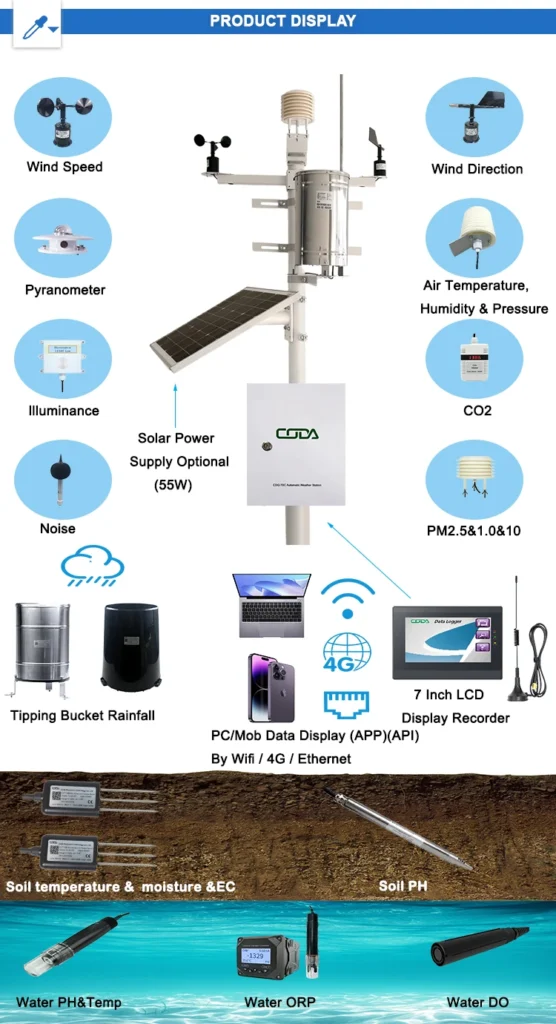
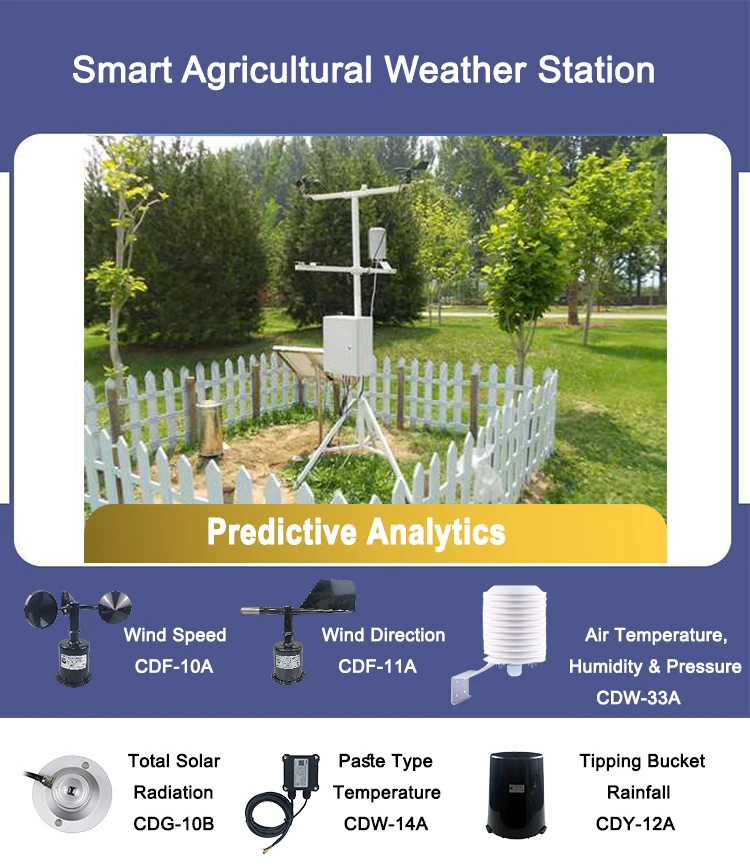
These sensors are made for outdoor use. They track important weather conditions like temperature, humidity, wind speed, wind direction, and rainfall. These systems can be used in many fields, such as agriculture, weather, environmental protection, and construction. They can be fixed or portable.
**II. Different Types of Remote Weather Station Sensors: Their Functions and Benefits**
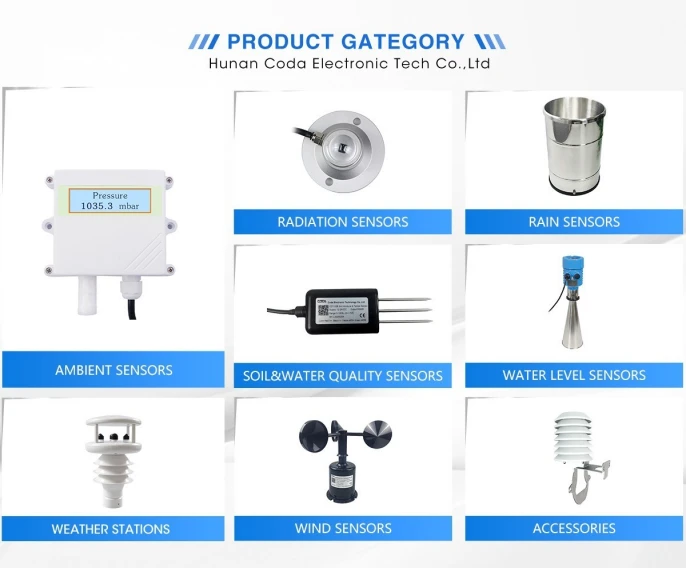
1. **Atmospheric Pressure Sensor**
– **Function:** It tracks changes in air pressure. This helps predict weather patterns and possible changes in conditions.
– **Value:** It is important for weather forecasts. It gives early warnings of upcoming weather systems. This helps with disaster preparedness.
2. **Environmental Temperature Sensor**
– **Function:** It measures the air temperature. This helps track climate trends and find extreme weather events, like heatwaves and cold snaps.
– **Value:** Agricultural management is important. It helps farmers deal with changing weather to keep their crops safe.
3. **Relative Humidity Sensor**
– **Function:** Measures air moisture to predict rain and track weather conditions.
– **Value:** This helps predict rain, improve farm irrigation, and reduce water loss from evaporation.
4. **Wind Speed Sensor**
– **Function:** It measures wind speed. This helps us learn about wind energy and predict bad weather, like storms.
– **Value:** Wind energy helps prevent disasters. It also helps with farming tasks, like using pesticides and pollinating plants.
5. **Wind Direction Sensor**
– **Function:** It shows where the wind comes from and how strong it is for a full wind analysis.
– **Value:** Helps with weather prediction, keeps aviation safe, aids urban planning, and improves planting strategies in farming.
6. **Rainfall Sensor**
– **Function:** It measures how much it rains and how hard it rains. This helps us understand risks such as flooding and droughts.
– **Value:** Water is essential for irrigation efficiency. It helps save water, prevent floods, and manage resources effectively.
7. **Solar Radiation Sensor**
– **Function:** The system collects data on total solar radiation. This includes incident, reflected, scattered, and tilted surface light.
– **Value:** This is important for improving solar energy. It helps us study the weather. It also helps with sustainable farming and the growth of renewable energy.
8. **Soil Temperature and Moisture Sensors**
– **Function:** Checks the soil for temperature and moisture. This helps to see if the ground is ready for planting.
– **Value:** It shows farmers how to use good irrigation and fertilization methods. It also helps to keep the soil healthy.
9. **Leaf Wetness Sensor**
– **Function:** Detects moisture on leaves to check for possible plant disease risks.
– **Value:** Helps find disease threats early. This helps us act quickly to keep crops healthy.
**III. Key Features of Remote Weather Station Sensors**
1. **Wireless Connectivity**
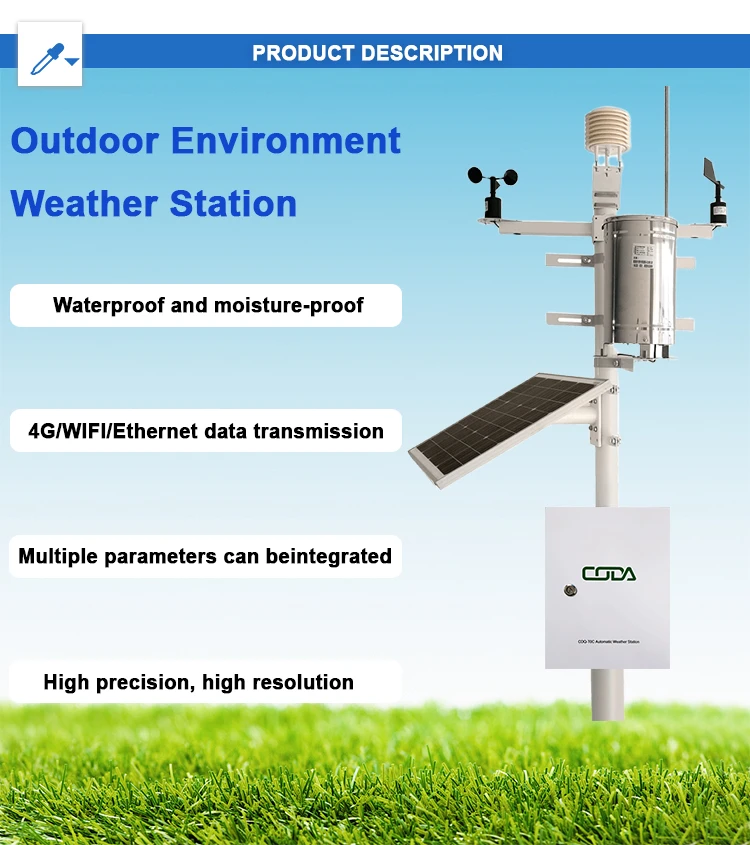
Modern sensors use technologies such as Wi-Fi, LoRaWAN, and 4G or 5G networks. This makes it easy to send data without needing physical connections. It makes it easier to adapt and deploy.
2. **Energy Independence**
These sensors typically use batteries or solar power. They are designed to work on their own in remote places and provide long-lasting performance.
3. **Resilience in Harsh Conditions**
These strong devices are built to last in tough weather. They can handle heat, cold, rain, and strong wind. This ensures they measure and monitor well in different climates.
4. **Support for Multi-Channel Monitoring**
Some advanced models can watch many locations at the same time. This makes them great for big operations over large areas.
5. **Seamless Integration**
Remote weather sensors are designed to work well with specific or multi-functional weather station networks and systems.
IV. Uses and Advantages of Remote Weather Station Sensors
1.Accurate Farming
– **Application**: Large-scale farms, orchards, vegetable fields, and similar agricultural areas.
– **Benefits**: Accurate weather data helps farmers manage their land better. It allows them to improve fertilization, irrigation, and pest control. This leads to improved crop yield and quality while minimizing costs.
2. Disaster Early Warning
– **Application**: Regions prone to extreme weather events, such as coastal areas or mountainous regions.
– **Benefits**: It helps to predict storms, frosts, droughts, and other bad weather. This helps farmers take steps to prevent damage and reduce losses.
3. Scientific Research and Education
– **Application**: Universities, research centers, test fields, and schools.
– **Benefits**: This gives important information for farming research. It helps study how climate change affects farming. This information helps scientists make plans for sustainable development.
4. Policy Development
– **Application**: Government groups and farming management agencies.
– **Benefits**: Helps make policies based on data to tackle climate change. Supports sustainable farming and creates focused plans for managing resources.
5. Urban Green Space and Landscape Management
– **Application**: Urban parks, gardens, green spaces, and golf courses are all similar places.
– **Benefits**: It helps take care of plants in the city. This makes the city look better and helps control the local climate.
6. Industrial and Infrastructure Construction
– **Application**: This is important for construction sites, mining, ports, and infrastructure projects.
– **Benefits**: Watches the weather to keep workers safe, stay on schedule, and reduce delays caused by bad weather during projects.
7. Wind Energy Development
– **Application**: Wind farms dedicated to harnessing wind power.
– **Benefits**: This measures wind speed and direction. It helps evaluate energy potential. This supports site selection, design, and planning for wind energy projects.
V. Techniques for Sharing Information from Remote Weather Station Sensors
1.Wireless Local Area Network (Wi-Fi)
– **Functionality**: Sends data over a local Wi-Fi network to a router or access point. Then, it uploads the data to the cloud or user device through the internet.
– **Advantages**: Easy to install and set up. It offers fast data transmission speeds. And it is great for regular updates. It works well with other smart devices.
– **Disadvantages**: “Needs stable Wi-Fi coverage. It works best in places with a stable network setup. There may be some cybersecurity concerns.”
2. Cellular Network (GPRS/3G/4G/5G)
– **Functionality**: Uses mobile networks such as GPRS, 3G, 4G, and 5G to send data to servers far away. This is done using SIM cards or built-in cellular modules in the stations.
– **Advantages**: Provides broad coverage, especially in remote or rural areas without fixed networks. It ensures stable data transfer and supports real-time monitoring and alerts.
– **Disadvantages**: It involves regular data usage fees. It may not work well in very remote areas with weak mobile network access.
3. LoRaWAN (Long Range Low Power Wide Area Network)
– **Functionality**: Works well for low-bandwidth and long-distance data transmission. It sends weather data from stations to a LoRa gateway, which connects to the cloud.
– **Advantages**: Energy-efficient; provides long battery life; ideal for unmanned stations with long-term monitoring needs; supports broad deployment across vast areas due to long transmission range.
– **Disadvantages**: Limited data transmission rate; best suited for infrequent transmission of smaller data packets; requires additional infrastructure (e.g., LoRa gateways); involves elevated initial setup costs.
4. Ethernet (Wired Network)
– **Functionality**: Establishes a direct connection between the weather station and local/internet networks using Ethernet cables. Highly suited for stationary setups.
– **Advantages**: Robust data transfer with high bandwidth; reliable and resistant to wireless interference; secures high levels of data security.
– **Disadvantages**: Needs extensive cabling efforts; involves higher installation costs; inappropriate for mobile or temporary setups.
5. Hybrid Transmission Solutions
– **Functionality**: Employs complementary methods like satellite communication as the primary channel with LoRaWAN or cellular methods as backups for enhanced reliability.
– **Advantages**: Ensures data reliability through redundancy; circumvents challenges associated with single-method communication; optimizes cost-performance balance over time.
– **Disadvantages**: Higher complexity increases system setup effort and maintenance demands; involves significant upfront investment but reduces long-term operational risks.
VI. Data Transmission Security and Reliability for Remote Weather Stations
Ensuring secure and reliable data transmission is a fundamental aspect of operating remote weather stations, regardless of the selected communication method. To keep these systems working well, they usually take these steps:
– Encrypted Transmission: Using encryption protocols like SSL/TLS helps stop unauthorized access. This keeps the data secure and unchanged.
– Data Integrity Checks: Techniques like Cyclic Redundancy Checks (CRC) help make sure the data is complete and correct.
– Redundancy Design: Using two or more transmission channels helps keep data transfer going. This is true even if one channel fails.
– Automatic Resending: If there are any errors in transmission, the system will automatically resend the data. This helps prevent data loss.
– Remote Monitoring and Alerts: Users can use cloud platforms or mobile apps to watch their systems in real-time. They will get alerts right away if any problems are found.
Summary
Remote sensors in weather stations are a key part of modern weather monitoring systems. They use different sensor technologies to provide detailed environmental data. This helps with better management and informed decision-making.
Setting up these systems may have high initial costs. However, their benefits, like better productivity, cost savings, and more market competitiveness, are worth the investment over time.
These stations are not just for farming. They also play important roles in research, protecting the environment, city planning, and industry.
They collect and analyze data in real-time. This gives important insights into climate change. It helps support long-term economic and social growth.
With new IoT and communication technologies, future remote weather stations will become smarter and more efficient. They will meet a wider range of industry needs.