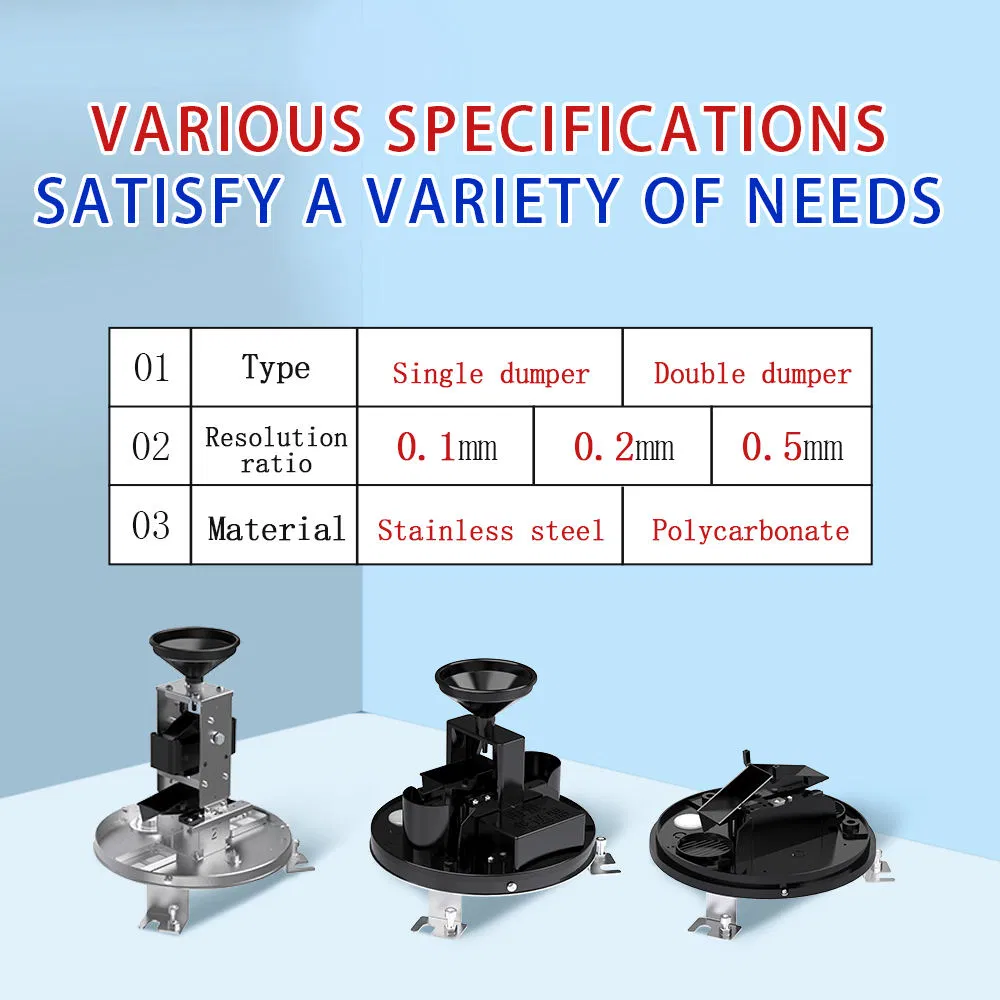
Variations between 0.2mm, 0.1mm, and 0.5mm tipping bucket rain gauges.
Tipping bucket rain gauges are devices that measure how much it rains. They have a small container, or bucket, that tips when it fills to a certain level. The differences between types of tipping bucket rain gauges are based on their resolution, accuracy, design, and use. Here is a clear explanation of the differences between 0.2mm, 0.1mm, and 0.5mm tipping bucket rain gauges:
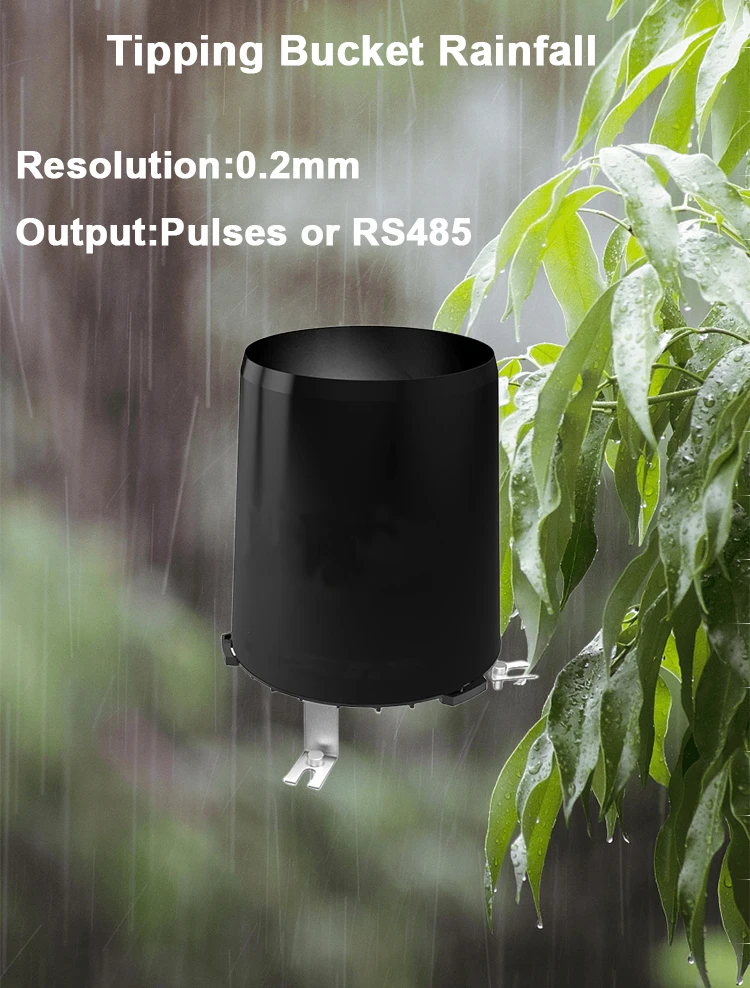
1. **0.2mm Tipping Bucket Rain Gauge:**
This rain gauge measures rainfall with a resolution of 0.2mm. Each time the bucket tips, it shows 0.2mm of rain. It is perfect for situations that need accurate measurements. It can also capture small amounts of rain well.
– This is often used to monitor the weather, control farm irrigation, and gather accurate data in other areas.
– This is good for short time periods, like hourly or half-hour rainfall data.
2. **0.1mm Tipping Bucket Rain Gauge:**
The 0.1mm tipping bucket rain gauge has a high resolution of 0.1mm for each tip. This makes it the most sensitive of the three. This accuracy makes it ideal for uses that need precise rainfall data.
– This data is often used in precision farming, scientific research, and studies that need detailed rainfall information.
– Capable of measuring rainfall at very short time intervals, such as per minute or even less.
3. **0.5mm Tipping Bucket Rain Gauge:**
This type measures rainfall in increments of 0.5 mm. This makes it not as precise as the other two types. Its lower resolution can be useful when high accuracy is not required.
– This is often used to observe the weather and monitor water.
– More suited for longer time intervals, such as daily or hourly measurements.

**Common Features Across the Gauges:**
All three types work on the same basic idea, even if their resolution differs. They tip a small bucket when they collect a set amount of rain. This tipping sends a signal to record the data.
These gauges are often made with a lot of automation. They can give real-time rainfall data and store a lot of information. They also help with automatic transmission.
Additional features are strong weather resistance for outdoor use, good anti-interference abilities, high stability, and low maintenance needs.
Application Scenarios for 0.1mm, 0.2mm, and 0.5mm Tipping Bucket Rain Gauges:
The 0.1mm, 0.2mm, and 0.5mm tipping bucket rain gauges have different uses. Each one is made for specific needs based on how well it measures.
The 0.2mm tipping bucket rain gauge gives better rainfall measurement accuracy because it has a higher resolution. This makes it perfect for uses that need accurate rainfall data.
These include weather research, environmental monitoring, and water studies. Accurate measurements are very important in these areas. They help us study weather patterns. They also predict changes in water resources and support decision-making.
The 0.5mm tipping bucket rain gauge has a lower resolution. It is best for situations where exact accuracy is not crucial. However, it is good for collecting data in real-time and responding quickly.
You can check irrigation systems on farms or drainage systems in cities. It gives reliable data for basic monitoring and operational choices.
The 0.1mm tipping bucket rain gauge is made for situations that need very precise measurements. Its high resolution makes it popular in weather stations, environmental studies, precision farming, and water management. Here, accurate data helps with climate analysis, water resource evaluation, irrigation planning, and scientific progress.
It is important to note that the 0.1mm tipping bucket rain gauge is very accurate. However, it often costs more. When choosing a device, consider your needs, budget, and maintenance costs.
Also, proper installation and following guidelines are important. Regular maintenance and calibration help keep measurements accurate and reliable.
Choosing the right tipping bucket rain gauge depends on your specific needs. You can choose from 0.1mm, 0.2mm, or 0.5mm options.
Factors like needed accuracy, time resolution, weather conditions, and total costs should guide decision-making. It is important to regularly calibrate and maintain the device. This makes it accurate and effective for any use.