Ultrasonic sensors
How Do Ultrasonic Sensors Work?
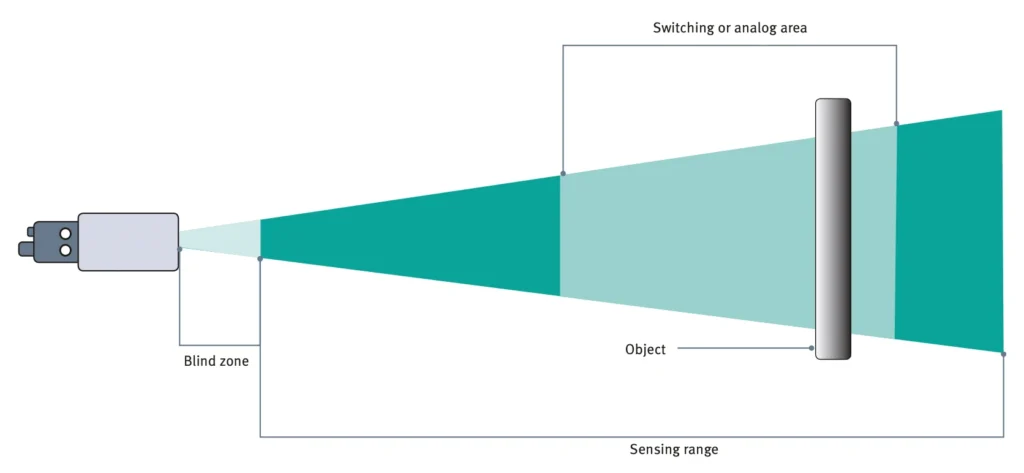
Ultrasonic sensors work by sending out high-frequency sound waves, usually above 20 kHz.
These sounds are beyond the range of human hearing. These sound waves travel to a target, bounce off its surface, and return to the sensor. By measuring the time taken for the echo to return and using the speed of sound, the distance to the object can be accurately determined.
In flow measurement, ultrasonic sensors check how sound waves act in moving liquids. This enables precise calculation of flow rates. Advanced signal processing helps provide reliable measurements, even when conditions change, like temperature or pressure shifts.
How Accurate Are Ultrasonic Sensors?
The accuracy of an ultrasonic sensor depends on several factors. These include the sensor’s quality, the environment, and the target’s material properties. Basic ultrasonic sensors, often used with Arduino, usually have an accuracy of about ±3 mm. While these sensors work for basic distance checks, they are not ideal for high-precision uses.
On the other hand, industrial-grade ultrasonic sensors are much more accurate. They are often accurate within a few millimeters. They include advanced features like temperature compensation, strong signal filtering, and better transducer designs.
These features reduce errors from air turbulence, humidity, and changes in the target material. For high-precision tasks, like flow monitoring or automated quality control, choose a high-accuracy ultrasonic sensor.
Arduino-Compatible Ultrasonic Sensors vs. Industrial Sensors
Ultrasonic sensors for Arduino projects are low-cost and easy to use. This makes them ideal for hobbyists, education, and prototype development.
While great for simple tasks, these sensors cannot handle demanding industrial settings. Their precision and durability are limited. They also resist harsh conditions poorly. In contrast, industrial ultrasonic sensors are built to withstand heavy use.
They have sturdy housings and programmable outputs, such as analog or digital signals. They also offer advanced features like temperature compensation. These traits make them a good fit for uses that need steady performance in tough settings.
How to Connect an Ultrasonic Sensor
The method of connecting an ultrasonic sensor depends on its purpose and design:
1. **Arduino or Microcontroller-Based Projects**:
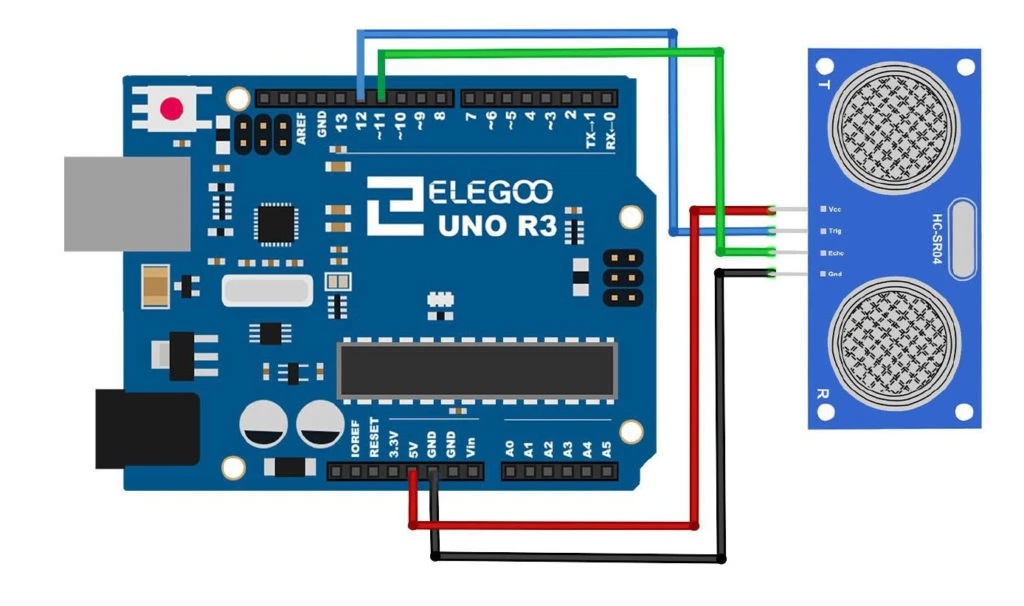
Sensors like the HC-SR04 typically connect through digital input/output pins. The trigger pin sends a sound pulse. The echo pin receives the returning signal to calculate distance.
2. **Industrial Ultrasonic Sensors**:
These models often offer configurable outputs, such as analog or digital signals. They may also support IO-Link for easy integration with PLCs and control networks. Configuration is usually done using push-button interfaces, dedicated software tools, or IO-Link programming protocols.
Applications of Ultrasonic Sensors
Ultrasonic sensors are used in many industries. They can measure distance, detect objects, and monitor levels. They do this well and without touching anything. Some common uses include:
– **Industrial Automation**: Object detection, material thickness measurement, and conveyor belt monitoring
– **Water Management**: Flow rate and level measurements in tanks or pipes
– **Automotive**: Parking assist systems and proximity alerts
– **Healthcare**: Non-invasive medical imaging (e.g., ultrasound)
– **Robotics**: Obstacle detection and navigation guidance
Ultrasonic sensors are valuable in many fields because they are versatile, reliable, and precise. Whether used in small DIY projects or large industrial systems, they play a key role in modern technology.
Common applications encompass:
– **Flow Measurement:** Used in ultrasonic flow sensors to track liquid flow through industrial pipelines.
– **Level Detection:** Used to monitor tank levels in industries like water treatment, chemical processing, and food production.
– **Object Detection and Automation:** Facilitates precise positioning and counting tasks in automated manufacturing lines.
– **Proximity Sensing:** Identifies objects in systems used in packaging, automotive, and logistics.
– **Obstacle Avoidance in Robotics:** Integral for navigation in autonomous robots and drones.
– **Parking Sensors and Vehicle Distance Monitoring:** Incorporated in modern vehicles to aid in parking and prevent collisions.