15+ Weather Prediction Tools and Innovations That Transformed Weather Forecasting
Weather has always played a vital role in shaping human activities, from farming to travel. Over time, our ability to predict it has changed a lot.
– Weather forecasting has changed a lot over time.
– It has moved from old methods to new computer technologies.
– This journey highlights the important improvements made in forecasting. Discover how old tools and inventions helped make the accurate forecasts we have today.
**Historical Context: Early Techniques for Weather Prediction**
In ancient times, people predicted the weather by watching nature closely and using simple methods. Indian monk Aryabhata observed changes in the weather.
Early Chinese weather experts observed patterns in the weather that repeated over time. Ancient Greeks and Egyptians used simple methods too. They often relied on reading clouds, wind directions, and even astrology.
Aryabhata’s method was one of the first ways to understand changes in the weather. Chinese scientists studied wind and cloud patterns. This helped predict important seasonal rains, especially for farming needs.
**Pioneering Tools: The Invention of Anemometers and Barometers**
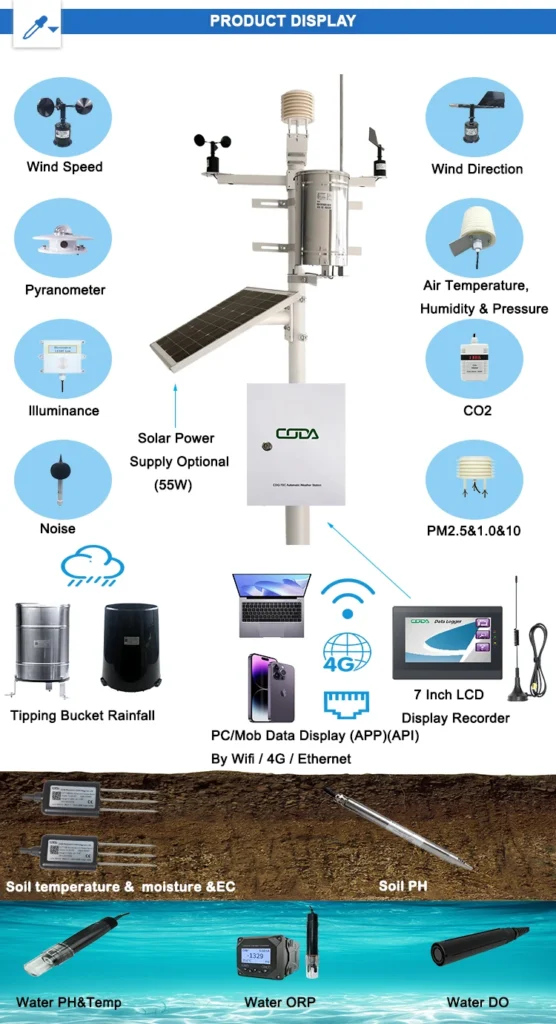
The 17th century was a turning point. It led to the creation of important tools like the anemometer and barometer.
Evangelista Torricelli was an Italian physicist. He created the anemometer to measure how fast the wind blows. This is important for studying weather.
He also introduced the barometer. This tool measures atmospheric pressure very accurately. Understanding shifts in pressure became key to predicting severe weather events such as storms.
These inventions made meteorology much better. This allowed for better study of wind patterns and changes in pressure. This set the stage for better forecasting methods.
**The Rise of Climatology: A Shift Toward Scientific Weather Analysis**
In the 19th century, climatology became its own special field. It focused on long-term weather patterns and big atmospheric systems. Renowned scientists like William Ferrel and Vilhelm Bjerknes made important contributions during this time.
Ferrel found the atmospheric circulation pattern called the Ferrel cell. This pattern is important for global weather systems. Bjerknes came up with the idea of atmospheric fronts. These are key parts of today’s weather forecasting.
Meteorologists studied long-term climate records. They looked at temperature, rainfall, and other factors to find patterns. This helped them improve the accuracy of forecasts.
This important time changed how we make predictions. We moved from just observations to using scientific methods and historical data.
**Technological Innovations: Transforming Weather Forecasting in the 20th Century**
The 20th century brought a big change in weather forecasting thanks to new technology. Early computer models changed meteorology. They let scientists simulate complex movements in the atmosphere.
In the 1950s, numerical weather prediction models were created. These systems use math equations to predict future weather conditions.
These models set the stage for today’s advanced prediction tools. At the same time, satellite technology changed the game. Real-time satellite data gave us new insights into cloud formations, temperature changes, and pressure systems around the world.
As technology evolved from analog to digital platforms, accuracy and detail in forecasting reached new heights. These advancements made predictions faster, more precise, and capable of addressing various scenarios. Computer models and satellite images work together. They create the advanced forecasting systems we use today.
Modern Innovations: Big Data and AI in Weather Prediction
The 21st century has shown how important big data and AI are for better weather forecasting. Advanced predictive models like the Global Forecast System (GFS) and High-Resolution Rapid Refresh (HRRR) use large datasets. They provide very accurate predictions.
These models mimic weather conditions very well. This helps meteorologists predict weather events a few days in advance. Big data collects real-time information from many sources. These sources are satellites, radar systems, and ground sensors.
Machine learning algorithms analyze this large amount of information to find patterns and trends. This improves the accuracy of forecasts. For instance, AI technologies can predict how strong hurricanes will be and where they will go. This allows for early warnings and better disaster management.
These improvements have changed how we forecast the weather. It is now more reliable and timely. Big data and AI are changing how we see the weather. They provide important insights that help keep people safe and guide economic choices.
Case Studies: Success Stories in Weather Forecasting
The impact of weather prediction tools can be seen in scenarios such as wildfire prevention and aviation safety. One great example is how they help manage wildfires. Accurate weather forecasts, like high temperatures and low humidity, help fire departments plan and take action.
This foresight can help stop wildfires from spreading. It can save lives and protect property. In 2018, finding the Santa Ana Winds early in Southern California helped stop wildfires.
Authorities moved thousands of people to safety and used resources carefully. This helped prevent bigger disasters.
In aviation, weather forecasting plays a vital role in ensuring safe travel. Airlines rely on accurate predictions to plan flight paths, expect turbulence, and ensure passenger safety.
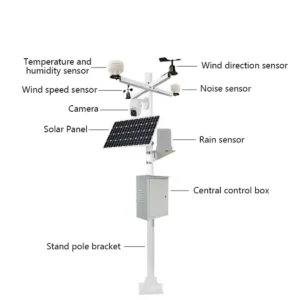
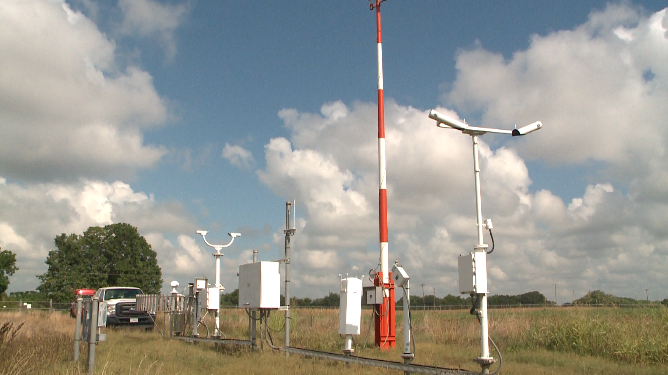
Satellites and ground sensors provide real-time information. This helps pilots and air traffic controllers make better decisions. This reduces the chances of delays and accidents.
Challenges and Future Directions
Even with great progress, there are still many challenges in weather forecasting. Accuracy of data, limitations in computational power, and the necessity for comprehensive models continue to pose challenges. Meteorologists must seamlessly integrate data from numerous sources while ensuring its reliability and timeliness.
Also, limits in computing power can affect how complex a model can be. This might reduce how accurate the predictions are. New technologies provide hopeful ways to move ahead.
Quantum computing can greatly improve forecasting. It does this by processing and analyzing data much faster than before.
Creating better models is important. These models should take into account various climate factors. This will help make accuracy better in the future.
The Evolution Continues
The change from old weather observation methods to new computer models shows our desire to understand and prepare. Each step forward has refined our ability to anticipate and respond to nature’s forces.
As technology keeps changing, our ability to predict the weather also improves. Investing in research and innovation will help us solve current challenges. It will also create new jobs in weather science.
The continued improvement of these tools will help us keep communities safe. It will also help support economic growth that is sustainable. This helps create a better future for everyone.