Top 3 Types of Water Quality Parameters
Water quality parameters are important indicators. They help us assess the condition and changes in water environments. It is important to keep track of these factors for the safety and function of water sources. This includes drinking water, well water, and water from industries.
To protect public health and stop waterborne diseases, the U.S. Environmental Protection Agency (EPA) has set limits. These limits are for more than 90 possible contaminants found in water.
Industrial wastewater needs proper treatment before it can be released into the environment. Drinking water is tested carefully to make sure it is safe to drink. A wide range of factors is used to assess water quality.
These factors can be grouped into three main types: physical, chemical, and biological. These parameters include several indicators like color, smell, temperature, cloudiness, pH levels, and bacteria content.
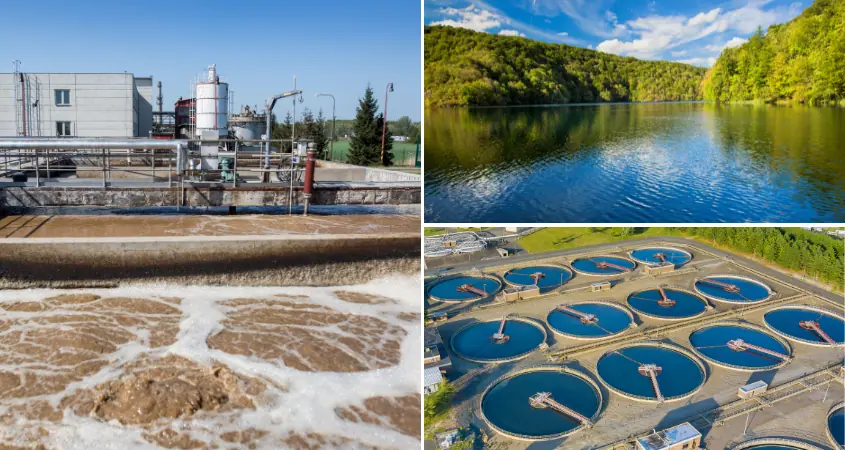
Three Categories of Water Quality Parameters
1. **Physical Characteristics**:
These encompass features such as smell, flavor, hue, suspended particles, heat level, cloudiness, electrical conductivity (EC), and total dissolved solids (TDS).
2. **Chemical Parameters**:
These check factors such as pH levels, chlorine content, and chemical oxygen demand (COD).
3. **Biological Parameters**:
This category assesses the presence of bacteria, algae, and viruses in the water.
Physical Water Quality Parameters
Odor
Odor comes from substances that can easily evaporate and are mixed in water. These can come from natural sources such as algae, decaying plants, and organic matter. They can also result from what people do.
These activities include industrial wastewater, pesticide runoff, oil spills, and sewage from homes. Bad smells might not always hurt your health, but they can show possible contamination.
– **Measurement**: Odor is usually checked by smelling it. It can also be measured using the Threshold Odor Number (TON) with dilution methods.
Taste
The taste of water comes from the substances mixed in it. Natural compounds such as chlorides and sulfates can affect the taste of water. Microbial byproducts and metal ions, like iron and manganese, also play a role in this change.
– **Measurement**: Water taste is judged in two ways. One way is through human sensory assessments. The other way is by using controlled sensory panels.
Color
Pure water should be clear and colorless. Dissolved or suspended substances can add different colors. This changes how the water looks, especially for drinking. It may also indicate that there are harmful substances present.
– **Measurement**: You can check colors by comparing them to standard solutions. You can also measure them using a spectrophotometer.
Temperature
Water temperature affects many things. It affects how well gases and salts mix in liquids. It also affects how fast chemical reactions happen, as well as taste and thickness.
Temperature impacts living processes. This includes biological oxygen demand (BOD), how fast sediment settles, and how well chlorination works. The best temperature for drinking water is usually between 50 and 60°F (10 to 16°C).
– **Measurement**: Assessed using a thermometer or temperature sensor.
Turbidity
Turbidity shows how clear water is by finding particles like silt, clay, and organic matter. Clear water usually has a turbidity level below 5 NTU, which stands for Nephelometric Turbidity Units. If levels go above 50 NTU, it often shows serious pollution.
– **Measurement**: The turbidity sensor checks how much light is scattered by particles in the water.
Electrical Conductivity (EC)
EC shows the number of dissolved ions in a solution. More ions lead to higher conductivity. Low conductivity is typical of pure or drinking water.
– **Measurement**: Conductivity is measured using an EC sensor. This sensor measures the electrical current that flows between two electrodes. Results are expressed in units such as microsiemens per centimeter (µS/cm) or millisiemens per centimeter (mS/cm).
Total Dissolved Solids (TDS)
TDS measures inorganic salts and organic materials in water. These substances can pass through a 0.45-micron filter. TDS levels between 50 and 300 mg/L show good-quality drinking water. Water is unsafe to drink if it has more than 1000 mg/L.
– **Measurement**: TDS is measured using filters and conductivity meters. These tools help figure out how much is dissolved in the water.
By watching these physical traits along with chemical and biological factors, scientists can check water quality. They can then take steps to make sure it is safe for different uses.
TDS Values
TDS (Total Dissolved Solids) levels can be directly assessed with the help of a TDS sensor.

Chemical Parameters of Water Quality
pH
pH is an important measure in water quality testing. It shows how acidic or basic the water is. It shows the negative logarithm of hydrogen ion (H⁺) activity in water. This value typically goes from 0 to 14.
The pH level affects chemical reactions, the stability of treatment processes, and the health of water systems. The best pH for drinking water is between 6.5 and 8.5. If the pH is too high or too low, it can cause issues. This may lead to corrosion, release of heavy metals, or stress for living organisms.
Measurement: Assessed with pH meters or pH test kits.
Chemical Oxygen Demand (COD)
COD serves as a critical marker of organic pollution in water. High COD levels mean more organic contaminants and greater pollution.
Surface water usually has COD values under 20 mg/L. Drinking water should stay below 10 mg/L. Untreated domestic sewage and industrial wastewater can exhibit COD levels ranging from 300 to over 1000 mg/L.
Measurement: Determined either by the potassium dichromate method or COD sensors.
Biochemical Oxygen Demand (BOD)
BOD is the amount of oxygen used by microorganisms to break down organic matter in water. It is often shown as BOD₅, which means five-day biochemical oxygen demand. Higher BOD₅ values mean worse pollution and more oxygen use.
High-quality surface water usually has a BOD₅ value of less than 3 mg/L. Untreated domestic sewage has levels between 100 and 300 mg/L. Industrial wastewater can reach several thousand mg/L.
Measurement: This is usually measured with the dilution inoculation method. It measures how much oxygen is used after five days in the dark at a set temperature.
Dissolved Oxygen (DO)
Dissolved oxygen shows how much oxygen is in water. It is important for aquatic life, like fish. A DO level of 5 mg/L or higher is usually deemed healthy.
Levels below 3 mg/L suggest low oxygen conditions. DO levels under 1 mg/L show serious oxygen loss. Salinity, temperature, and pressure affect how much oxygen is dissolved in water.
Measurement: Evaluated using dissolved oxygen sensors or colorimetric analyzers.
Chlorine
Chlorine does not naturally occur in water systems. However, it is often added to wastewater to disinfect it. Although chlorine gas is harmful, minimal quantities in water are safe for humans. Low levels of chlorine often show that the water is clean and has few contaminants.
Measurement: Assessed through residual chlorine sensors or colorimetric testing kits.
Ammonia Nitrogen
Ammonia nitrogen is a key measure of organic nitrogen pollution. This pollution comes from sources such as home sewage, farm runoff, and factory waste.
It exists in water as free ammonia or ammonium ions. Free ammonia is especially toxic. High levels of ammonia nitrogen can harm water quality and cause eutrophication.
Measurement: Assessed through ammonia nitrogen sensors or the Nessler’s reagent technique.
Additional Free Ions
Dissolved inorganic salts in water have different free ions. These include sodium (Na⁺), calcium (Ca²⁺), magnesium (Mg²⁺), and potassium (K⁺). They also include sulfate (SO₄²⁻) and nitrate (NO₃⁻), among others.
These ions are found in natural water, drinking supplies, wastewater, and industrial sources. They influence hardness, alkalinity, corrosion risk, and conductivity.
Measurement: Evaluated using ion-selective sensors.
Biological Parameters of Water Quality
Bacteria
Bacteria are important indicators of water quality. Key types include Escherichia coli, Salmonella, and Vibrio cholerae. High levels of bacteria can cause serious waterborne diseases like cholera, typhoid fever, and leptospirosis.
Measurement: This can be measured using methods like membrane filtration, multiple tube fermentation (MPN), or enzyme-substrate techniques. Outcomes are often displayed in two ways.
They can be shown as colony-forming units per 100 milliliters (CFU/100mL). They can also be shown as the most likely number per 100 milliliters (MPN/100mL).
Algae
Algae are primary producers in water ecosystems. Their numbers and types show nutrient levels and ecological balance in water bodies.
Algae usually help keep ecosystems stable. However, when there is too much algae, it can lead to harmful algal blooms. These blooms produce toxins that can harm fish and human health.
You can measure in real-time with cyanobacteria sensors or chlorophyll sensors.
Viruses
Viruses are tiny organisms that are even smaller than bacteria. They are obligate intracellular parasites, which means they need living cells to reproduce. In water quality monitoring, enteric viruses matter a lot.
They can pollute water sources and hurt human health. Most water treatment facilities can effectively kill viruses through disinfection procedures, even though viruses are hard to eliminate.