Portable Meteorological Station Price: Factors, Ranges and Buying Guide
With rising demand for real-time weather monitoring in many fields, portable weather stations have become essential tools. Their prices vary greatly, from tens to thousands of dollars, due to different configurations and functions. This article reviews their price ranges, key factors that affect them, and buying tips.
1. Overview of the Price Range
Portable weather stations come in three price levels. These levels depend on configuration, features, and use cases. Core components drive the price differences.
1.1 Entry-Level ($30 – $500)
Targeting civilian use, basic teaching and simple outdoor activities, entry-level models have simple structures and basic functions. They use civilian-grade sensors to track 2–4 key measures: temperature, humidity, wind speed, and wind direction.
These sensors are less accurate and use short-range links like Bluetooth or Wi-Fi.
They use standard lithium batteries and have an IP54 protection rating. They are affordable, but they are not suitable for professional use.
1.2 Mid-Range ($500 – $5,000)
Suitable for small and medium-sized enterprises, agricultural bases, and campus research. These mid-range products balance performance and cost. Equipped with industrial-grade sensors (higher accuracy), they monitor 5 to 10 parameters.
They support 4G remote transmission. They use high-capacity lithium-polymer batteries, and some support solar charging. And they also have IP65 protection. They meet most professional needs and offer high cost-effectiveness.
1.3 Professional-Grade ($5,000 – $30,000+)
Used for high-precision tasks like scientific research and emergency rescue. Professional-grade stations are accurate and have many features. They can also adapt to different needs.
They use calibrated, high-precision sensors and support custom parameters. And they offer dual-mode “4G + Beidou” communication, advanced power systems, and IP67+ protection. Some customized models cost over $50,000.
2. Core Factors Affecting Prices
The price gap is mainly caused by the following factors:
2.1 Sensors
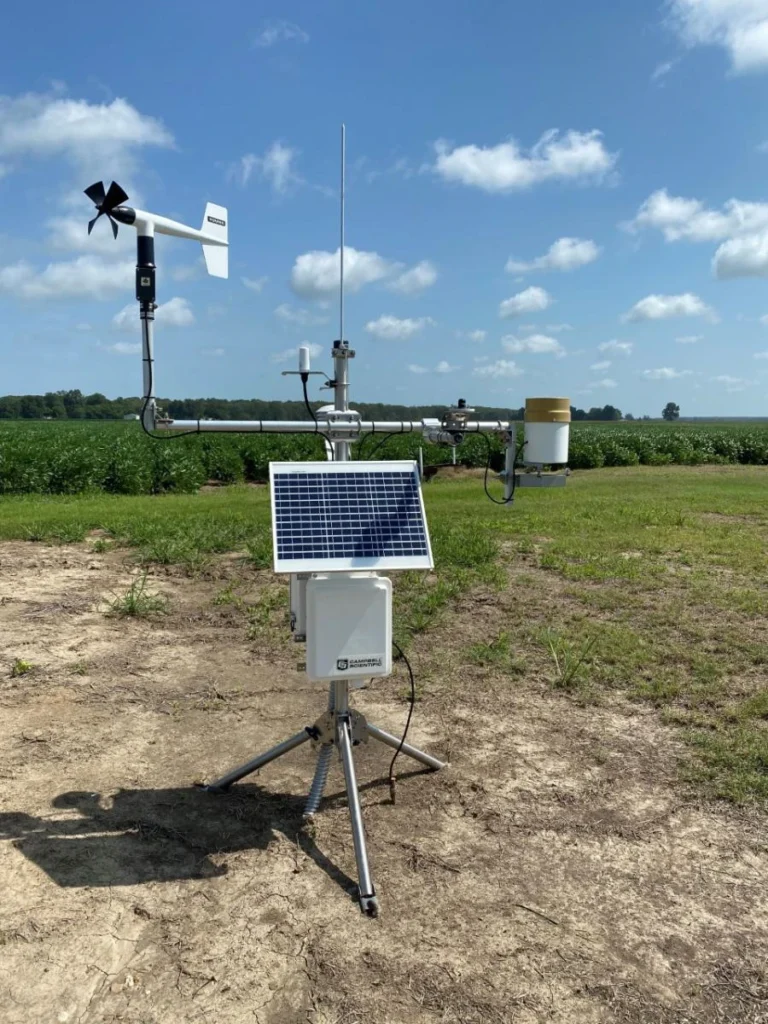
As the core component, sensor accuracy and quantity determine the base price. Civilian-grade sensors are cheap ($28 to $70). Industrial-grade sensors cost more ($280 to $700).
High-precision calibrated sensors cost the most (over $420). More monitoring settings and a longer service life can also raise costs.
2.2 Communication Modules
Short-distance modules (Bluetooth/WiFi) cost $7 to $14.
4G modules cost $28 to $70. Dual-mode modules (4G + Beidou) cost over $140. Transmission stability and network compatibility affect the cost.
2.3 Power Supply and Protection
Ordinary lithium batteries cost $7 to $14. Advanced power systems cost over $280. Protection levels (IP54/IP65/IP67+) and shell materials also push up costs.
2.4 Data Services and Brand
Professional-grade stations have high software service costs, often over $280 per year. Well-known brands often have a 10% to 20% price premium. Perfect after-sales service can also raise the price slightly.
3. Home and Abroad Price
Comparison
Foreign brands from America and Europe cost more, about 1.5 to 2.5 times domestic brands.
This is due to high component costs, brand premiums, and tariffs. They still offer high precision. Domestic products offer clear cost advantages, short delivery times, and convenient after-sales service. They are suitable for large-scale promotion.
4. Buying Guide
Users should explain how they will use it and what they need to monitor. This helps them choose the right price level.
Balance performance and price. Do not chase high precision without reason. Choose trusted brands with strong after-sales service. Compare several products to find the best value.
5. Conclusion
Portable weather station prices vary widely. They depend on sensors, communication modules, power supply, data services, and brand. Users should choose products based on their needs and budget. As technology improves, their designs will be optimized and prices will be more reasonable.