What is the difference between the Internet of Things and the Internet?
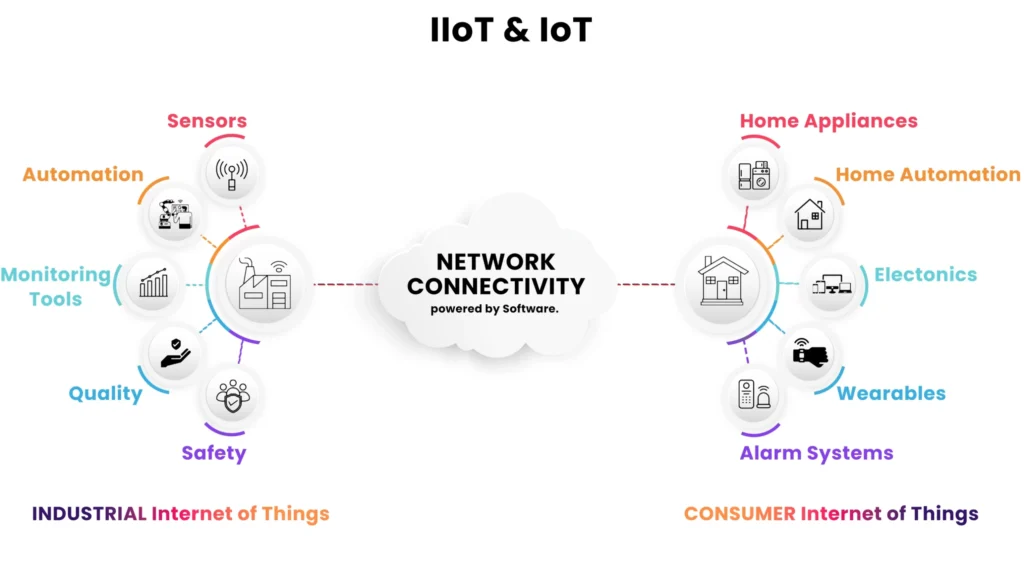
The Internet of Things (IoT) and the Internet differ in essence, purpose, and scope. However, they are closely linked. While the Internet connects people and supports communication through computers, phones, and other devices. The IoT connects physical objects. It lets things communicate with each other and their environment.
The core of IoT is sensing and services. Its data is a valuable resource for big data and cloud computing. In comparison, the internet shares and spreads information across devices and platforms, like phones and PCs.
However, online information is often short-lived and changes quickly. It is often recreated, so it adds less to long-term data storage for analytics.
In recent years, the Internet has connected people and their devices almost everywhere. The IoT has also grown as a parallel system. It focuses on adding connections to everyday objects. The link between these networks can be studied in three key areas.
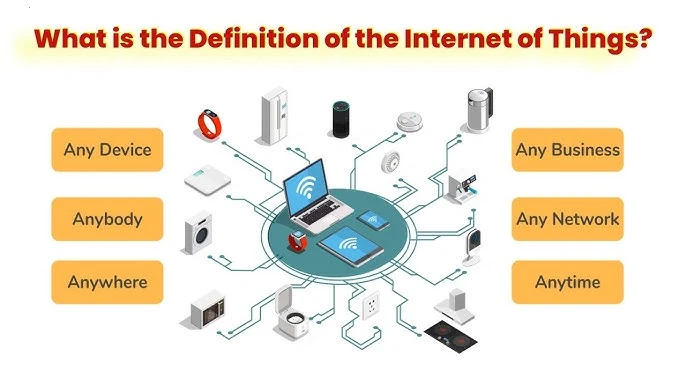
These are technology and protocols, application focus, and user ecosystems.
From a **tech and protocol view**, the Internet is a global network using standard protocols like TCP/IP. It connects people through computers and mobile phones using shared standards.
On the other hand, the IoT uses various protocols. There is no defined global standard at present. Examples include NB-IoT, which uses licensed frequency bands.
Other examples include Sigfox, LoRa, and Zigbee. These are designed for low-power connections for IoT use cases.
In terms of **application and focus**, the Internet helps people communicate with each other. It does this through apps like social media, e-commerce, and messaging. The main uses of the Internet focus on people sharing information with each other.
For IoT, the main focus is communication between objects. This is also called machine-to-machine (M2M) communication. The IoT supports apps that automate tasks and link device workflows, unlike standard internet apps built for people.
The distinction also extends to **users and stakeholders**. The Internet mainly serves companies that offer services like e-commerce, content creation, and communication platforms. Examples include BATJ: Baidu, Alibaba, Tencent, and JD.
Meanwhile, IoT stakeholders often include technical service providers, system integrators, hardware manufacturers, and platform operators. They also include other business users at the B2B level.
Despite their differences, the IoT is fundamentally an extension of the Internet. The **connection between IoT and the Internet** can be seen in how both technologies use network infrastructure to transmit information.
While the main function of the Internet is to help people and devices communicate through messages.
The IoT adds automation layers that enable smooth data exchange between objects and people. It uses artificial intelligence (AI) to create smart systems that can make decisions on their own. It also supports real-time communication and remote control between devices.
In summary:
1. The **Internet** is a global network of connected devices. It supports person-to-person communication.
2. The **IoT** focuses on networking objects so they can interact autonomously with each other. It builds on current internet technology and supports efficient work across many industries.
3. The IoT enables deeper integration with AI and automation tools. These tools connect people and machines in smart networks.
4. The Internet mainly helps devices share content worldwide. The IoT builds on this. It creates an interactive system of physical devices.
Ultimately, while they differ in purpose and scope, the Internet of Things is part of a broader, connected world.