Choosing the Right Commercial Weather Station for Your Needs
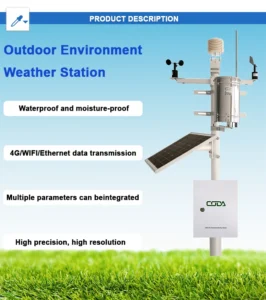
In weather monitoring, many people like commercial weather station. They are helpful and reliable. There are many choices at various heights.
These are 2.5 meters, 3.5 meters, and 10 meters. This can make it hard for customers to find the best fit for their needs.
Each height has special features and is best for certain uses. Choosing the right weather station for your needs is important for the best performance. This guide will look at the features and uses of three types of commercial weather stations. It will help you make a smart choice.
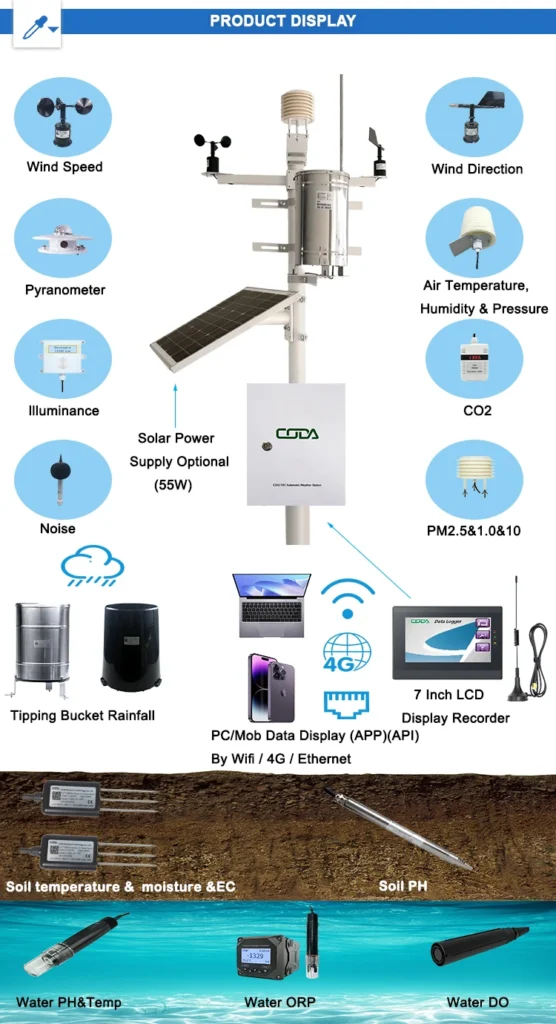
2.5 Meter Professional Weather Station: A Mobile and Adaptable Choice
Features:
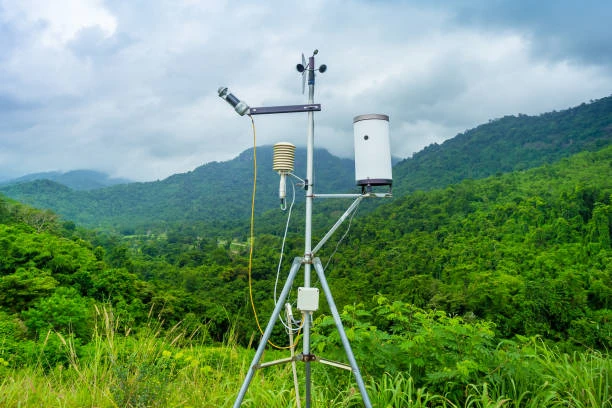
– Lightweight and compact: This station has a stainless steel tripod. It is easy to store and move. It makes setup quick and easy.
– High portability: It has a simple support frame. This makes it easy to carry. It is great for monitoring outside or when you move often.
Applications:
– Farms: This helps keep track of important farming conditions such as temperature, humidity, and wind speed. It helps farmers improve their planting methods.
– Schools: Offers hands-on learning for students. It explains how to watch the weather and look at data.
– Research Projects: This design is meant for studies that last a short time. It makes setting up and taking down quick and easy.
Advantages:
– Perfect for watching and learning up close. Perfect for tracking farm conditions and improving student experiences.
– Flexible design: Flexible for places that need a lot of movement or where space is limited.
3.5 Meter Professional Weather Station: The Top Option for Educational and Research Initiatives
Features:
– Balanced height: It combines the strength of taller stations with easier handling. This meets different educational and research needs.
– Robust construction: Made with strong materials to ensure stability during long use.
Applications:
– Campus Weather Stations: They are great for teaching students how weather tools work. They help students learn about weather science more easily.
– Agricultural Monitoring: This text gives clear insights into farm environments. It helps farmers make smart choices in crop management.
– Research Projects: Supports studies that last from medium to long durations. It provides reliable data collection for advanced research needs.
Advantages:
– Multifunctional design: Skilled at supporting education and research, I match my professional skills with real-world needs.
– Enhanced stability: Made to keep data correct during long-term observation.
10 Meter Professional Weather Station: The Top Option for Commercial Weather Tracking
Features:
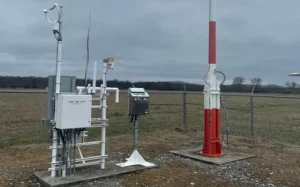
– Strong and sturdy design: Made from metal or alloy, it has six guy wires. These wires help it resist wind and increase strength.
– Expansive monitoring range: Higher elevation lowers ground-level interference. This allows for better and more accurate weather data collection.
Applications:
– Agricultural Monitoring: It tracks important things like temperature, humidity, and wind speed. This helps farmers grow more crops.
– Forest Fire Surveillance: Looks at weather conditions in forests to predict fire risk and give timely warnings.
– Environmental Research: Monitors air quality by checking levels of pollutants like PM2.5 and greenhouse gases. This aids in climate research and environmental rules.
– Meteorological Studies: Gathers weather data to study climate patterns. This helps make predictions about global trends.
– Airport Weather Services: Provides up-to-date weather information for safe flying and better scheduling.
– Marine Weather Monitoring: This gives important information about coastal weather. It helps with maritime operations and managing fisheries.
Urban Planning Insights: Provides weather data like temperature and wind patterns. This helps create city designs that are good for the environment. It includes adding parks and green areas.
– Traffic Safety Applications: Detects bad weather effects on important structures like highways and bridges. This helps improve traffic alert systems.
– Renewable Energy Optimization: It helps track weather conditions at wind farms and solar power stations. This improves energy resource management.
– Disaster Alerts: It gives early warnings in high-risk areas that may experience floods or landslides.
Advantages:
– Extensive monitoring capacity: Reduces the impact of ground-level obstacles, ensuring clear data coverage.
– Superior precision: This product is made for professional use. It gives dependable weather observations over a long time.
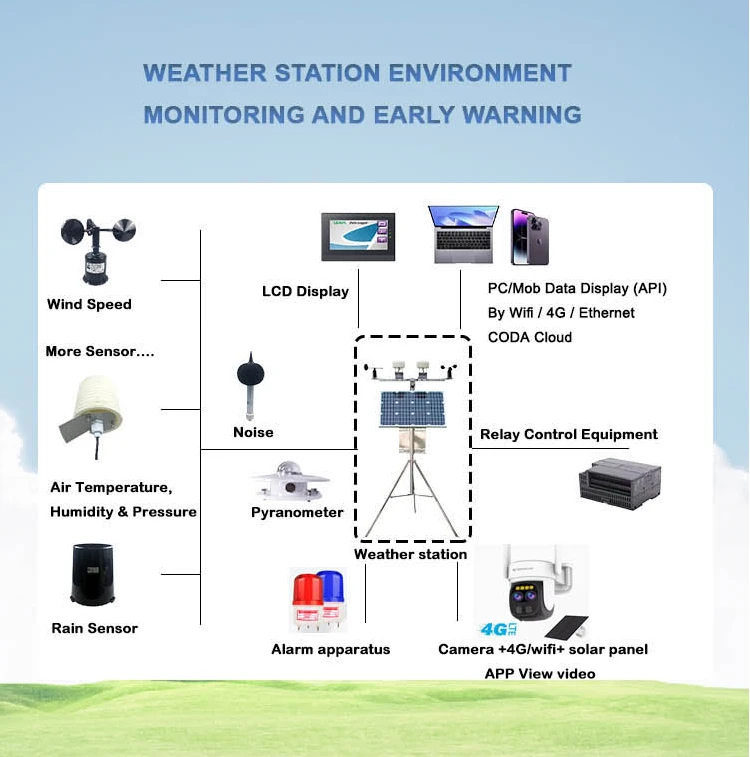
How to Select the Right Weather Station
To choose the best commercial weather station, start by knowing your needs and how you plan to use it. Here are the key factors to keep in mind when deciding:
1. Purpose
– Research and Education: A weather station measuring 3.5 meters is suitable for educational purposes and medium-duration research initiatives.
– Agricultural Monitoring: Choose a 2.5-meter or 3.5-meter weather station to collect data for your farm.
– Professional Monitoring: For big projects that need high accuracy, a 10-meter weather station is the best choice.
2. Environmental Conditions
– Terrain and Building Layout: Check the site conditions, like the land and nearby buildings, to find the right height.
– Harsh Climate: In windy or extreme conditions, choose the strong 10-meter station for better stability and durability.
3. Portability Needs
– Frequent Movement: A portable 2.5-meter weather station is great for setups that need to move around.
– Fixed Location: Think about using the 3.5-meter or 10-meter stations for stable, long-term setups.
4. Data Accuracy and Monitoring Scope
– Localized Precision: For detailed measurements in small areas, the 2.5-meter or 3.5-meter weather stations work better.
– Wide Coverage: The 10-meter weather station offers a lot of data and is very accurate for big operations.
5. Maintenance and Budget
– Upkeep Costs: Be aware of the maintenance tasks that come with different models and functions.
– Budget Constraints: Pick a weather station that fits your budget and meets your needs.

Pricing Overview for Commercial Weather Stations
The cost of commercial weather stations depends on factors like size, functionality, brand reputation, and added features. Here is a simple pricing breakdown based on the height of the station:
– **2.5-Meter Portable Weather Station**
Applications: Farms, schools, research projects
Price: Typically, it ranges from ¥5,000 to ¥10,000. This is about $700 to $1,400 USD. Custom or high-end models can cost much more based on extra features or upgrades.
– **3.5-Meter High Automatic Weather Station**
Applications: School campuses, farming monitoring, and learning environments
Price: The model is slightly higher than 2.5 meters. The height can change based on its design, features, and brand quality.
– **10-Meter High Automatic Weather Station**
Applications: Fire monitoring in forests helps prevent wildfires. Airport operations ensure safe flights. Atmospheric research studies weather and air quality.
Price: Prices are usually higher because of complex designs and taller masts. They range from ¥30,000 to over ¥100,000, which is about $4,000 to $8,000 USD. The price depends on the materials and features.
Key Pricing Influencers
– Brand Reputation: Famous brands usually cost more, but they offer better durability and reliable performance.
– Features and Configuration: Extra sensors, better measurement tools, wireless data connections, and special functions increase the cost.
– Customization: Custom features or added specifications can raise the total cost a lot.
– Bulk Buying & Shipping Costs: Buying in bulk can reduce the price for each item. Shipping fees can change depending on how far the distance is and the way items are transported.
Final Thoughts on Choosing Your Weather Station
Choosing a commercial weather station needs careful thought about your needs. Think about the application, data quality, portability, and how it adjusts to the environment. Consider maintenance needs and budget limits to make a good choice.
Steps to Select a Weather Station:
1. Identify your main monitoring goals and how you want to send data
2. Check your budget and the network infrastructure you have for the setup.
3. Check the environmental conditions that affect the station’s performance at the selected location.
4. Look at the maintenance needs for different models and technologies.
5. Make a smart choice to ensure quick results and long-term flexibility.
By following these guidelines and looking at the analysis here, you can choose a weather station that meets your needs. This will also help you keep up with future advancements in weather monitoring technology.