All About Rain Gauges
Ever wondered what it means when your weather app shows a 30% chance of rain? How do meteorologists measure how much rain fell in an area? Behind this data lies the work of rain gauges.
While these tools may seem simple, they help us understand weather patterns. They also guide how we respond to changes in the environment.
By turning raindrops into useful data, rain gauges help farmers, scientists, and meteorologists. They forecast weather, manage water resources, and plan well. If you want to buy a rain gauge, or you just want to learn how it works, this guide covers the basics.
Introduction
Among weather instruments, the rain gauge is one of the oldest and most reliable tools for measuring rainfall. Despite better satellite systems and modern forecast tools, rain gauges remain an essential resource. At its core, a rain gauge measures the depth of precipitation, like rain, snow, or hail.
It does this over a specific area and within a set time period. The data collected helps scientists improve forecasts and make informed decisions about weather and environmental factors.
Rain gauges trace their origins back to ancient times when they were simple containers used to collect and quantify rainfall. Modern versions have improved a lot. They use advanced technology for accurate measurements.
They range from basic manual models for hobbyists to advanced automated systems. These systems send real-time data to weather stations.
These innovations make rain gauges vital for tracking climate trends. They also help manage water supplies. They help teams respond fast to extreme weather, like floods or droughts.
In this guide, we explore rain gauge uses, types, and applications. We also explain the key parameters they measure. By the end, you’ll gain insights that can help you choose the best option for your needs.
What Is the Purpose of a Rain Gauge?
Understanding rain gauges starts with knowing how people use them each day. It also means seeing their larger role in science and planning.
Below, we’ll cover their main and secondary uses. We’ll also review the broader benefits they offer to people and communities.
Primary Function: Measuring Precipitation Depth
The main purpose of a rain gauge is to measure precipitation.
It measures the amount of rain, snow, or hail falling on a set area. This metric is typically recorded in millimeters or inches. For instance, one millimeter of rainfall equals roughly one liter of water per square meter.
These sensors collect precipitation by channeling it into a container. They can also use electronic detection to provide accurate readings.
The measurements from these instruments are key for tracking local weather and calculating average rainfall over time. Meteorologists use this information to predict weather events.
They also give early warnings for severe events like floods. Furthermore, this data guides water management for reservoirs, dams, and drainage systems. It helps authorities make evidence-based decisions.
Secondary Use: Data Collection and Long-Term Analysis
Beyond real-time rainfall measurement, rain gauges are key tools for collecting long-term weather data. The collected information is added to forecasting systems and analyzed to find trends. These trends guide short- and long-term weather predictions.
This helps experts track changes in weather patterns. It also helps them understand broader climate change. They can then create policies to reduce harmful environmental impacts.
For researchers and climatologists who study global climate, rain gauge data is key to understanding weather. It also helps plan actions for climate-related challenges.
Everyday Utility
Rain gauges are not just for professionals. They also offer practical benefits for everyday users. Home gardeners use them to track rainfall and avoid overwatering plants. Overwatering can harm crops and soil health.
Farmers also rely on accurate rainfall data to protect their fields from water damage and improve crop yields.
In academic settings, students and researchers use rain gauges for experiments or to study meteorology and environmental science. By using real-world data, these tools build a deeper understanding of climate processes. They also encourage hands-on learning.
Applications of Rain Gauges
Rain gauges do more than record rainfall. They help solve real-world problems in many fields. Below are key areas where rain gauges make a real impact.
✔ Meteorology and Weather Monitoring
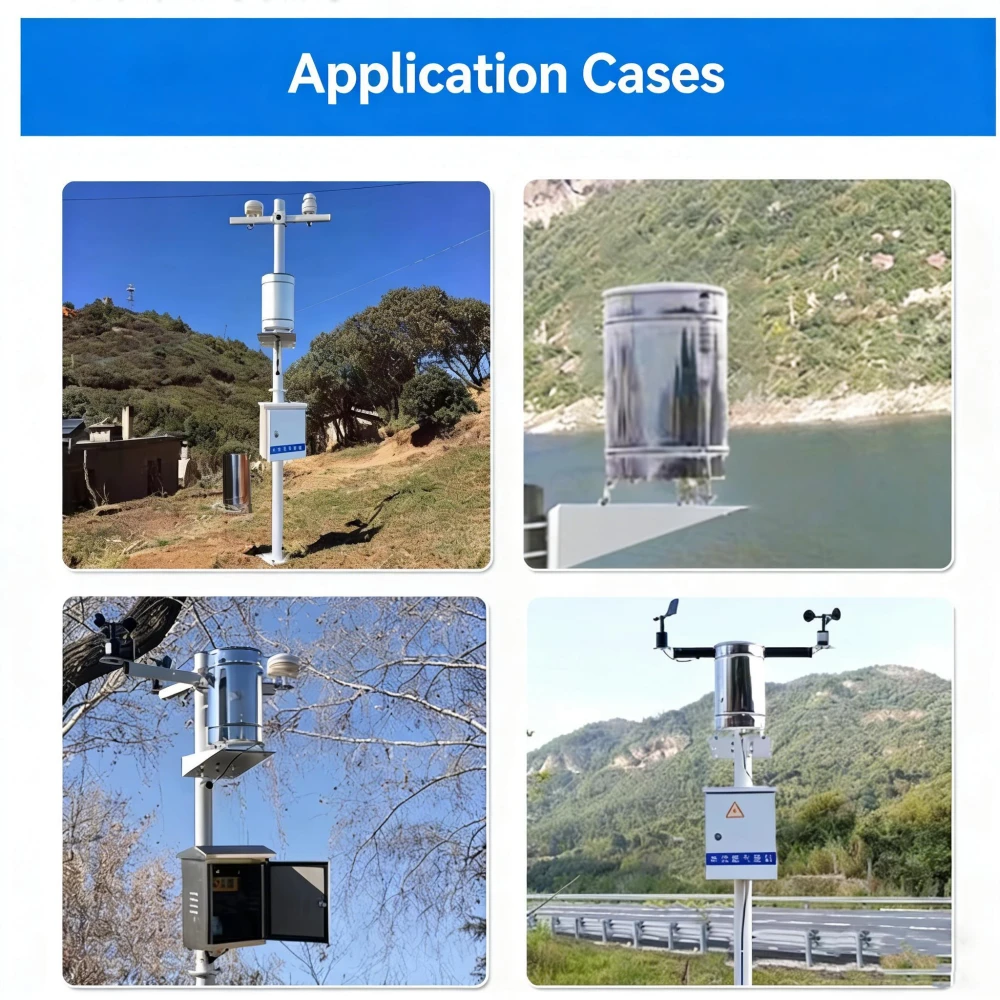
Rain gauges send real-time rainfall data to weather stations. Meteorologists use this data to forecast rain and warn local authorities about severe weather. This information is vital for preparedness. It helps regions reduce the impact of extreme weather.
Beyond short-term forecasts, this data also supports long-term studies. It helps researchers find patterns. They can better predict droughts, monsoons, and hurricanes.
✔ Agriculture and Forestry
In farming, rain gauges help manage water use. Farmers can measure irrigation levels in their fields to use water efficiently. This helps avoid overwatering and reduce waste, especially in dry regions.
In forestry, rainfall data is vital for assessing risks such as forest fires. These insights support early action in both sectors, improving resource management and environmental sustainability.
✔ Hydrology and Water Resource Management
Rain gauges are essential tools for hydrologists and water managers. By tracking rainfall, they help manage river levels, plan reservoir storage, and carry out flood prevention in risky areas. During emergencies, rainfall data helps plan evacuations and protect infrastructure. Long-term data helps design efficient drainage systems, dams, and irrigation networks that can handle future weather events.
✔ Other Industries
Beyond traditional uses, rain gauges help many industries. In construction, they ensure runoff rules are met. They assess how rainfall affects soil stability and project timelines.
In urban development, these devices are key to smart city systems. They help design efficient drainage to prevent water buildup on streets. They also lower the risk of urban flooding.
Rain gauge sensors can do much more than just record rainfall data. They provide useful insights into many factors, helping meteorologists, hydrologists, and other users understand local rainfall trends.
Beyond measuring rainfall, these sensors compare it with past data. This helps draw conclusions and predict future scenarios. In this article, we will explore more key parameters that rain gauges measure. We will also explain why they matter.
Core Parameter: Rainfall Amount
The main job of a rain gauge is to measure how much rain falls.
It is usually shown in millimeters (mm) for a given area. This core metric is the key feature of every rain gauge. It supports studies in agriculture, water management, and weather forecasting. Without this key data, planning water use and tracking climate trends would be nearly impossible.
Additional Parameters in Advanced Models
For those who want more than rainfall measurement, advanced rain gauges offer extra features for specific needs. These gauges can tell different types of precipitation apart, like rain, snow, and hail.
They also measure rainfall intensity and how long precipitation lasts. Certain models can also estimate evaporation rates or snow depth. This offers a fuller view of local water cycles. This improved data gives researchers and planners key insights, from storm planning to managing water in drought-prone areas.
Rainfall Intensity
Rainfall intensity measures how much rain falls over a set time. It is often shown in millimeters per hour (mm/h). By analyzing this parameter, experts can gauge storm severity, predict flash floods, and assess effects on water bodies.
High rainfall may trigger early evacuation warnings in flood-prone areas. Two main methods measure this parameter. Tipping bucket gauges count pulses to measure rainfall intensity. Radar and optical sensors provide real-time data on precipitation rates.
Resolution and Accuracy
Like any measuring tool, rain gauges have limits in accuracy and detail. Resolution is the smallest rainfall amount a sensor can measure. For high-quality sensors, it usually ranges from 1 mm to 0.1 mm.
Accuracy shows how close the sensor readings are to real conditions. Reputable gauges keep errors within ±1 mm or ±5%.
However, factors like wind turbulence or debris can change these theoretical values. Proper installation and routine maintenance are essential to ensure accurate readings in real-world conditions.
Precipitation Type Detection
Advanced rain gauges can now spot different types of precipitation, like rain, snow, and hail. They use radar and optical sensors to measure particle size and speed.
Knowing the type of precipitation is crucial for aviation safety, winter road maintenance, and climate observation. This is important in regions with mixed or changing weather patterns.
Other Key Specifications
High-quality rain gauges have extra features, based on how you plan to use them. Some are built to work well in extreme weather, from freezing cold to blistering heat, without losing accuracy.
For remote areas with limited power, some models use low energy to keep working. Many advanced devices also send output signals in many formats, such as pulse, RS-485, or analog. These signals connect easily with larger monitoring systems.
By using rain gauge sensors, researchers can collect detailed precipitation data. This data goes beyond basic rainfall totals.
Policymakers can use it to better tackle climate change. It can also help manage water resources. It can improve disaster preparedness.
Types of Rain Gauges
Rain gauges come in different types. Each type is made for a specific purpose. Here is an overview of the main categories, their features, and their uses.
**Non-Recording Types**
Traditional rain gauges are the standard way to measure rainfall. These standard cylindrical gauges collect rainwater in a simple container. Observers then measure it by hand in millimeters or inches.
Ideal for backyard hobbyists or places without power, these devices give simple measurements at low cost.
**Recording Types**
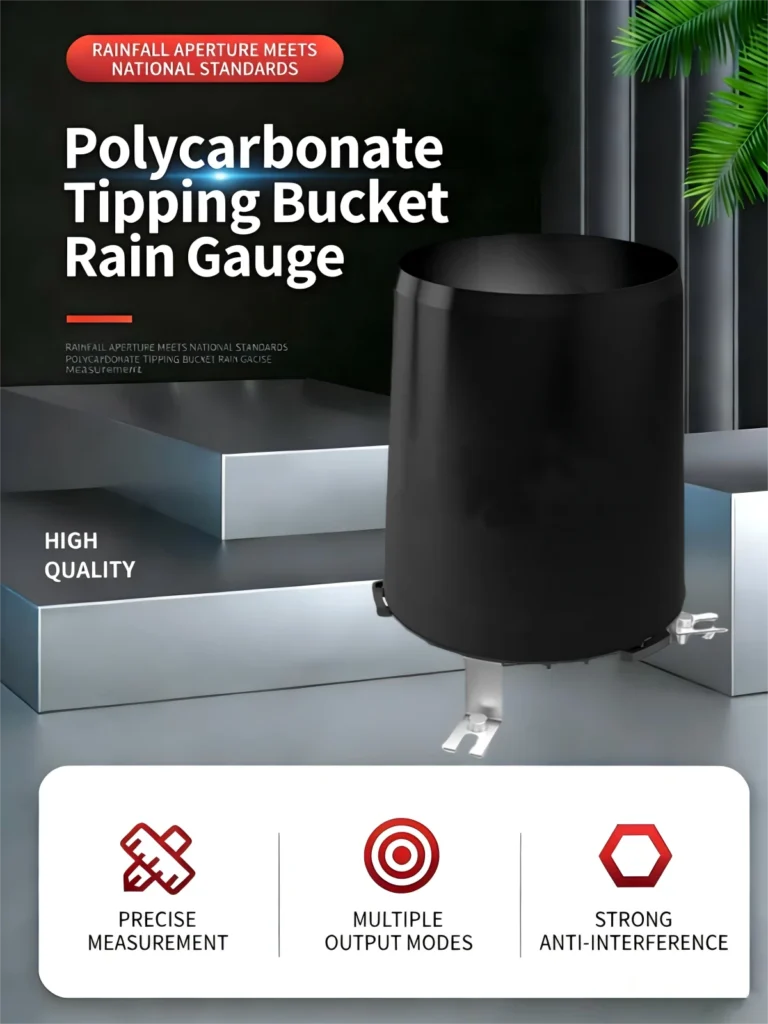
Recording rain gauges are widely used instruments for measuring rainfall. Examples include models like the CDY-12A Metal Tipping Bucket and the CDY-14B Economical Tipping Bucket. These devices work mechanically. They tip when 0.2 mm of rain collects. This sends a pulse signal for accurate tracking.
Variations in materials offer different prices. Metal builds last longer but cost more. Plastic options cost less and fit most budgets. Another type of recording is the weighing rain gauge. It measures precipitation by tracking changes in weight. These gauges also help measure both precipitation and evaporation.
Each rain gauge type is made for specific needs. It gives users flexible and accurate measurements in different settings.