Automated Weather Observation System
An Automated Meteorological Weather Observation System (AMOS) is a system that works by itself. It collects weather data. It also analyzes and shares this data.
And it uses various sensors, tools, and communication technologies to capture real-time weather conditions. This removes the need for human help.
AMOS is important in many fields. These include weather forecasts, climate studies, environmental analysis, aviation, and farming. In all these fields, accurate and timely weather data is essential.
AMOS makes weather forecasts better and helps with decision-making. It does this by making weather data easier to use, more reliable, and more accessible.
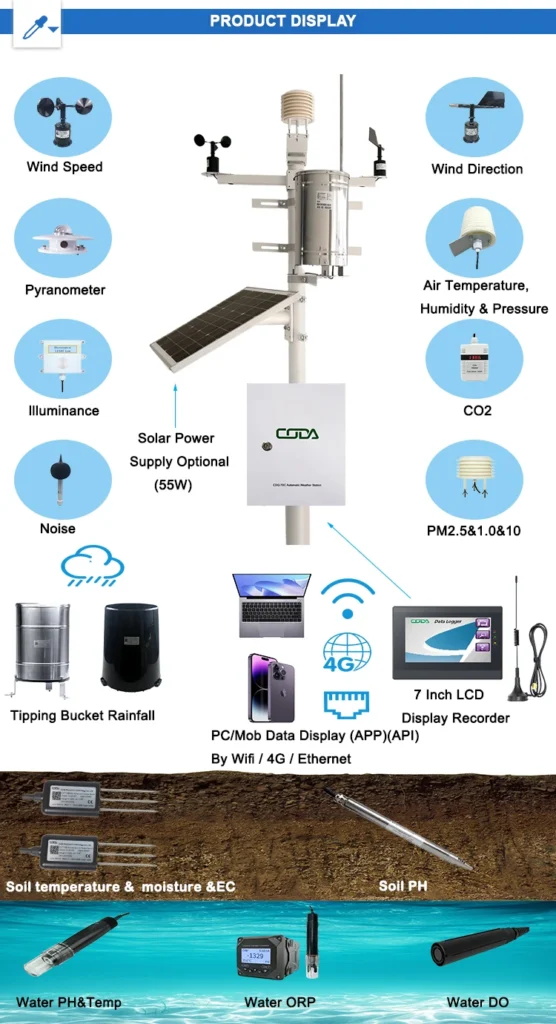
The system has special parts to measure weather variables. These include:
1. **Wind Direction Sensor**:
It measures wind direction with a wind vane and a magnetic sensor.
2. **Wind Speed Sensor**:
It uses a propeller and a magnetic sensor to measure wind speed.
3. **Temperature Sensor**:
Tracks air temperature via thermistors or thermocouples.
4. **Humidity Sensor**:
It checks air humidity with a special capacitor or resistor that responds to moisture.
5. **Air Pressure Sensor**:
Measures atmospheric pressure with a vacuum diaphragm and a pressure sensor.
6. **Visibility Sensor**:
It measures visibility by looking at how light scatters and reflects. This is done with a transmitter and a receiver.
7. **Precipitation Sensors**:
Collects data on rain, snow, or hail with tipping bucket rain gauges.
These sensors are part of a system that observes automatically. They help collect and process data into reports. These reports include real-time weather charts and data summaries. Data that has been processed can be sent to weather agencies or other important groups using strong communication systems.
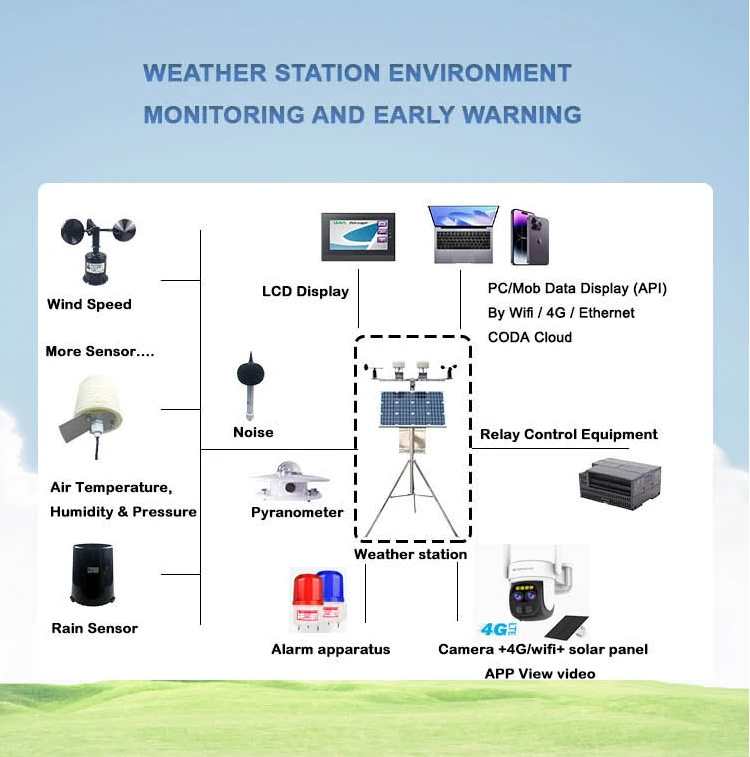
Key components and functionalities of AMOS include:
1. **Weather Sensors**:
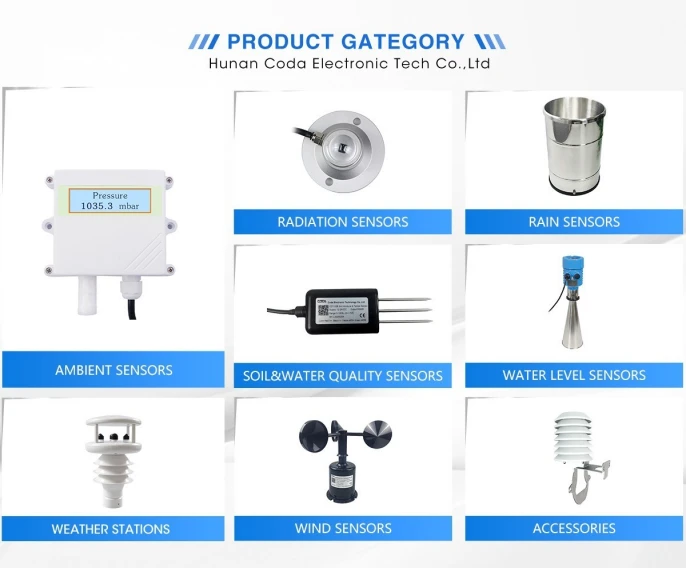
There are many types of sensors. They measure temperature, humidity, wind speed, wind direction, and air pressure. They also watch the rain, sunlight, and how far you can see. Sensors are often set up at fixed locations or on weather towers.
2.**Data Acquisition**:
Sensors gather information with data loggers or similar tools. These devices measure things at regular times.
3. **Data Processing**:
The system processes raw data to find important weather details. This includes averages, highs, lows, and overall changes. Quality control checks solve problems in the dataset.
4. **Data Transmission**:
AMOS uses communication networks such as wired systems, wireless setups, LoRaWAN, and cellular networks like 4G and 5G. It sends processed data to central databases or weather agencies in real-time.
5. **Data Storage and Management**:
Processed data is safely stored in databases. This allows for long-term access and retrieval. Data management systems ensure that information is correct, trustworthy, easy to find, and kept private.
6. **Data Visualization and Sharing**:
Tools like software apps or online platforms help show and share weather data. This is helpful for weather experts, researchers, and everyone.
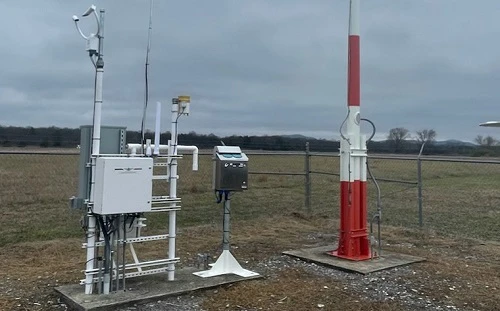
AMOS is widely used in airport weather services. Its ability to make automatic observations gives real-time weather updates. This is important for making accurate forecasts and good decisions in aviation.
AMOS also helps with weather observation. It makes it easier to collect, analyze, share, and spread weather data in many industries. Its advanced automation makes weather assessments faster and more accurate. This makes it a vital tool for today’s weather monitoring systems.
AMOS extends beyond just airport weather services, finding utility in several other areas:
Marine weather observation is very important in ocean areas. It provides real-time weather data. This data makes maritime navigation safer. It also helps improve fisheries operations.
Traffic weather observation:
AMOS provides important weather updates for roads, trains, and air travel in real-time. This helps make traffic safer and improve scheduling.
Urban weather observation:
In cities, AMOS provides real-time weather data. This helps city planners and managers make smart decisions. It supports better urban development and governance.
Agrometeorological observation:
In farming, AMOS gives important weather updates. This helps farmers do their work better and plan their activities more effectively.
Overall, AMOS is an important weather observation tool. It has many uses. It gives real-time weather data and services in various areas.