What Is Used to Measure Evaporation?
**Understanding Evaporation**
Evaporation, in meteorology, is the daily loss of water from a surface.
This includes loss that happens during freezing. It measures the depth of the water layer lost due to evaporation within a specified container over the course of a day.
Typically, the unit of measurement is millimeters (mm), measured accurately to 0.1 mm. As a vital component of hydrometeorological monitoring, evaporation data plays a critical role in understanding environmental and climatic conditions. This useful metric is often measured using evaporation sensors.
**Devices Used to Measure Evaporation**
**1. Evaporation Sensor**
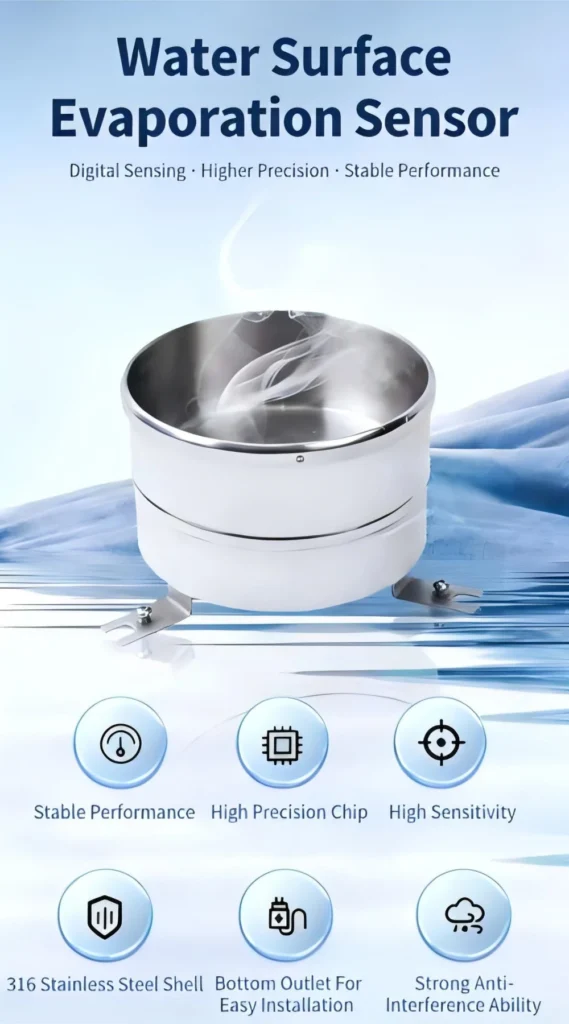
The evaporation sensor is a metal cylinder.
It has a diameter of 29.8 cm and a height of 30 cm. Its opening has an inset copper ring with an inner square design and an angled blade structure.
The sensor measures pressure and uses it to estimate evaporation levels by weighing the liquid in an evaporating dish. As the liquid mass changes, its volume and height are measured to determine the evaporation rate. Notably, this measurement process remains unaffected when the liquid freezes.
To improve accuracy, a two-layer stainless steel cover surrounds the sensor and reduces errors from direct sunlight. This design makes it very reliable in many environmental conditions.
**2. Evaporation Transmitter**
The evaporation transmitter uses advanced digital sensors to ensure durable performance and accurate data collection. The bottom-out wiring design minimizes exposed wires. This reduces the risk of line failures.
Additionally, its stainless-steel construction resists corrosion and works well in wind, rain, or waves. This transmitter adapts well and resists electromagnetic interference. It delivers steady output, even after power interruptions.
Equipped with a standard Modbus-RTU 485 signal output, the evaporation transmitter integrates easily into hydrometeorological networks. Data from the evaporation sensor is sent to a central monitoring system over a 485 bus. This system uses GPRS or 4G for remote management. It supports real-time data viewing, abnormal alarm alerts, and full data analysis.
**Applications and Importance**
Evaporation sensors and transmitters often work with automatic water-level devices, data systems, and transmission tools.
Together, they provide complete monitoring solutions. These devices are vital in many setups. These include automatic rainfall stations, weather stations, environmental monitoring systems, and agricultural research facilities.
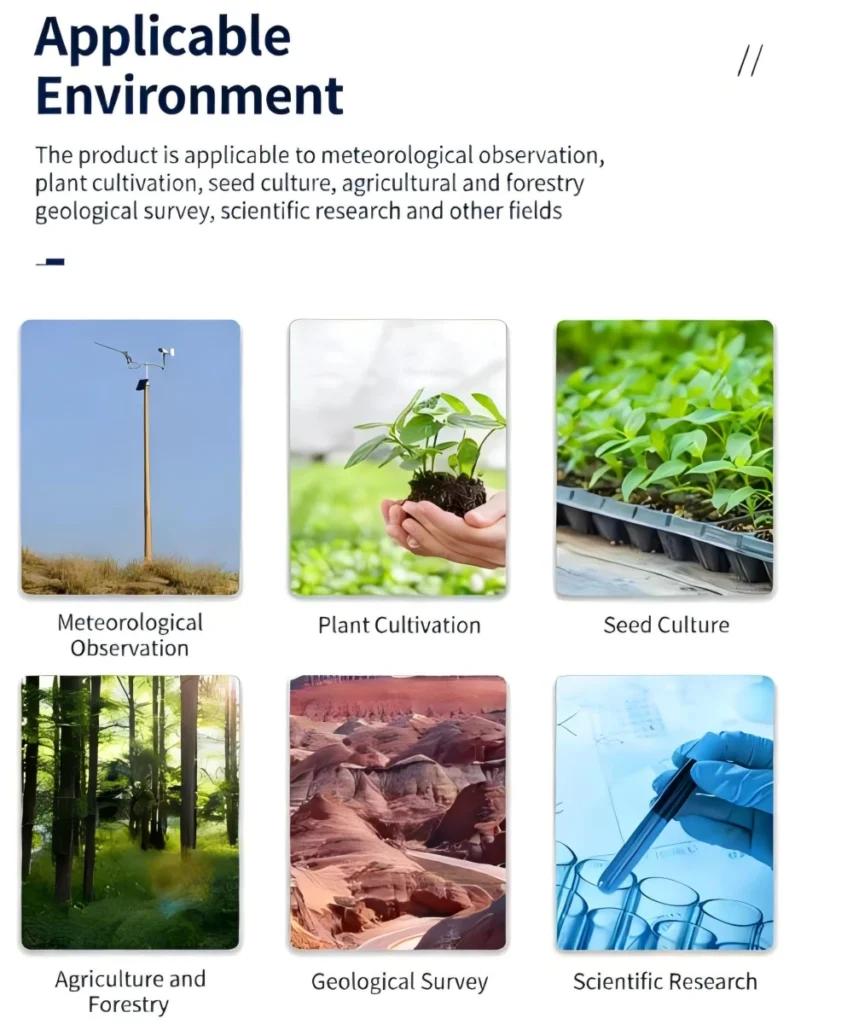
Their applications span meteorology, agriculture, forestry, plant cultivation, geological research, and scientific exploration. By automating monitoring processes, they allow real-time tracking and sharing of evaporation and rainfall patterns across large areas.
In hydrometeorological systems, these sensors help analyze surface evaporation trends over large water bodies. For arid and semi-arid regions with little rainfall, they help show that evaporation often exceeds available water.
Conversely, in humid areas, these devices reveal that basin-wide evaporation aligns closely with water surface evaporation levels. In semi-humid locations, measurements show how water supply and the air’s drying power control evaporation.
By summarizing links between rainfall and evaporation in specific regions, these tools support better water management. They also improve environmental planning, especially in areas with extreme rainfall and limited water.