What are weather instruments
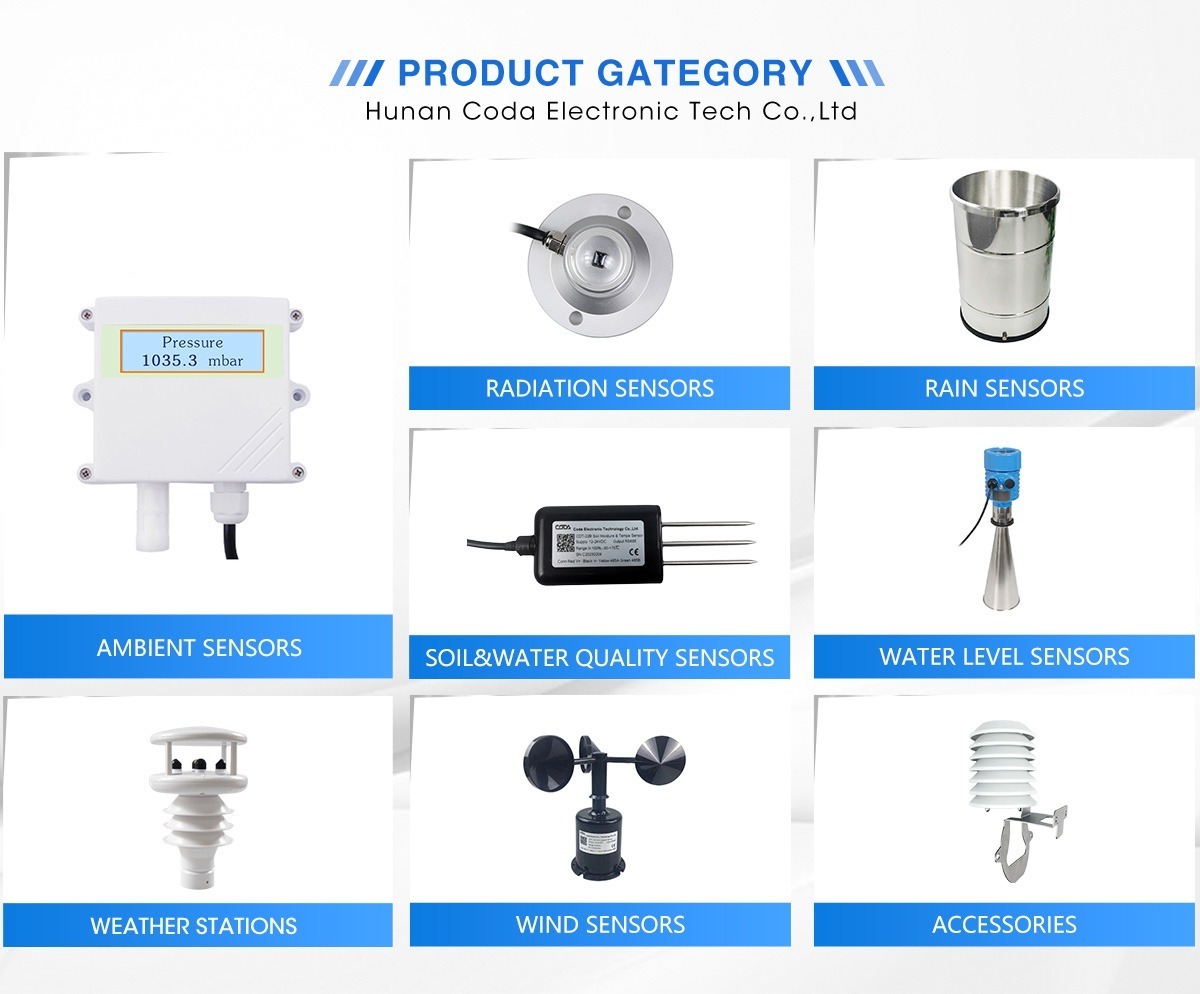
Weather instruments are useful tools. They measure various weather and environmental conditions. They help meteorologists, researchers, and people gather important data.
This data is important for tracking weather patterns. It helps predict changes and understand climate trends. Here is a summary of common weather instruments and what they do.
1. **Thermometer**
– It measures air temperature. This is an important weather factor. It affects weather events and how comfortable people feel.
– Common types are liquid-in-glass, digital, and infrared thermometers.
2. **Barometer**
– Measures atmospheric pressure. This helps show weather changes, like approaching storms (low-pressure systems) or clear skies (high-pressure systems).
– Types include mercury barometers, aneroid barometers, and digital barometers.
3. **Hygrometer**
– It measures the air’s humidity to find out the relative humidity.
– It usually includes a dry-bulb thermometer and a wet-bulb thermometer to measure moisture levels.
4. **Anemometer**
– Measures wind speed and direction.
– There are different types of anemometers. These include cup anemometers, vane anemometers, and sonic anemometers.
5. **Wind Direction Sensor**
– Indicates the direction of the wind.
– Usually, it works with anemometers to give detailed wind data. It is put on tall structures to get accurate measurements.
6. **Rain Gauge**
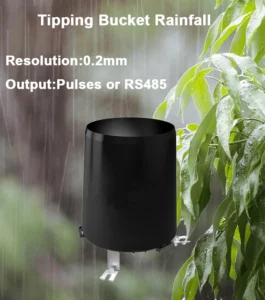
– It measures how much rain or snow falls.
– Common types are standard rain gauges, tipping bucket gauges, and weighing rain gauges.
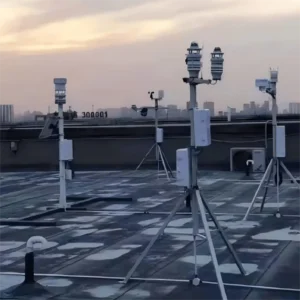
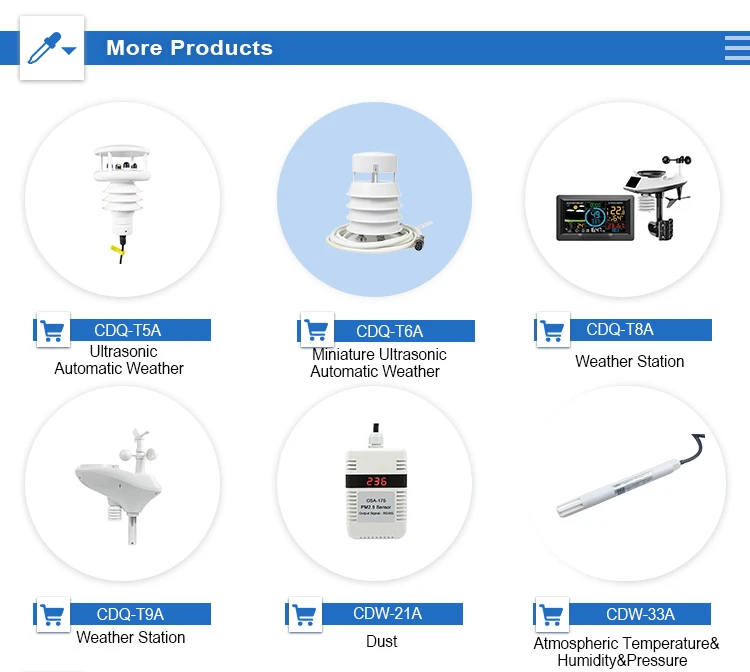
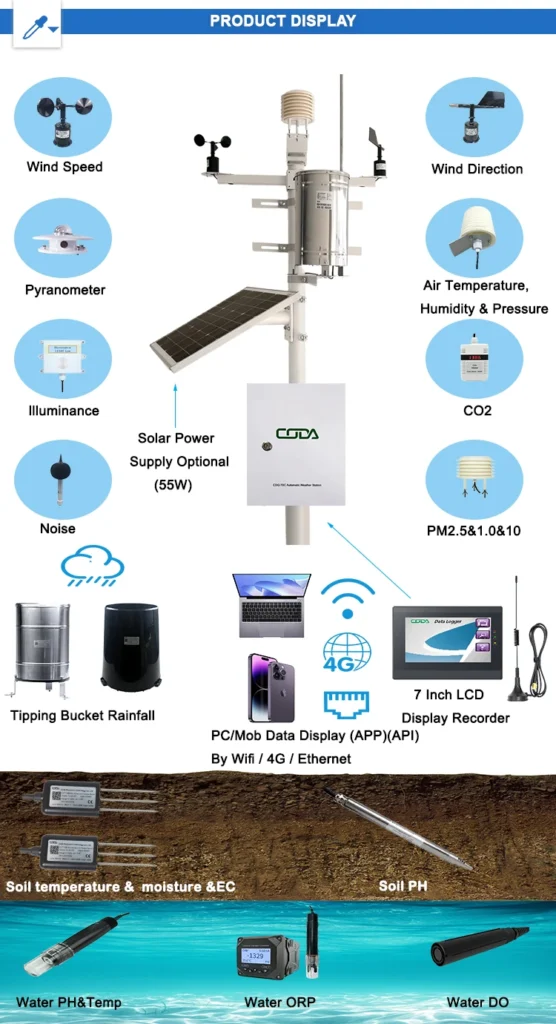
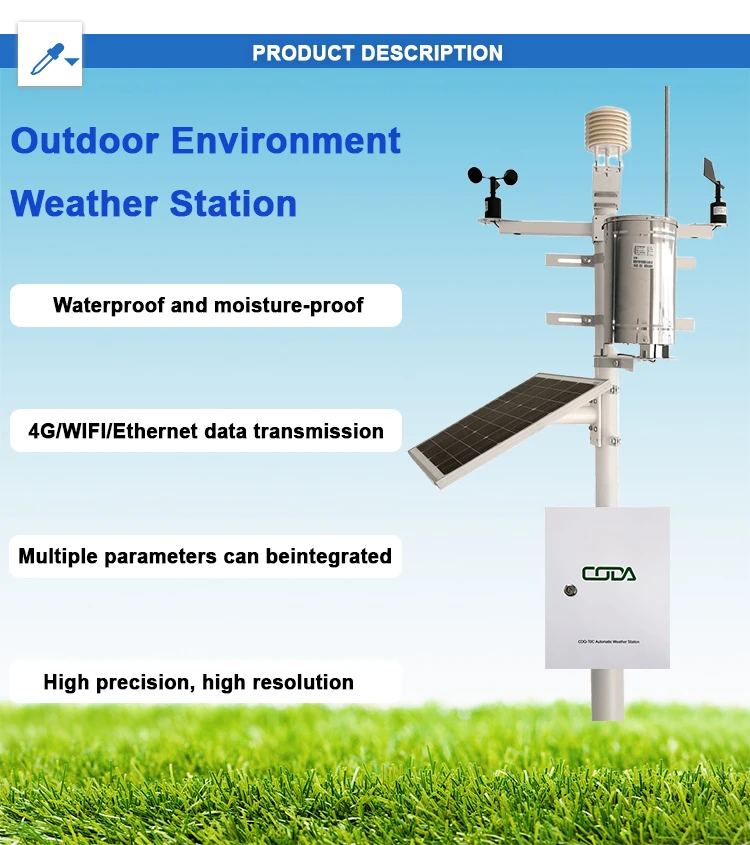
7. **Weather Station**
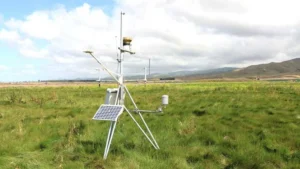
– A complete system uses various weather tools. It measures things like temperature, humidity, pressure, wind speed, and direction. It can also measure solar radiation.
8. **Solar Intensity Meter**
– It measures how strong solar radiation or sunlight is.
– This is often used in weather studies, climate studies, and solar energy projects.
9. **Cloud Meter **
– It measures how high the clouds are. It also checks how far you can see up and down.
– Used often in aviation, this helps keep flights safe during take-offs and landings.
10. **Spectrometer**
– It measures the light spectrum from the sun or other light sources.
– This is often used to study the atmosphere and solar radiation.
11. **Satellite Meteorological Instruments**
– These are radiometers, spectrometers, and sensors found on weather satellites. They measure things in the air, like temperature, cloud patterns, and sea surface temperatures.
12. **LIDAR (Light Detection and Ranging)**
– Uses laser pulses to measure how far away things are. It also shows atmospheric features like clouds and aerosol particles.
13. **Sondes**
– Special devices measure the temperature and humidity in the air. They do this by studying how radio waves act when they pass through water vapor and gases.
conclusion
These tools give important data for weather forecasting and climate science. They help check the environment, support farming, and ensure air travel is safe. They are helpful in many areas that need precise weather information.
Technology has made them more accurate and easier to carry. It also helps provide real-time data. This helps us better understand and predict changes in the weather and climate.