Micro Weather Station: Site Selection and Installation Guidelines
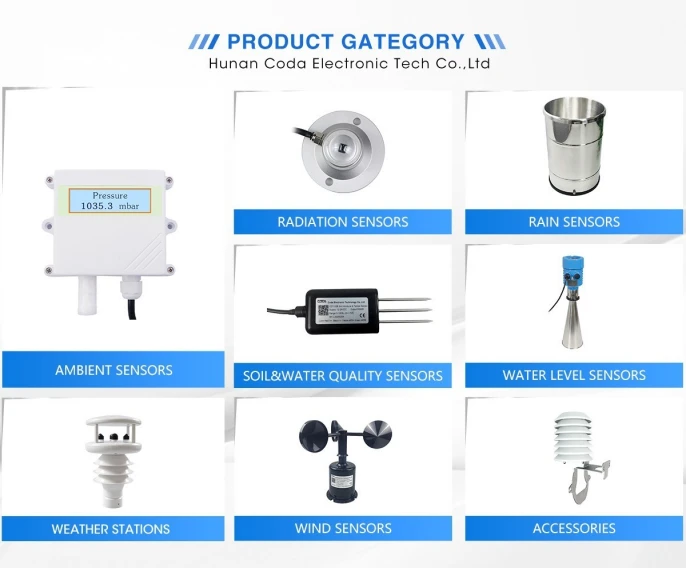
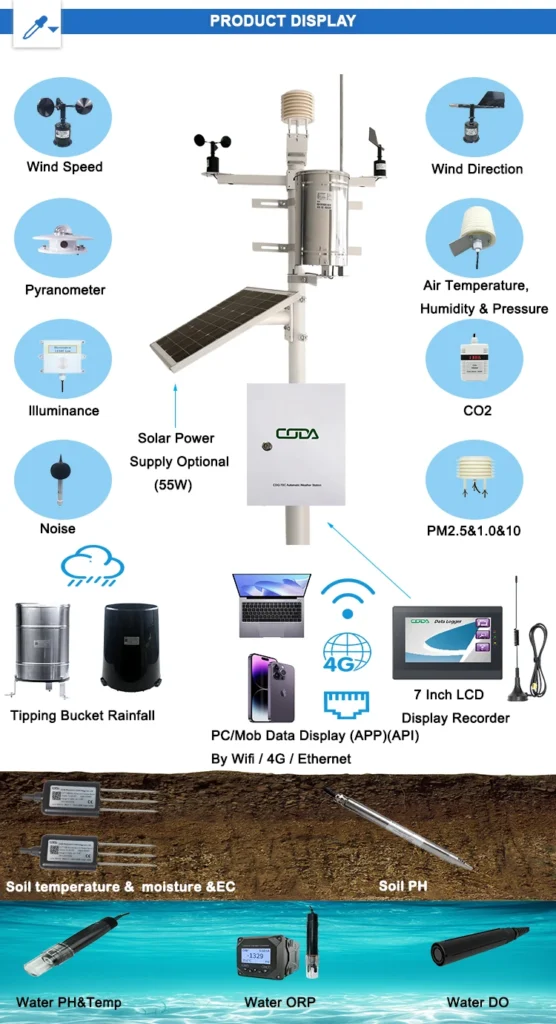
A micro weather station is a small device. It is used to monitor and record weather data. A weather station has sensors, a microprocessor, a data collection unit, a power source, and a protective case. It helps to watch and record weather conditions as they happen.
These elements are temperature, humidity, air pressure, wind speed, wind direction, and precipitation. Here is a clear overview of micro weather stations. It has rules for picking and setting them up.
I. Explanation and Roles of Micro Weather Stations
A micro weather station is a small and portable device. It is easy to set up and helps monitor the weather. It uses precise sensors and a data system. This allows it to collect and send weather data in real time.
This is an important source of data. It helps with weather watching, tracking the environment, farming, and scientific research.
II. Key Characteristics of Micro Weather Stations
1. Portability:
Micro weather stations are small and light. They are easy to carry and set up. They can be easily used in outdoor places like farms, yards, and remote areas.
2.Low Power Use:
These stations use sensors and data loggers that use low power. This helps them last longer and save energy. They usually run on batteries or solar power.
3. Multifunctionality:
This device can measure many weather factors. These include temperature, humidity, air pressure, wind speed, wind direction, and rainfall. Some advanced models also measure solar radiation, soil moisture, and other environmental factors.
4. Digitalization:
Micro weather stations use digital systems to record and send data. They make it simple to gather, study, and share data.
5. Real-Time Monitoring:
They can show and report weather data right away with real-time monitoring. Many products have an alarm function. This function sends alerts when settings go beyond preset limits.
6. User-Friendliness:
Most devices have easy-to-use interfaces and simple controls. This lets users easily see and understand weather data. Some models also offer mobile apps or cloud services. These tools help with accessing and managing data from a distance.
III. Applications of Micro Weather Stations
Micro weather stations are used in many places. These include monitoring the weather and environment, protection, and airports. They are also important in many fields. These include industry, agriculture, forestry, tourism, geology, hydrology, and water management.
They are also used in the military, storage, and scientific research. In agriculture, they help with weather monitoring for farms, making irrigation decisions, and surveying crop planting.
Also In weather observation, they help build weather stations, create early warning systems, and prevent weather disasters. In energy development, they help track weather conditions at wind farms and solar power stations.
In today’s weather monitoring, micro weather stations are essential tools. They are portable and efficient. Their performance mainly depends on choosing the right site and proper installation.
This article talks about the environmental needs and steps to take during installation. This helps make sure the data is correct and keeps the equipment safe.
Micro Weather Station Installation Guide
1. Key Considerations for Site Selection
1. Away from Pollution Sources: To ensure the accuracy of observation data, the installation site must be far from pollution sources. Electromagnetic interference (EMI) from high-voltage power lines and substations can change temperature readings and other measurements. Shadows and reflections from objects can change how we measure solar radiation and sunshine duration. So, these factors should be avoided when choosing a site.
2. The environment around us greatly affects how accurately we collect data. Tall buildings nearby can affect wind speed measurements. The site should be chosen to have an open and well-ventilated area around it.
3. Site Requirements: The observation site should be a flat area that is 25m by 25m. It should have short grass to keep it natural. In special places like mountains, islands, and remote stations, the size and shape of the site can change based on real conditions.
2. Installation Requirements
1. Lightning Rod Installation:
The risk of lightning strikes on micro weather stations is low. It is still a good idea to install a lightning rod. This will help keep the equipment safe. The following points should be noted during installation:
1. Height: The lightning rod should be at least 3 meters tall.
2.Grounding Resistance: To make sure lightning current goes safely into the ground, grounding resistance should be less than 10 ohms.
3. Location: The lightning rod should be placed in the center of the observation site. This will protect the equipment fully.
2. Equipment Installation:
1. Equipment Placement: Place the micro weather station in the center of the observation site. Make sure it is stable.
2. Sensor Installation: Place all sensors, like temperature, humidity, and wind speed sensors, in their correct spots. Follow the equipment manual for guidance.
3. Data Transmission Cables: Connect the sensors to the data collector to ensure smooth data transfer.
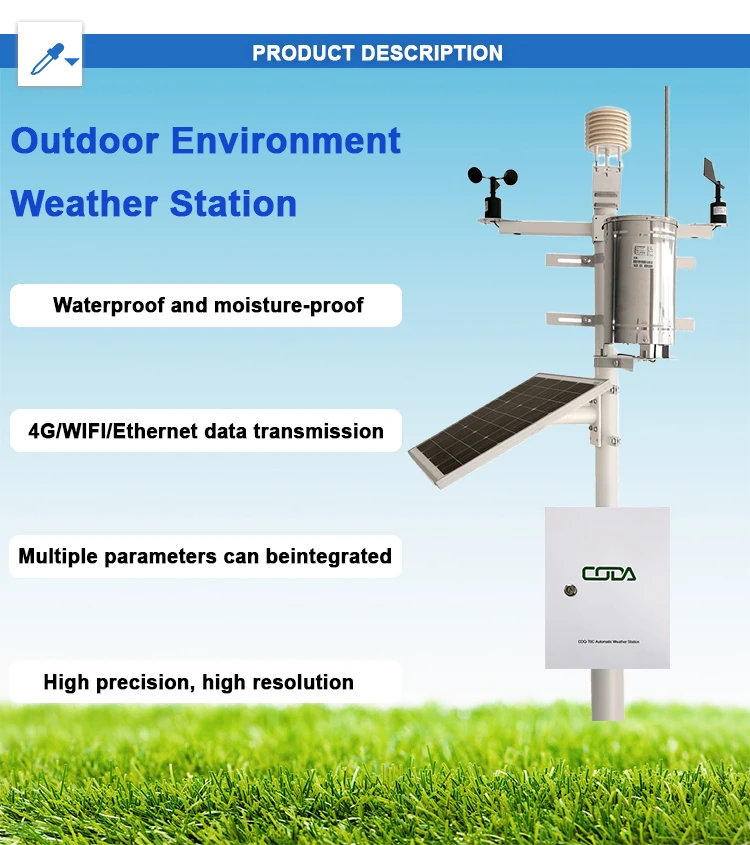
4. Power Supply: Provide a stable power supply for the equipment. Solar panels are suggested as the best power source.
3. Installation Details and Safety Measures
– **Importance of Lightning Protection**:
Lightning strikes are rare. However, installing a lightning rod is a crucial step to protect your equipment. The lightning protection system must be made according to industry standards. This will keep equipment safe from damage during storms.
– Precise Positioning and Layout: Before you install, plan the layout of the sensors carefully. This helps each sensor work well without interference from outside factors. For example, place wind speed and direction sensors in the area with the least blockage. To reduce measurement errors, keep temperature and humidity sensors out of direct sunlight.
– Site Maintenance: Keep the observation site clean and have some plants. Avoid waterlogging and too much soil compaction. This helps keep a natural microclimate. It also makes it easier to check and take care of equipment often.