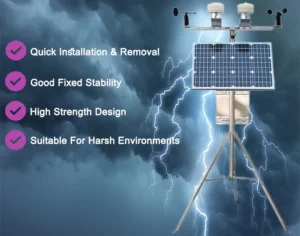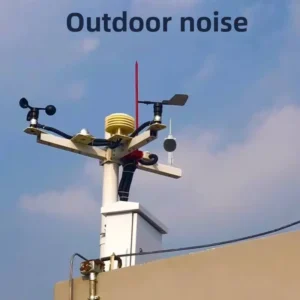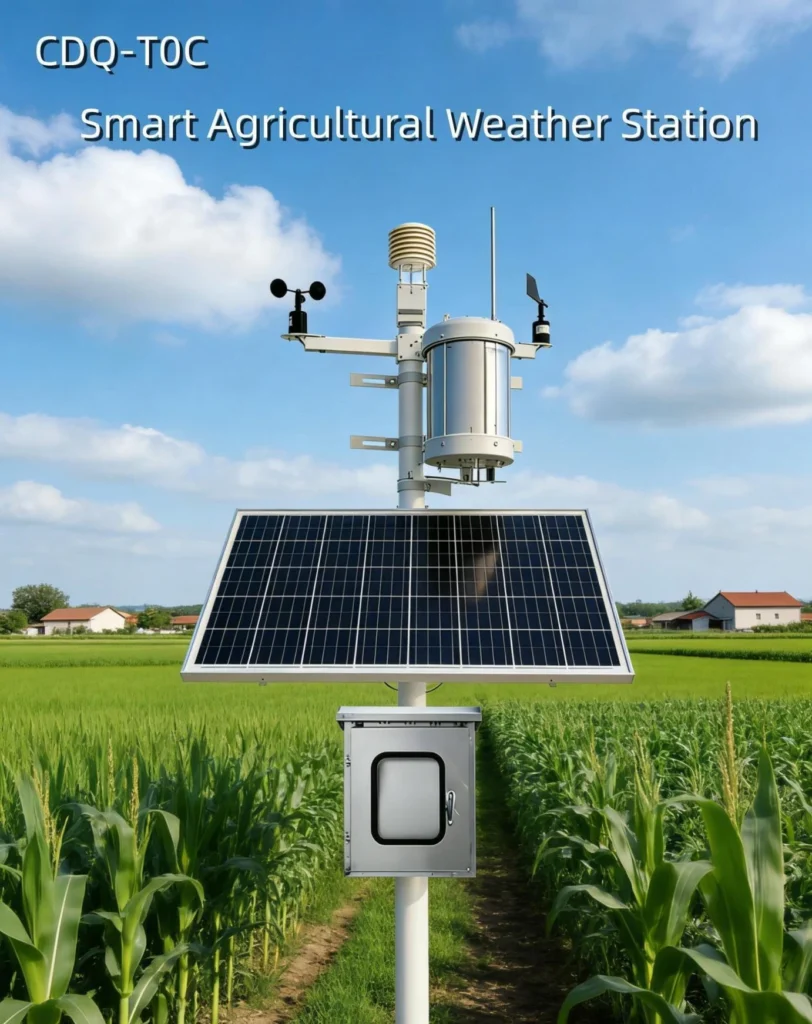
Automated Weather Stations (AWS)
Automated weather stations are far more than just gadgets for hobbyists and weather bloggers. These systems play a key role in many industries and institutions, from agriculture to transportation and more.
What Is an Automated Weather Station?
To understand an **automated weather station**, we first need to define a basic weather station. A weather station is a set of tools and sensors. It measures, records, and sometimes sends data about atmospheric conditions.
An **automated weather station** (AWS) improves this idea by automating data collection and transmission. It removes the need for manual work. These stations can work alone or as part of larger networks. They are the top standard for studying climate patterns and boundary-layer meteorology worldwide.
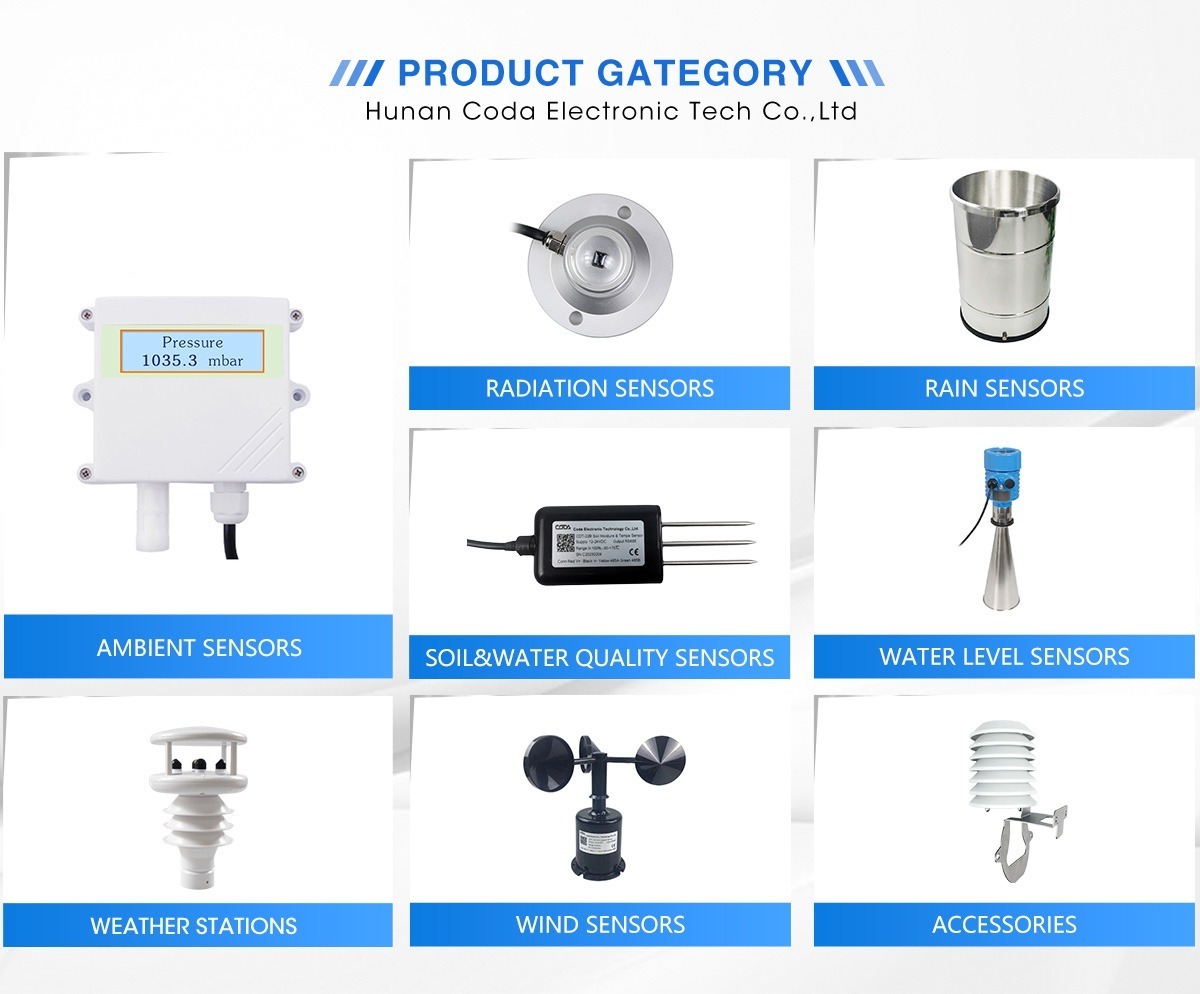
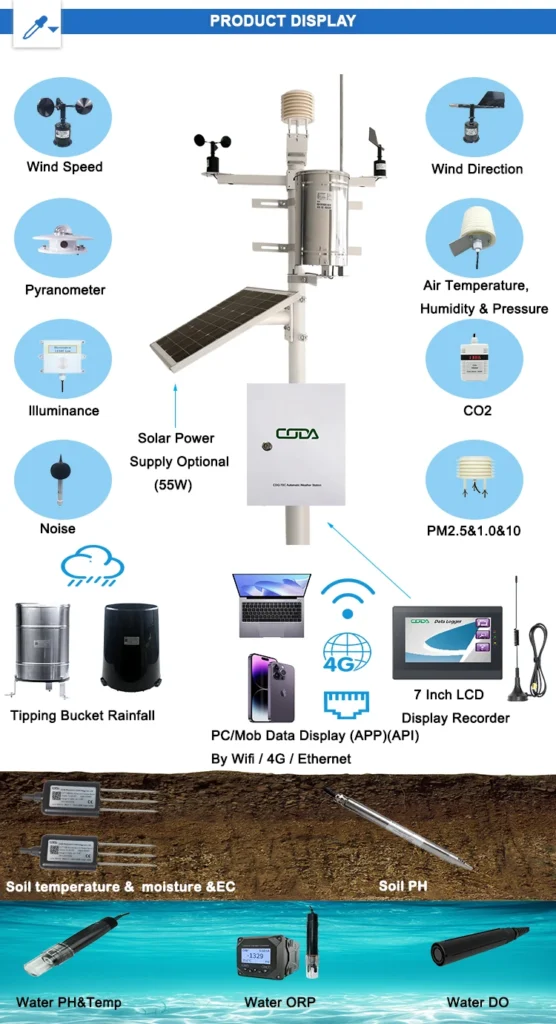
Among the most commonly tracked measures by automated weather stations are:
1. Air Temperature
2. Wind Velocity
3. Wind Bearing
4. Rainfall / Precipitation
5. Moisture Levels
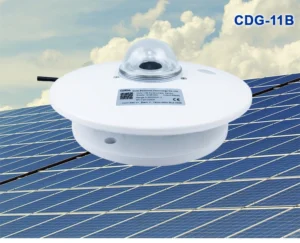
6. Sunlight / Solar Exposure
7. Barometric Pressure
8. Viewing Distance / Visibility
This list is not complete. Stations may add sensors to track cloud height or other metrics, based on setup.
How Do Automated Weather Stations Work?
With a basic understanding of what an AWS is, let’s move on to how these sophisticated systems operate.
Automated weather stations use specialized instruments to measure atmospheric conditions.
They then relay this data to a central network, forecasters, or a local display system. Components like thermometers (for temperature) and barometers (for air pressure) are key to their operation.
A weather station’s setup depends on the maker and model. Some common parts include:
1. **Weather Sensors**
2. **Lightning Sensors**
3. **Sensor Shelters**
4. **Rain Gauges**
5. **Data Loggers/Network Appliances**
6. **Weather Displays**
7. **Weather Cameras**
Here is a breakdown of the main components and what they do:
1. Weather Sensor
This term usually refers to instruments that measure wind speed with an **anemometer**.
They measure wind direction with a **wind vane**.
Most modern weather systems combine these two measurements in one device called a *vane-style anemometer*. Wind speed and direction data is vital. It helps track weather systems and forecast arrival times. It also helps explain general weather patterns.
2. Lightning Sensor
Although not in every AWS, lightning sensors are vital for safety insights, especially in thunderstorm-prone regions. They monitor **total lightning**, including both in-cloud and cloud-to-ground strikes. This data helps assess storm severity.
For instance, frequent in-cloud lightning activity often indicates more severe weather phenomena such as tornadoes, hailstorms, and downbursts.
The most efficient lightning sensors are part of wider detection networks. These networks improve accuracy and reliability when identifying strikes. They reduce false alarms and send timely alerts as storms develop.
3. Sensor Shelter
The **sensor shelter** holds many important instruments in an automatic weather station. It protects sensitive equipment and also brings together measurements for key atmospheric conditions, such as:
– Temperature (via thermometers)
– Relative Humidity (via hygrometers)
– Dew Point (via hygrometers)
– Barometric Pressure (via barometers)
– Heat Index (measured with thermometers and hygrometers; it shows the combined effects of temperature and humidity)
– Wind Chill (calculated using thermometers and anemometers to measure how wind increases cooling in cold temperatures)
– Wet Bulb Globe Temperature, or WBGT, is calculated using humidity, air temperature, solar radiation, sun angle, and wind speed. It uses sensors like hygrometers, thermometers, pyranometers, and anemometers.
Each sensor plays a specialized role while collectively contributing to a complete and accurate representation of current atmospheric conditions.
4. Rain Gauge
The rain gauge is a simple and essential part of any automatic weather station. It’s a device designed to measure liquid-equivalent precipitation. It typically looks like a bucket or a wide, vertical cylinder.
Weather stations with rain gauges can track rainfall or snow buildup over set time periods. The automated rain gauges used by Earth Networks provide valuable data, including:
– Daily rainfall total
– Daily rainfall average
– Weekly rainfall total
– Weekly rainfall average
– Yearly rainfall total
– Yearly rainfall average
5. Data Logger and Network Appliance
Two key parts of an automated weather station are the data logger and the network appliance. They work smoothly together. These components collect, process, store, and transmit data in an automated sequence.
First, the data logger collects data from the sensors. Next, it processes and stores the data. Finally, the network appliance transmits the data to interfaces such as weather displays, apps, and alert systems.
When choosing a weather station, look for devices with network features and long battery life. This helps it keep working during power outages. For instance, Earth Networks’ network appliances offer a reliable 72-hour backup battery life. They also reboot automatically if needed, ensuring constant access to your weather data.
6. Weather Display
Nearly all weather stations come with display units, even the smaller personal models designed for home use by weather enthusiasts.
Professional-grade automated weather stations, on the other hand, are often equipped with advanced displays that convey detailed information such as current conditions and extended forecasts. For instance, Earth Networks commercial-grade weather stations can connect to HD displays for a clearer overview.
Additionally, online weather displays let users access weather data remotely from any location. These online centers are most helpful when they bring together live video feeds, current observations, forecasts, and past data.
7. Weather Camera
A final key part of some weather stations is the weather camera. While not all stations have this feature, cameras add value by capturing live images. These images can foster community engagement.
Some users keep their camera feeds private, while others work with local news outlets by sharing live views of their area. Such partnerships help both sides. News stations get strong content for their broadcasts, and organizations gain wider exposure.
Advantages of Using an Automated Weather Station
Automated weather stations are widely used by people and groups with specific goals. A golf club may protect players. A school may support STEM learning. An emergency team may predict severe weather more accurately.
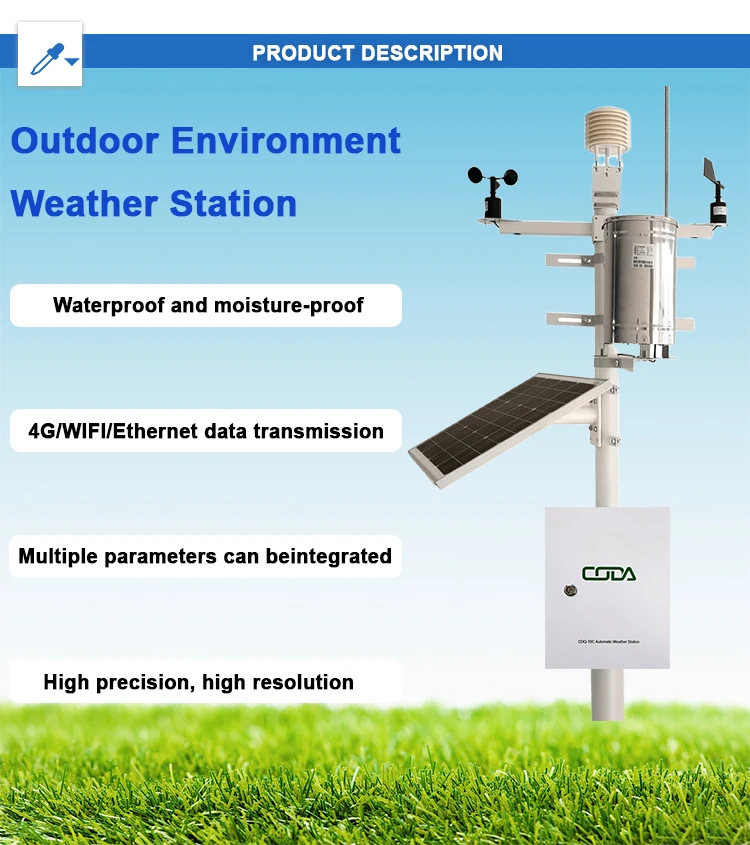
Businesses in many industries rely on automated weather stations. They are a key part of modern forecasting and monitoring systems. Compared to traditional manual stations, automated options come with several key advantages, including:
– Precise measurements
– Low energy consumption
– High durability and reliability
Accurate Measurements
One key benefit of automated weather stations is their ability to provide accurate, timely data. In rapidly changing weather, real-time updates are very valuable.
Unlike manual systems that rely on people, automated systems reduce errors. They provide consistent, regular updates without intervention. Some advanced stations can even provide data every few minutes for up-to-the-moment monitoring.
Moreover, these stations can be more accurate with professional calibration. For example, Earth Networks employs meteorologists to regularly check and fine-tune their equipment for peak performance. If any issues arise, the station is flagged for immediate inspection and repair to maintain high quality standards.
Low Power Requirements
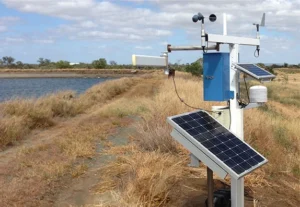
One key advantage of an automatic weather station is its low power use. These stations can run well on renewable energy sources like solar panels and wind turbines. They can also use mobile phone technology.
This capability makes them ideal for remote or off-grid sites. Weather occurs everywhere, even in places without electric grids. With flexible power options, these stations can adapt to almost any environment.
With help from a skilled field technician, you can set up an automatic weather station almost anywhere.
Proven Reliability
Another key benefit of automatic weather stations is their dependable performance. While issues may happen at times, these stations need little or no routine maintenance. As mentioned earlier, having support from meteorologists or calibration experts boosts their performance.
Connecting these stations to a full network improves reliability even more. If one station goes offline, nearby stations can fill in the data gaps. For instance, our global weather network has over 17,500 hyperlocal sensors, giving users easy access to data worldwide.
Weather Stations for Schools
While many organizations use weather stations, schools are one of the most common users. Schools install automated weather stations for three main reasons. They help keep students safe. And they support event planning. They also promote STEM education.
If your school is thinking about adding a weather station, or already has one, here’s why it helps:
Student Safety and Event Planning
One of the top priorities for schools is maintaining safety during daily operations and extracurricular activities. From school days to sports events and large gatherings, sudden weather can create risks.
These risks can affect students, staff, visitors, and property. School weather stations give key insights that help administrators, like superintendents and principals, make informed safety decisions.
A key part of these systems is the lightning sensor, which warns schools when severe storms are near. Many schools improve safety by using automated weather stations with lightning horns and strobe lights. They give automatic alerts during dangerous situations.
Enabling STEM Learning
Weather stations can also play an important role in education by supporting STEM learning in classrooms. Meteorology, data analysis, and scientific exploration can be hard to teach. An on-site weather station often grabs students’ interest. It also engages them in hands-on learning.
Our school weather stations include lesson plans and connect easily with the GLOBE Program for smooth classroom use. These stations send real-time weather updates to the GLOBE Program.
Students can use data mining tools.
Teachers can access tailored curricula.
The wider GLOBE community can use hyperlocal data for scientific studies.
Airport Weather Stations
Airports are another key area where automatic weather stations are very useful. The aviation industry, including airlines and fixed-base operators (FBOs), relies on accurate, hyperlocal weather observations.
These observations improve both safety and operational efficiency.
Surprisingly, the biggest safety threats in aviation often happen on the ground. Lightning, strong winds, and heavy hail can harm workers on tarmacs and at airports. Having an on-site weather station gives real-time updates and helps reduce these risks.
For more help, our full lightning safety guide for airport operations keeps everyone safe in extreme weather. Whether you work in aviation logistics or ground operations, it can help you stay safe.