What is a Pyranometer and How is it Used?
Measuring sunlight that reaches the Earth’s surface is important for many uses, including solar power and climate research. This is where the pyranometer comes into play. These precise instruments measure solar radiation with high accuracy. They provide reliable data for environmental studies, energy savings, and weather tracking.
Whether you’re checking the weather or measuring sunlight for a solar farm, a pyranometer sensor is a key tool. It provides accurate, real-time data.
What is a Pyranometer?
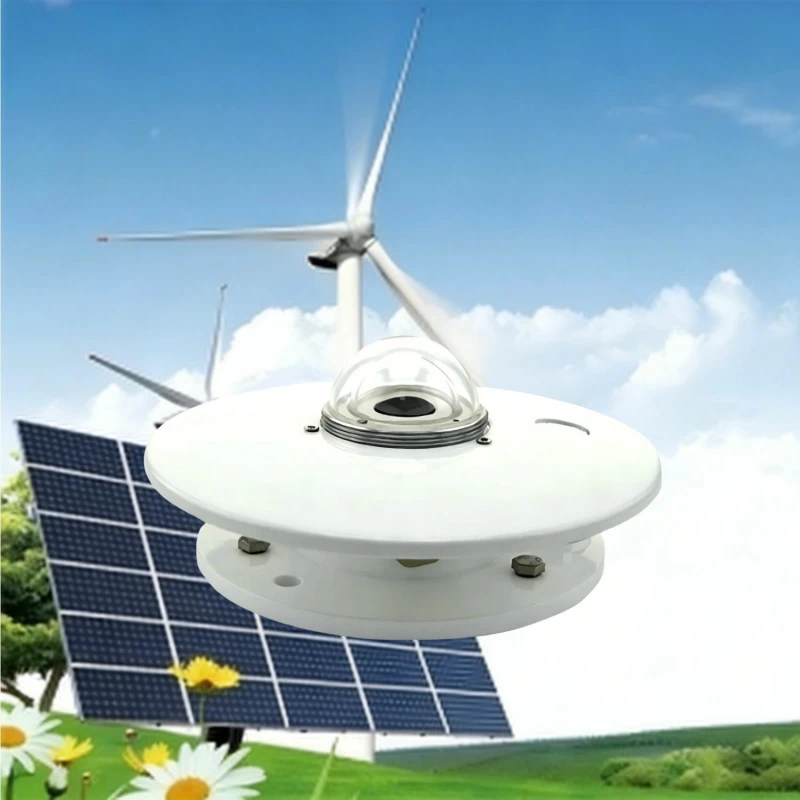
A pyranometer is a scientific device. It measures total solar irradiance on a flat surface. This is also called global horizontal irradiance (GHI). It carefully measures how much solar radiation comes from the sun.
With the growing global focus on renewable energy and sustainability, pyranometers have become more important. They are essential in fields such as meteorology, climatology, solar energy optimization, and agricultural research.
How Does It Work?
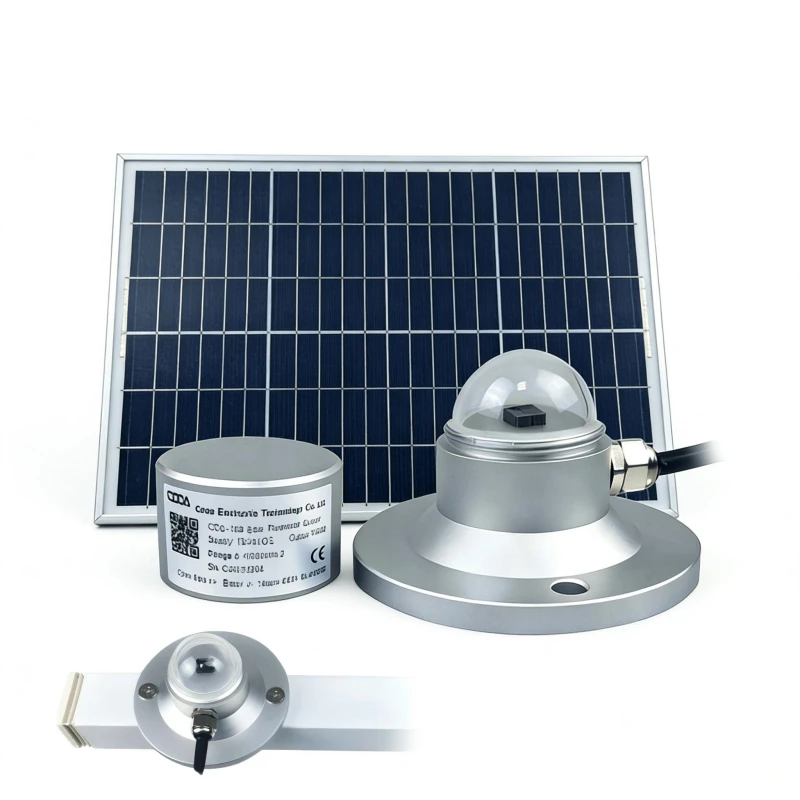
The pyranometer works using either thermopiles or photodiodes. When sunlight hits the sensor, it creates heat or an electrical current.
This response matches the radiation intensity. The data is amplified and calibrated. This lets you convert data into irradiance measurements.
Here’s a breakdown of how a pyranometer functions:
1. **Sensor**: At its core, the pyranometer has a sensor that detects incoming solar radiation and converts it into electrical signals.
2. **Absorption of Solar Radiation**: The sensor surface, made of thermopiles or photodiodes, absorbs sunlight instead of reflecting it.
3. **Thermopiles or Photodiodes**: A thermopile pyranometer uses thermocouples to turn absorbed radiation into heat. It creates a voltage that matches the temperature difference caused by sunlight.
A photodiode pyranometer, on the other hand, generates current or voltage when sunlight photons interact with semiconductor materials, creating electron-hole pairs.
4. **Calibration**: Calibration makes measurements accurate by comparing the electrical output to known standards.
5. **Data Processing**: The sensor’s electrical signal is further processed through amplification and filtering. It is then converted into digital irradiance units (W/m²).
6. **Output**: The processed data is shown as solar irradiance values in watts per square meter.
Applications of a Pyranometer
If you’re wondering how a pyranometer relates to your work, here are its main uses:
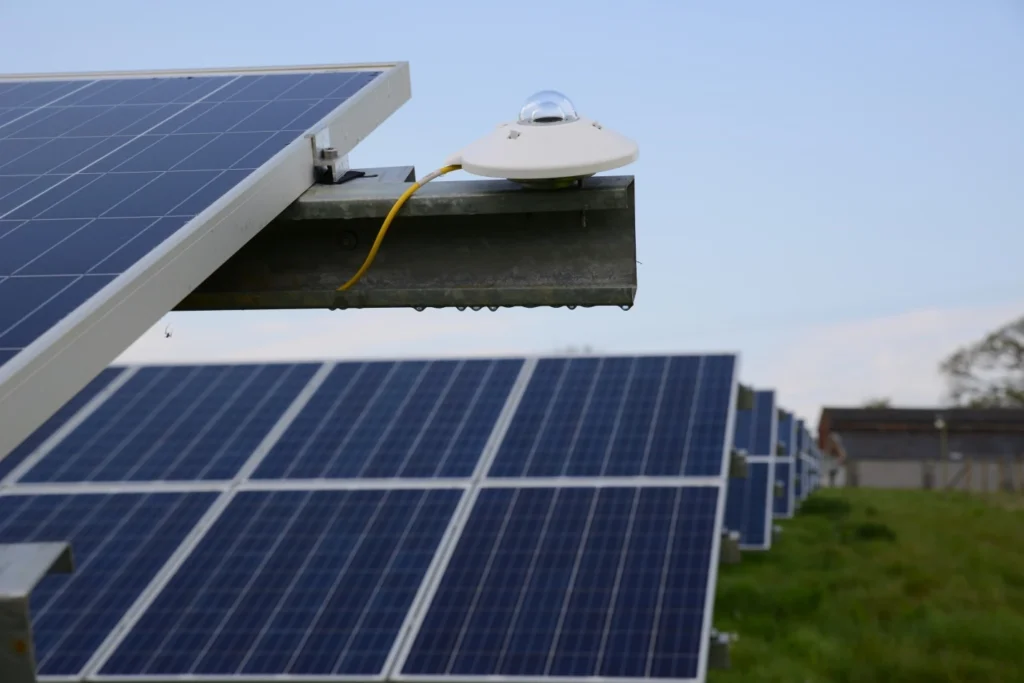
– **Solar Energy Assessment**: Pyranometers are often used in solar power systems. They measure solar irradiance. Engineers use this data to assess energy output from photovoltaic systems. This helps them plan and install solar panels for the best efficiency.
– **Agricultural Research**: Researchers use pyranometers to measure how sunlight affects crop growth and photosynthesis. By tracking how much light crops get, and how good it is, farmers can adjust irrigation, fertilization, and planting. This helps boost productivity and efficiency.
– **Climate Research**: Pyranometers are vital in climatology. They help study patterns of sunlight to understand climate trends. They also help predict weather conditions, like temperature changes and forecasts.
– **Building Energy Analysis**: In architecture and construction, pyranometers measure a building’s exposure to sunlight. They guide passive solar gain and support energy-efficient design. They also help improve a building’s orientation.
– **Solar Water Heating Systems**: Engineers use pyranometers to measure solar water heating system performance. They check how well these systems turn sunlight into heat. This helps both homes and businesses find cost-effective heating solutions.
– **Weather Monitoring**: In meteorology, pyranometers serve as crucial instruments in weather stations, providing data on incoming solar radiation to predict weather conditions accurately.
Key Differences
Here’s how a pyranometer compares to similar devices:
– **Pyranometer vs Radiometer**:
Pyranometers measure total solar energy on a flat surface. Radiometers measure electromagnetic radiation across many spectrum ranges. These ranges include ultraviolet, visible, microwave, and radio waves.
Radiometers are flexible instruments with many types of sensors. Depending on their design, they use components such as:
– Photodiodes
– Bolometers
– Photomultiplier tubes
– Microwave antennas
These devices are used in many fields, including:
– Astronomy
– Thermal imaging
– Remote sensing
– Industrial radiation monitoring
**Distinguishing Features:**
1. **Spectral Response Range:** Radiometers measure wavelengths from ultraviolet to microwaves, covering a wide spectrum. In contrast, pyranometers work in the solar wavelength range of 300 to 3000 nm. They offer a more specific focus.
2. **Sensor Design:** Pyranometers use thermopile sensors. These sensors are designed for accurate solar measurements. On the other hand, radiometers use different sensor types for each wavelength range.
3. **Application Areas:** Pyranometers work well for solar energy research, environmental monitoring, and weather studies. Radiometers work best in science, space research, and detecting radiation in industry.
4. **Calibration and Standards:** Pyranometers adhere to ISO 9060 standards for solar accuracy through rigorous calibration processes. Radiometers are calibrated for the type of pyranometer radiation they measure and how they are used in science.
**Pyranometer vs Pyrheliometer:**
Pyrheliometers measure direct solar radiation. They use a collimated tube. It narrows the viewing angle to 5°. Sunlight passes through the tube. This allows direct readings. Accurate readings rely on sun-tracking systems and clear skies.
**Key Applications for Pyrheliometers:**
– Concentrated Solar Power (CSP) system design
– High-precision solar research
– Direct Normal Irradiance (DNI) assessments
**Core Differences:**
1. **Measurement Type:** Pyrheliometers only measure direct radiation. Thermopile pyranometers measure direct and diffuse sunlight. This makes pyrheliometers not suitable for shade or diffuse light.
2. **Positioning:** Pyranometers stay in place and mount flat for steady measurements, while pyrheliometers must track the sun for accuracy.
3. **Usage:** Pyranometers are best for general solar data collection and meteorology. Pyrheliometers excel in direct solar energy uses, such as CSP systems.
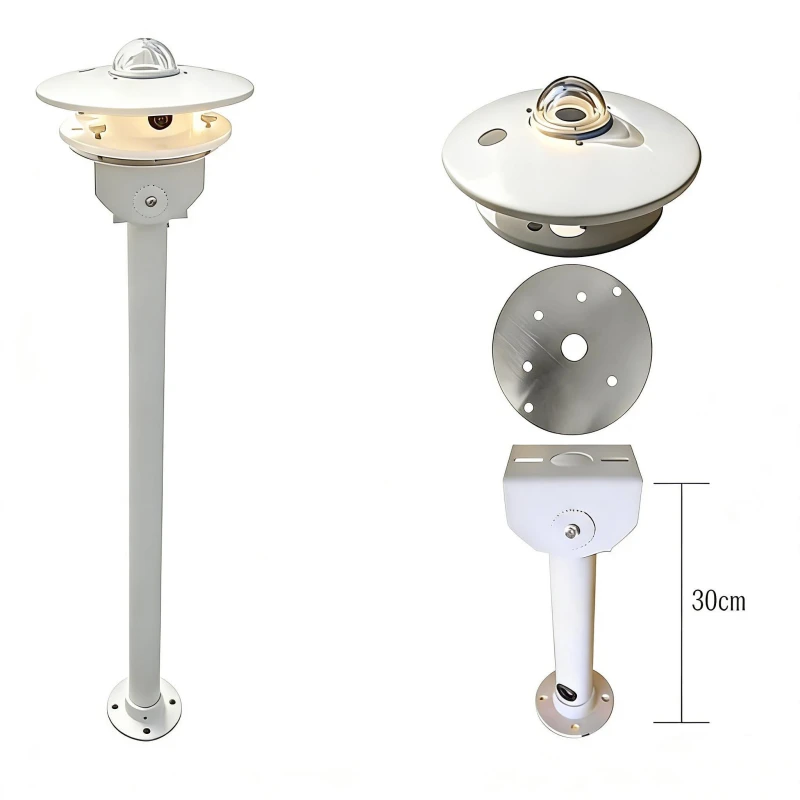
4. **Design Elements:** Pyranometers use glass domes to capture radiation from many angles.
Pyrheliometers use narrow tubes to limit the view to the solar disk.
**Pyranometer vs Solar Radiation Meter:**
Modern advances have led to portable solar radiation meters. They use photodiode sensors to measure sunlight. They show readings in watts per square meter (W/m²).
**Key Characteristics of Solar Radiation Meters:**
– Compact and user-friendly design
– Suitable for indicative field measurements
– Ideal for technician checks or smaller-scale applications
**Core Differences:**
1. **Accuracy:** Pyranometers are more precise than solar radiation meters. Solar radiation meters are better for quick field checks. They are less suited for detailed scientific monitoring.
2. **Sensor Technology:** Solar radiation meters use photodiodes for faster readings across a broader spectrum, but with lower accuracy. Pyranometers use thermopile sensors to collect more precise data.
3. **Standards:** Pyranometers follow ISO 9060 certification rules, which support global accuracy standards. Solar radiation meters need pre-calibration, but they are not verified by international standards.
4. **Cost Efficiency:** Pyranometers cost more because they are durable and perform better. Solar radiation meters cost less and suit basic assessments.
**Conclusion:**
Pyranometers are great tools for getting accurate and reliable data in solar energy and environmental research. Their strong design ensures accurate performance in many conditions. It also allows seamless integration into many monitoring systems. Selecting a high-quality pyranometer is crucial for leading the way in precision data collection in these domains.
If you’re searching for dependable instruments, Hunan Coda Electronic Tech stands out as a trusted supplier across China. Whether you need portable devices or large systems, Hunan Coda offers reliable solutions. We also provide professional installation services 24/7, wherever you are.