Wired Weather Station
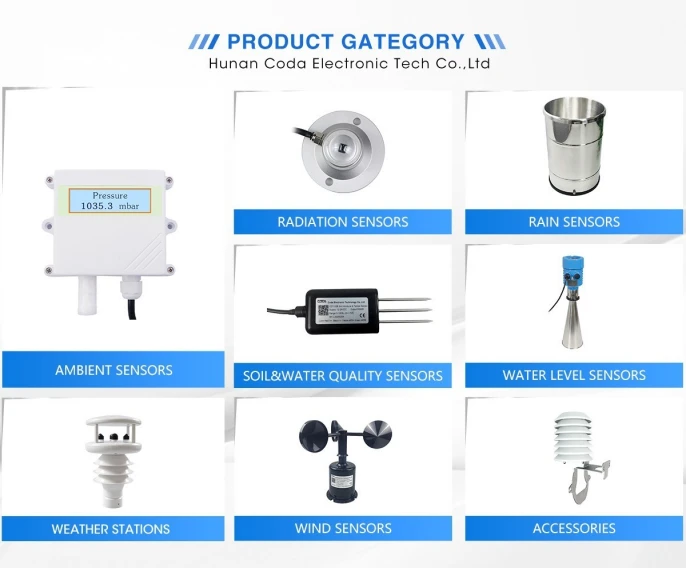
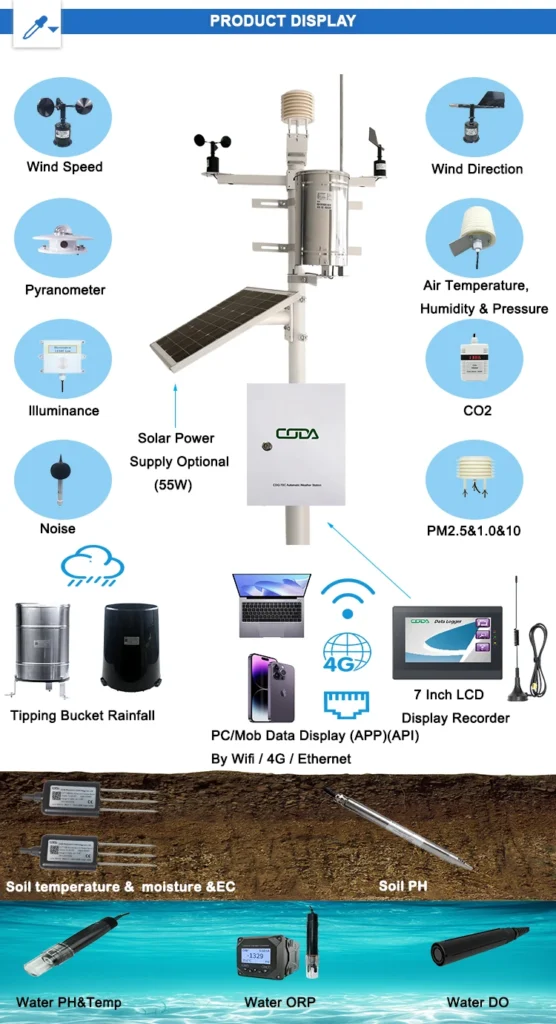
A wired weather station has these main parts:
1. **Meteorological Sensors**
These include temperature sensors, humidity sensors, barometers, wind speed and direction gauges, rain gauges, and solar radiation sensors. They are made to measure different weather conditions. They do this by Wired Weather Station
2. **Data Collector (Data Logger)**
The data collector gets electrical signals from the sensors. It then turns these signals into helpful weather data. The system checks and fixes data during this process.
This makes sure the data is correct and trustworthy. It also saves the data and backs it up for future use and analysis.
3. **Transmission Cable**
A cable links the sensors to the data collector. This guarantees that data is sent in a stable and reliable way. Common cable types are RS485 and RS232. They provide fast speeds, strong stability, and high resistance to interference.
4. **Power Supply**
Wired weather stations need a steady power source. This can be electricity from utilities or other dependable power sources. This helps them keep running.
5. **Data Processing and Display System**
This system has tools to manage weather networks. It can handle databases, look at data trends, and create charts. It saves, processes, and analyzes weather data that it collects.
The display interface can be part of the data logger or linked to an external device. This could be a computer or a different screen.
6. **Communication Equipment**
Communication systems send data to remote servers or data centers. They use wired networks or special lines. This allows for a wider analysis and use of weather data.
Working Principle of a Wired Weather Station
– **Data Acquisition**: Sensors check weather conditions in real time and turn them into electrical signals.
-**Transmission**: These signals go to the data collector through cables.
– **Data Processing**: The data collector handles these signals. It checks and calculates them before saving the processed data.
– **Data Display and Recording**:
Collected data is shown on a screen.
It is saved in the logger.
It can also be sent to remote systems with transmission equipment.
– **Data Communication**: Weather data is sent to central weather centers or other platforms. This helps with better analysis using wired communication.
Features of Wired Weather Stations
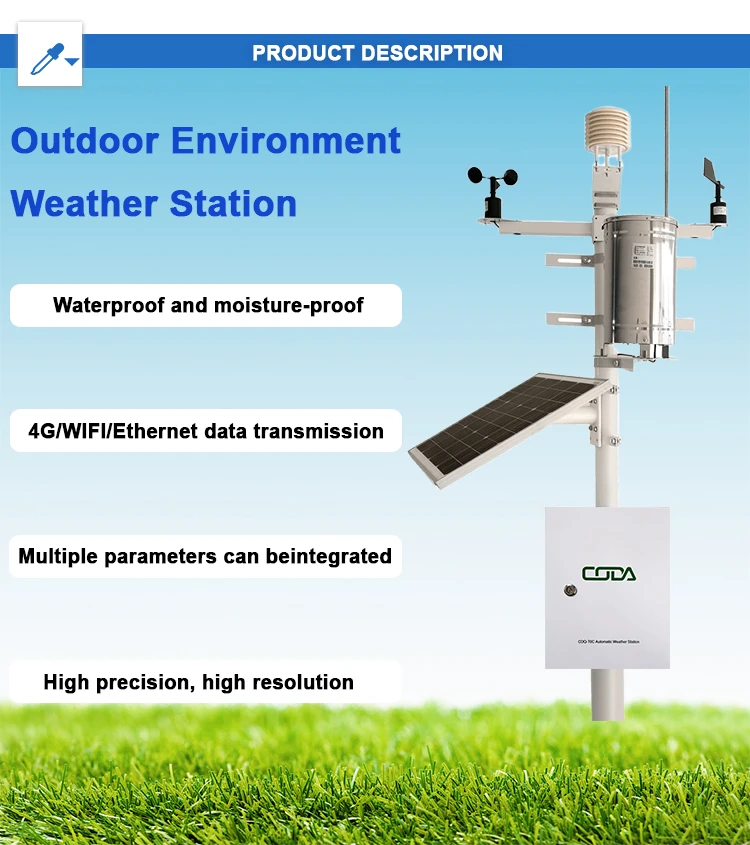
– **High Stability**: More resistant to interference than wireless systems. This helps keep data transfer steady.
– **Fast Data Transmission**: Wired connections often provide faster data transfer than wireless systems.
– **Suitable for Complex Environments**: Great for places with strong electromagnetic interference or weak wireless network coverage.
– **Accuracy and Reliability**: Ensures accurate tracking and dependable gathering of weather data.
– **Real-Time Monitoring**: Continuous monitoring shows changes in weather conditions right away.
– **Comprehensive Functionality**: Able to combine weather observations with environmental monitoring and data analysis for various uses.
– **Fixed Locations**: This is made for long-term use in places like airports, research centers, or regular weather stations.
– **Low Maintenance Costs Over Time**: The first cabling costs might be higher. However, ongoing maintenance mainly involves calibrating sensors and checking cables.
– **Expandability**: You can add new sensor nodes to make it more capable. This may need more cabling work.
Features of Wired Weather Stations
– **High Stability**: More resistant to interference than wireless systems. This helps keep data transfer steady.
– **Fast Data Transmission**: Wired connections often provide faster data transfer than wireless systems.
– **Suitable for Complex Environments**: Great for places with strong electromagnetic interference or weak wireless network coverage.
– **Accuracy and Reliability**: Ensures accurate tracking and dependable gathering of weather data.
– **Real-Time Monitoring**: Continuous monitoring shows changes in weather conditions right away.
– **Comprehensive Functionality**: Able to combine weather observations with environmental monitoring and data analysis for various uses.
– **Fixed Locations**: This is made for long-term use in places like airports, research centers, or regular weather stations.
– **Low Maintenance Costs Over Time**: The first cabling costs might be higher. However, ongoing maintenance mainly involves calibrating sensors and checking cables.
– **Expandability**: You can add new sensor nodes to make it more capable. This may need more cabling work.
Disadvantages of Wired Weather Stations
– **High Installation and Maintenance Costs**: Installing cables can take a lot of work and money. Maintenance costs can also increase over time.
– **Limited Flexibility**: Sensors are fixed in place, so moving or adjusting them is hard.
– **Terrain Restrictions**: It is hard to install in places with complicated landscapes or far from power sources.
Application Scenarios of Wired Weather Station
Wired weather stations are used in many areas, including:
– Urban Weather Observation: Important for accurate weather forecasting in cities and for climate research.
– Agricultural Monitoring: Tracks the small climate of farmland to help improve agricultural production.
– Construction Sector: Monitors weather conditions and gives important information for building design and safety during construction.
– Transportation: Checks road surface temperature, wind conditions, and other factors to ensure safe road operations.
– Aviation Industry: It is very important for flying at high altitudes and for air traffic control. It helps keep flights safe.
– Scientific Research Institutions: A useful tool for doing advanced weather studies and experiments.
Comparison with Wireless Weather Stations
– **Stability**: Wired weather stations are great at providing stable and secure data transmission. This makes them ideal for places with complex electromagnetic environments or strong signal interference.
– **Flexibility**: Wireless stations are easy to set up and move. However, their data transmission can be interrupted by strong interference or bad weather.
– **Cost Considerations**: Wired weather stations often cost more to install at the beginning. However, they often have lower maintenance costs over time. In contrast, wireless stations have different cost patterns.
Summary
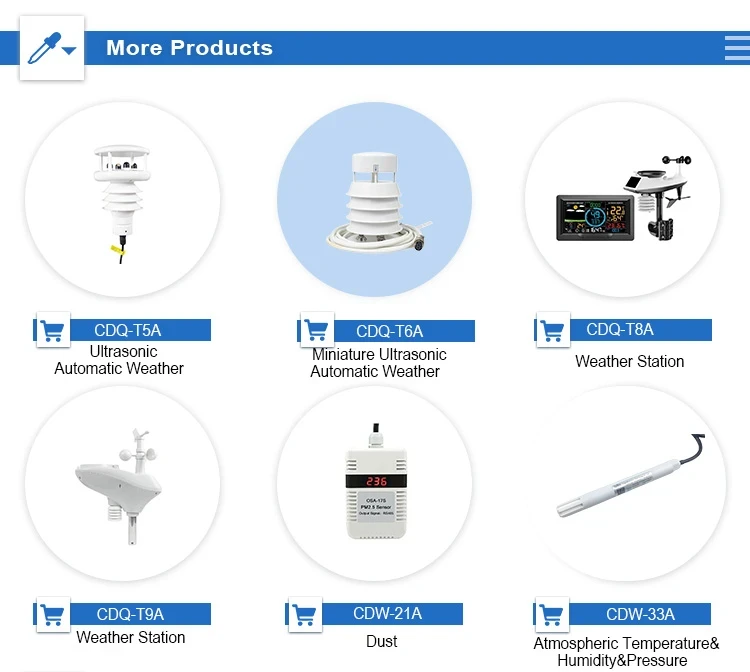
Wired weather stations are the best choice for professional weather observation. They give dependable data and can keep track for a long time.
They may be less flexible. And they also cost more to install. However, they are the best choice for situations that need accuracy and constant data collection.
Their many uses in areas like farming, environmental care, weather research, and aviation safety show how important they are.
noticing changes in the environment. Then, they turn those changes into electrical signals.