Wind Speed Measurement in Agricultural Applications
Introduction: The Significance of Wind Speed in Agricultural Production
Agriculture depends on natural environmental factors. Wind is one of the most influential forces in the agricultural production process. Wind speed is a key measure of wind and directly shows how strongly the air is moving.
With the growth of precision and smart agriculture, wind speed measurement is now essential. It helps optimize production, reduce risks, improve resource use, and support sustainable development. This article explores its many roles, its practical value in different situations, and its future prospects.
1. Overview of Wind Speed Measurement Technology in Agriculture
Basic Principles and Classification of Agricultural Wind Speed Measurement Technologies
Agricultural wind speed measurement needs adaptability for harsh field conditions, low maintenance, and compatibility with IoT systems. Mainstream technologies fall into three categories, each with distinct traits and uses.
1.1 Mechanical Wind Speed Measurement Technology
Working Principle of Mechanical Wind Speed Measurement
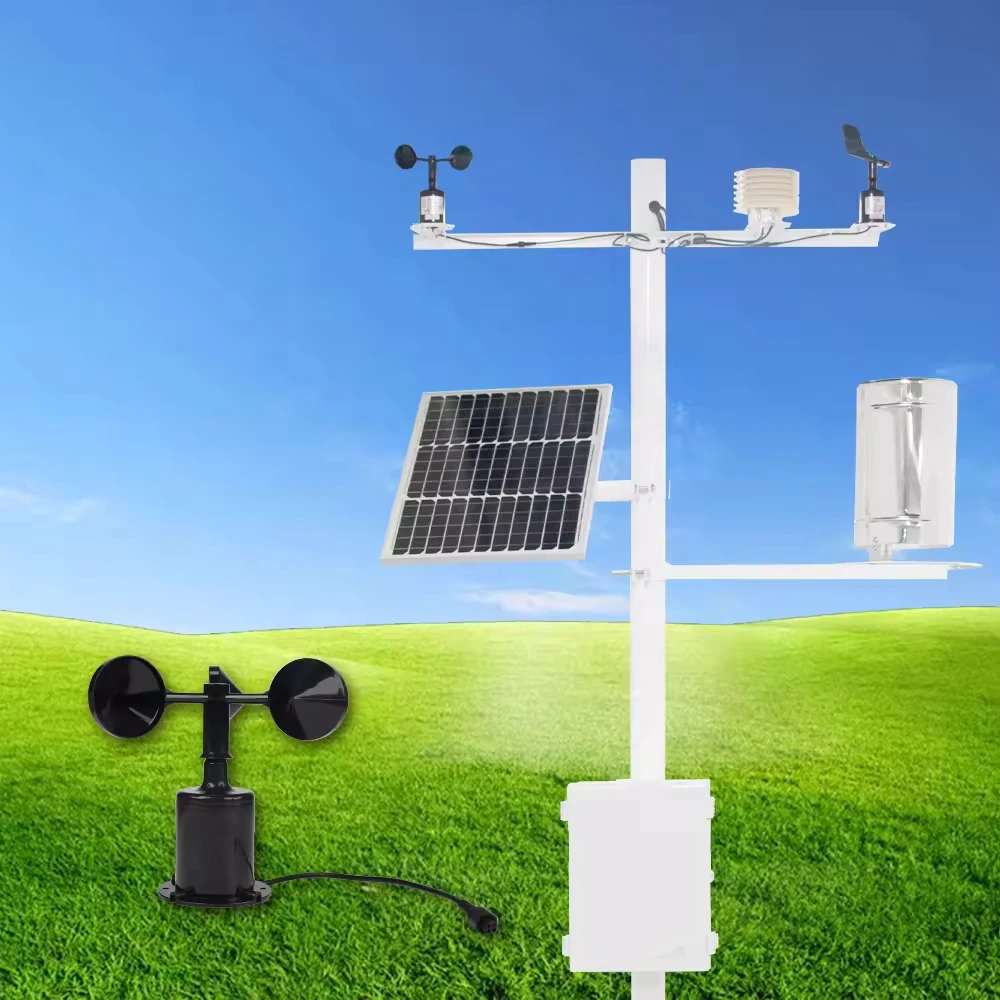
Mechanical anemometers are the most widely used technology, mainly cup-type models.
They use wind to spin cups, and the rotation rate is proportional to wind speed. Rotation turns into electrical signals using angle sensors or Hall elements. Calibration formulas then convert these signals into wind speed values.
Characteristics and Application Scope of Mechanical Anemometers
With a measurement range of 0 to 30 m/s and ±0.5 m/s accuracy, they are low cost. They are stable and easy to maintain. Widely used in open-field farming, such as wheat fields, corn fields, and orchards. It supports long-term monitoring in rural areas with little maintenance.
1.2 Electronic Wind Speed Measurement Technology
Working Principle of Electronic Wind Speed Measurement
Based on MEMS and electronic compass technology, electronic anemometers measure wind speed and direction.
They use thermal convection or piezoresistive effects. They combine microchips with heating and temperature sensor arrays. These arrays turn airflow-driven temperature and resistance changes into electrical signals.
Characteristics and Application Scope of Electronic Anemometers
Higher accuracy (±0.2 m/s) and wider range (0-50 m/s) than mechanical types. It can measure extremely low wind speeds. Small, low-power, and easy to integrate with IoT devices, they suit greenhouses and seedling bases.
They need protective casings because they are sensitive to environmental conditions.
1.3 Ultrasonic Wind Speed Measurement Technology
Working Principle of Ultrasonic Wind Speed Measurement
A non-contact technology that measures wind speed by detecting differences in ultrasonic travel time. Wind speeds up ultrasonic waves downwind and slows them upwind. Combining directional parts gives the true wind speed and direction.
Characteristics and Application Scope of Ultrasonic Anemometers
High accuracy (±0.1 m/s), fast response, and a wide range (0-60 m/s).
It has no moving parts, for long-term reliability. Costly and sensitive to temperature and humidity, they need compensation modules.
They are mainly used in large bases.
They are also used in high-value cash crop fields.
2. The Core Role of Wind Speed Measurement in Agricultural Production
2.1 Optimizing Crop Growth Environment and Improving Yield and Quality
Appropriate wind speed, 1 to 3 m/s in open fields, promotes air circulation and reduces canopy humidity.
In greenhouses, a wind speed of 0.3 to 0.8 m/s helps lower disease risks. Wind speed measurement helps farmers adjust actions.
They can install windbreaks for high winds. And They can use fans for low winds. They can optimize greenhouse ventilation. This helps keep temperature and humidity even.
2.2 Preventing and Mitigating Wind Disasters and Reducing Agricultural Losses
Wind speed measurement gives early warning of strong winds (≥15 m/s) and typhoons. Farmers can harvest in advance, reinforce facilities, and protect seedlings. It also provides data to help design farm structures that can withstand wind.
Examples include greenhouses and windbreaks. This design work uses long-term wind speed data.
2.3 Guiding Agricultural Operations and Improving Production Efficiency
Wind speed guides sowing (1–3 m/s for uniformity). It also guides pollination (2–4 m/s for wind-pollinated crops).And it guides pesticide spraying (≤3 m/s to avoid drift).
It also guides harvesting (1–2 m/s to reduce grain loss). And it also optimizes drying by accelerating water evaporation when wind speed is appropriate.
2.4 Supporting Precision Agriculture and Smart Farming Development
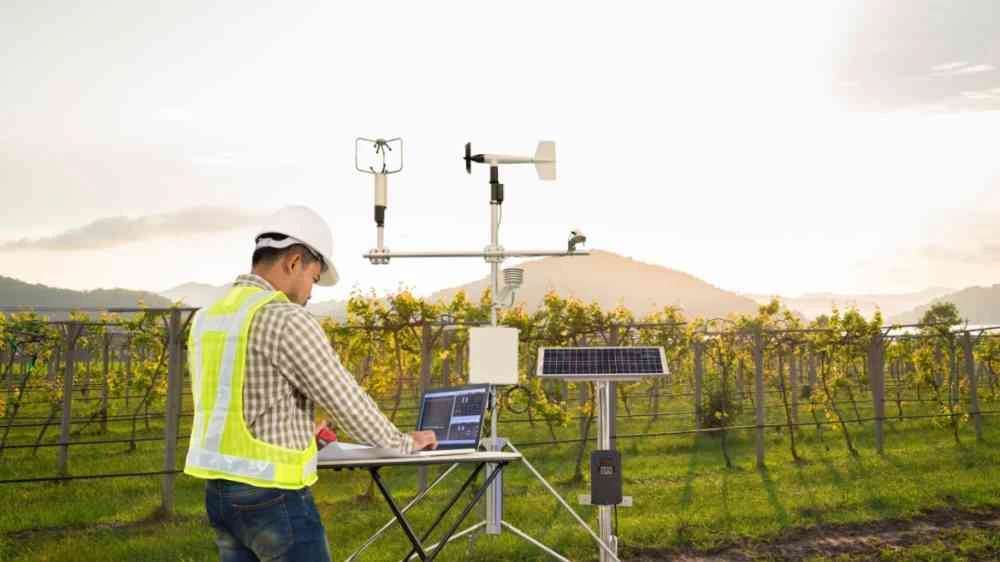
Integrated with agricultural IoT systems, wind speed sensors create a complete monitoring network. Data is sent to cloud platforms. These platforms use AI to adjust irrigation, ventilation, and pest control automatically. They also build models to predict crop growth and yield.
3. Application Cases of Wind Speed Measurement in Different Agricultural Scenarios
3.1 Open-Field Crop Planting
In Henan’s wheat fields, cup anemometers cut lodging by 30% and raised yields by 10% to 15%. In Iowa corn fields, ultrasonic anemometers raised yield by 12%.
They cut pesticide use by 20%.
They did this by improving irrigation and fertilization settings.
3.2 Protected Agriculture
MEMS anemometers in Shandong’s tomato greenhouses increased yield by 18%. They did this by improving ventilation and environmental control. In the Netherlands’ seedling bases, ultrasonic anemometers improved survival rates by 25% and shortened cultivation cycles by 10 days.
3.3 Cash Crop Planting
Cup-type anemometers in Zhejiang tea gardens raised yields by 12%.
They also increased the high-quality tea rate by 18%. In Shaanxi’s apple orchards, electronic anemometers cut fruit drop by 28%. They also improved quality by helping prevent wind damage and guide pest control.
4. Challenges and Development Prospects of Wind Speed Measurement in Agriculture
4.1 Current Challenges
Key challenges include high equipment costs, especially for ultrasonic anemometers. Harsh field conditions can affect sensor accuracy. Farmer skill levels vary widely. Integration with other agricultural technologies remains low.
4.2 Development Prospects
Future trends include lower equipment costs, due to wider use of MEMS anemometers.
They also include improved sensor accuracy and stability. Systems will integrate more deeply with IoT, big data, and AI. Applications will expand in new farm models, like vertical and aquatic farming.
These trends will also support carbon emission reduction.
5. Conclusion
Summary of the Role of Wind Speed Measurement in Agriculture
Wind speed measurement is vital for better growing conditions, reducing wind damage, guiding work, and supporting smart farming. Reducing equipment costs, improving sensor performance, enhancing farmer training, and promoting technology integration will unlock its full value. This will support agricultural modernization and high-quality development.