What is a Weather Station?
A weather station is a set of instruments that monitors and records weather and air conditions. It measures temperature, humidity, wind speed, wind direction, rainfall, and air pressure.
**Purpose of a Weather Station**
At its core, a weather station collects and shares data about the atmosphere. By monitoring environmental conditions all the time, it can store or send this information. It supports weather forecasts, data analysis, and decision-making.
Whether in a rural area, on a construction site, or near the coast, a weather station gives local weather details. This local data often gives more accurate results than wider regional forecasts.
**Components of a Typical Weather Station**
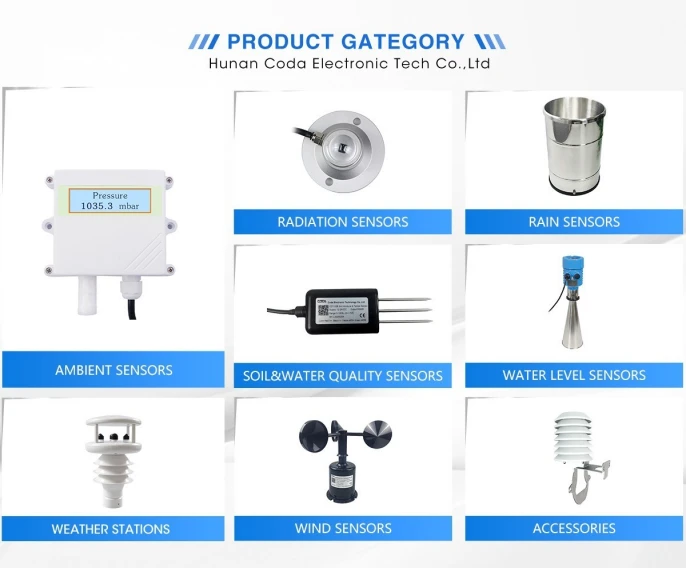
A weather station usually has many sensors and instruments, and each one has a specific weather job. Together, they build a strong system. It records current weather conditions and spots trends over time. Common components include:
– **Thermometer:** Measures air temperature.
– **Hygrometer:** Tracks relative humidity, or the amount of moisture in the air.
– **Barometer:** Measures air pressure in the atmosphere. This can help show and predict weather changes.
– **Anemometer:** Calculates wind speed.
– **Wind Vane:** Identifies the wind’s direction.
– **Rain Gauge:** Collects and measures precipitation levels over a set period.
– **Solar Radiation Sensor (Pyranometer):** Measures how much solar energy comes from the sun.
– **UV Sensor:** Tracks how strong ultraviolet radiation is.
– **Soil Sensors (Optional):** Measure soil temperature and moisture. This is especially useful for agriculture.
– **Leaf Wetness Sensor:** Used in agriculture to track plant wetness. It helps prevent crop disease and supports precision farming.
These instruments are often built into a compact, weatherproof structure, such as a Stevenson screen. It automates measurements and helps transmit data.
**How Weather Stations Work**
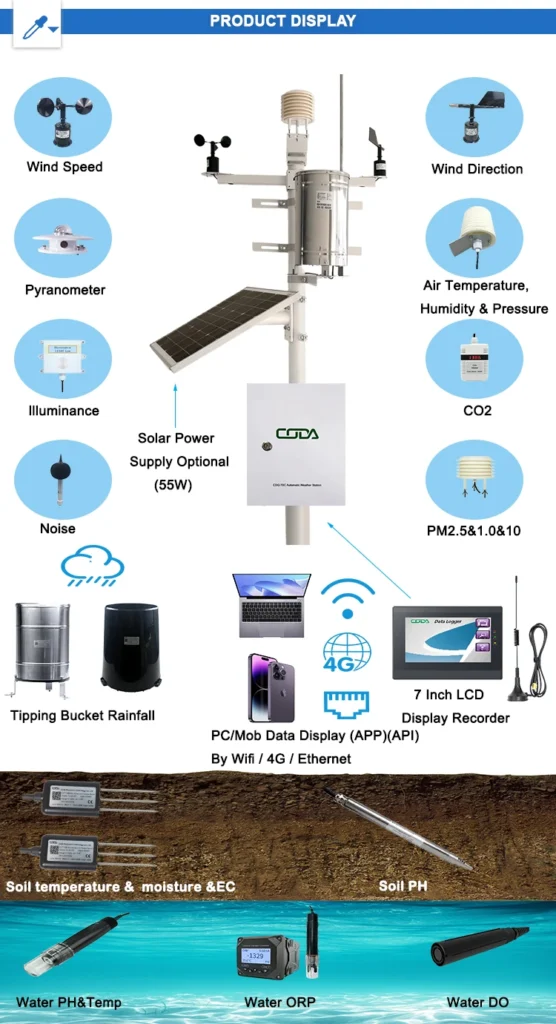
All sensors in the weather station connect to a central data logger. This device collects readings often, sometimes every few minutes. It stores them locally or sends them wirelessly to a central platform.
Data from the station can be viewed in software dashboards or mobile apps. It can also be exported to work with external systems. These systems include irrigation controllers and project management tools.
Many advanced weather stations are fully autonomous. They often use solar panels and backup batteries. This ensures uninterrupted use in remote or off-grid locations.
**Weather Station vs. Meteorological Station**
While these terms are often used the same way, they describe slightly different setups:
– A **meteorological station** is usually an official site run under strict rules.
These rules are set by national or international groups. One example is the World Meteorological Organization (WMO). These stations contribute to formal scientific research, weather models, and forecasting systems.
– A **weather station**, on the other hand, can refer to any system that collects weather data. These range from high-end professional systems used in industries to compact devices for personal use. Although many weather stations give reliable data, some do not follow scientific or regulatory standards. They may not calibrate their equipment properly. They may also collect data in the wrong way.
How Weather Stations Transmit Data
Modern weather stations are built to send data automatically. They use different ways to communicate, based on their locati0n and setup. Common ways it spreads include:
– Cellular networks
– Wi-Fi or local area networks
– Long-range radio frequency (RF) or LoRaWAN
– Satellite communication for isolated or offshore sites
These systems often upload data to a cloud platform. This allows real-time monitoring, alerts, and trend analysis. Many platforms also provide APIs (application programming interfaces). These let users add weather data to custom apps.
Installation and Data Accuracy
The exact locati0n of a weather station greatly affects how accurate its readings are. Stations should be installed in open areas, free from obstructions like buildings or trees.
Avoid nearby sources of artificial heat. Each sensor has clear placement rules. Temperature sensors are often mounted two meters above the ground. Wind sensors are placed ten meters high.
Improper placement can cause errors, mainly in temperature and wind readings. Therefore, careful site selection and proper installation are crucial for reliable data.
Applications of Weather Stations
Weather stations serve a wide array of industries by providing vital data that informs decisions. In agriculture, they help farmers track field conditions, plan irrigation, and reduce disease risks.
In construction, they help with site safety and planning for weather delays like strong winds or rain. For road maintenance teams, weather stations help predict road icing. This guides efficient use of salt or plows during winter storms.
Other key users include renewable energy operators who manage solar and wind power resources. Wildfire response teams use it for early risk detection.
Environmental scientists use it for research. Sports and event planners use it for scheduling. Marketing agencies use it to match campaigns with consumer behavior based on the weather.
Different Types of Weather Stations
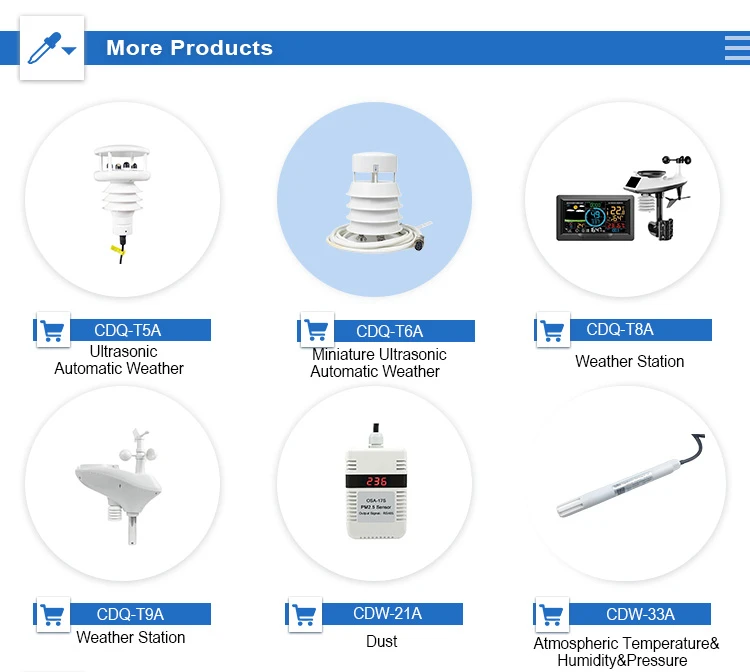
Weather stations come in different types to meet different needs.
– **Manual Weather Stations**: Rely on people to observe and record data.
– **Automatic Weather Stations (AWS)**: Fully automated systems built for continuous, unattended use over long periods.
– **Consumer-Grade Stations**: Compact, app-connected devices for personal, educational, or hobby use.
– **Professional-Grade Stations**: Built for precision and reliability, it is ideal for demanding settings like research labs or industrial use.
– **Specialized Stations**: Built for specific needs, like marine navigation, aviation safety, or wildfire monitoring. They often include unique sensors and housings for their use.
Each type is made for its specific purpose. All share a common goal. They collect accurate local weather data. This supports informed decisions.
Conclusion
A weather station is more than a set of tools. It is vital for understanding and responding to our changing climate. Whether used in a vineyard, along a highway, or on a solar farm, these devices deliver precise local insights.
They help improve planning, boost efficiency, and increase safety. As technology improves, weather stations are easier to access and connect. Their role in daily life and industry keeps growing.