What is a Sensor and What is it Made Of?

What is a Sensor and What is it Made Of?

A sensor, also referred to as a transducer, is a device designed to detect and measure specific information. It changes the detected information into electrical signals or other outputs based on set rules. This allows the data to be sent, processed, stored, shown, recorded, or controlled as needed.

Sensors have special features. These features are small and digital. They are smart, versatile, and linked to systems and networks. They are the first step in automated detection and control.
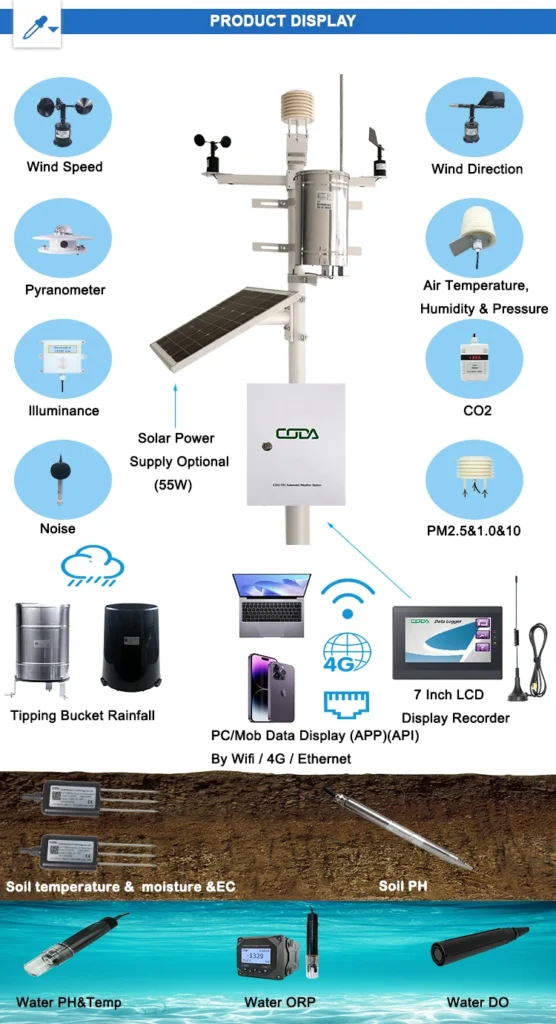
With new sensors, objects can mimic human senses like touch, taste, and smell. This makes them seem “alive.” Sensors can be grouped into ten types based on what they can sense. There are many types of sensors. They include:

– Thermal sensors

– Photosensitive sensors

– Gas-sensitive sensors

– Force-sensitive sensors

– Magnetic-sensitive sensors

– Humidity-sensitive sensors

– Sound-sensitive sensors

– Radiation-sensitive sensors

– Color-sensitive sensors

– Taste-sensitive sensors
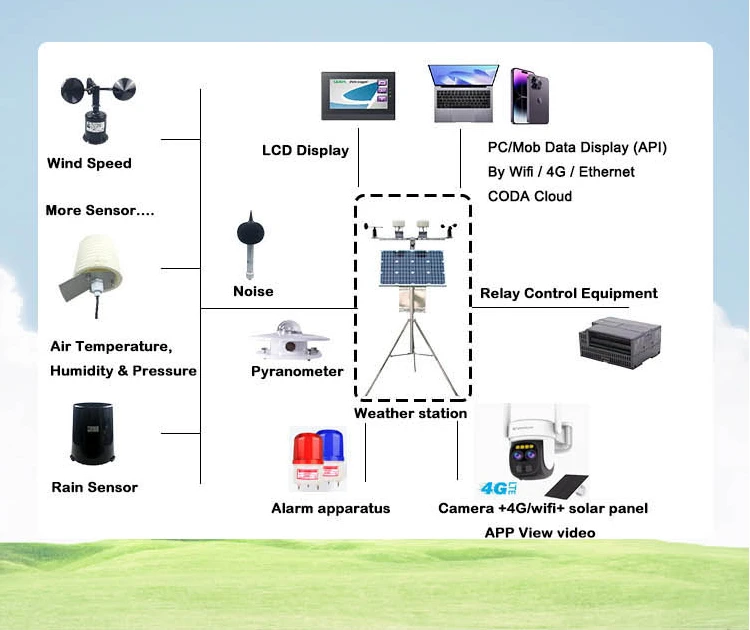
Components of a Sensor:

A sensor usually has four main parts. These are the sensitive element, the conversion element, the conversion circuit, and the power supply. Each part is important.

1. **Sensitive Element**:

This section works with the measured variable. It makes a physical signal that matches the measurement.

2. **Conversion Element**:

It changes the physical signal from the sensitive part into an electrical signal.

3. **Conversion Circuit**:

The circuit improves the electrical signals it gets from the conversion element. This means making the signals stronger or changing them in some way.

4. **Auxiliary Power Supply**:

An outside power source is often needed to run the conversion element and the circuit.
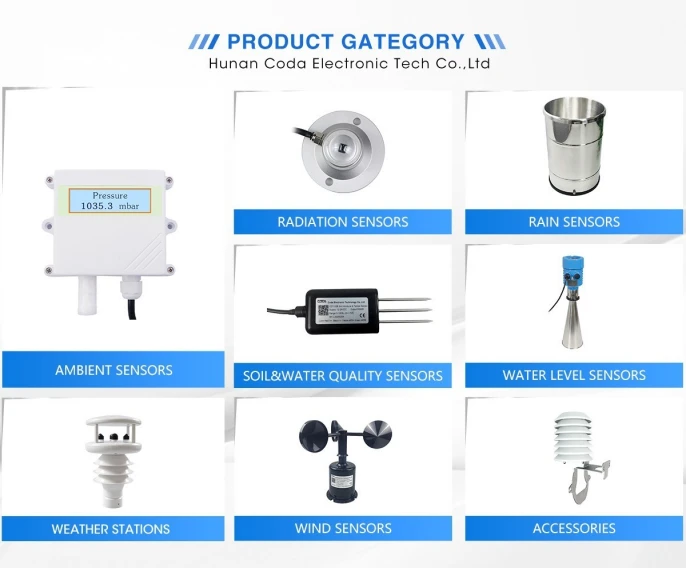
In meteorological monitoring, CODA, with strong expertise and extensive experience, has developed various monitoring solutions for customers.

CODA provides suitable solutions for every situation. This covers complex cities, vast wilderness, farming’s precise needs, and special industries such as aerospace and shipping.

When it comes to monitoring weather in cities, we set up a lot of smart sensors. These sensors unceasingly gather crucial data, including temperature, humidity, air pressure, wind speed and direction, and air quality. This helps city planners and environmental protection workers prepare ahead of time for weather – related disasters and pollution problems. As a result, city dwellers can enjoy a better quality of life and stay safe.

In agriculture, our tailored weather monitoring plan precisely measures things like soil moisture, rainfall patterns, and sunlight levels. This scientific data helps farmers plan farming well. They can then decide the best ways to water and fertilize their crops.It helps make farming smarter and more productive.

Related Post

Wireless Soil Moisture Sensor
Sensor-knowledge
Peter chen

Wireless Soil Moisture Sensor

In traditional farming, farmers manage fields using experience and scientific advice. However, the next major step needs a more creative approach.

Read More »
what is an orp sensor
Sensor-knowledge
Peter chen

what is an orp sensor

ORP sensor, which stands for Oxidation Reduction Potential sensor, measures the redox state of a solution.

Read More »
How do ultraviolet sensors work
Sensor-knowledge
Peter chen

How do ultraviolet sensors work

Ultraviolet (UV) radiation is a type of electromagnetic radiation. Its wavelengths are shorter than visible light but longer than X-rays. UV radiation ranges from about 10 to 400 nanometers (nm).

Read More »

Share your project needs. Let's discuss with CODA.

Please enable JavaScript in your browser to complete this form.

Welcome to Hunan CODA Electronic Technology Co., LTD

if you have any questions

Supported Payment :
Paypal
L/C
T/T