Are you aware of the invisible force that surrounds us, shaping our daily lives in profound ways? We are not talking about gravity. We mean atmospheric pressure, the weight of air in our atmosphere.
This force is not just a curiosity. It plays a key role in many parts of life. It affects weather forecasts and industrial processes.
At the heart of understanding and using this force is the atmospheric pressure detector. This vital device has applications across many industries.
In this article, we explore atmospheric pressure detectors. We explain how they work, their types, and their uses. We also look at how they affect daily life.
Introduction to Atmospheric Pressure Detectors
Atmospheric pressure detectors, also known as barometers, are devices designed to measure the pressure of the atmosphere at a given point. The principle behind these detectors is based on the link between gas pressure and gas volume.
There are several types of atmospheric pressure detectors, including mercury, aneroid, and digital barometers. Each type has its own way to measure pressure, from mercury columns to modern electronic sensors. Understanding how these detectors work is key to seeing their role in many uses.
Types of Atmospheric Pressure Detectors
Technology has grown and led to many types of air pressure detectors. Each type has its own benefits and uses.
- Mercury Barometers: These are the most traditional and simplest barometers.
They measure pressure by the height of a mercury column.
The column height changes with atmospheric pressure. While accurate, they are less commonly used today due to concerns about mercury’s toxicity.
- Aneroid Barometers: These use a series of evacuated bellows that expand or contract with changes in atmospheric pressure. The movement is sent to a dial, which shows a pressure reading. Aneroid barometers are smaller and safer than mercury barometers.
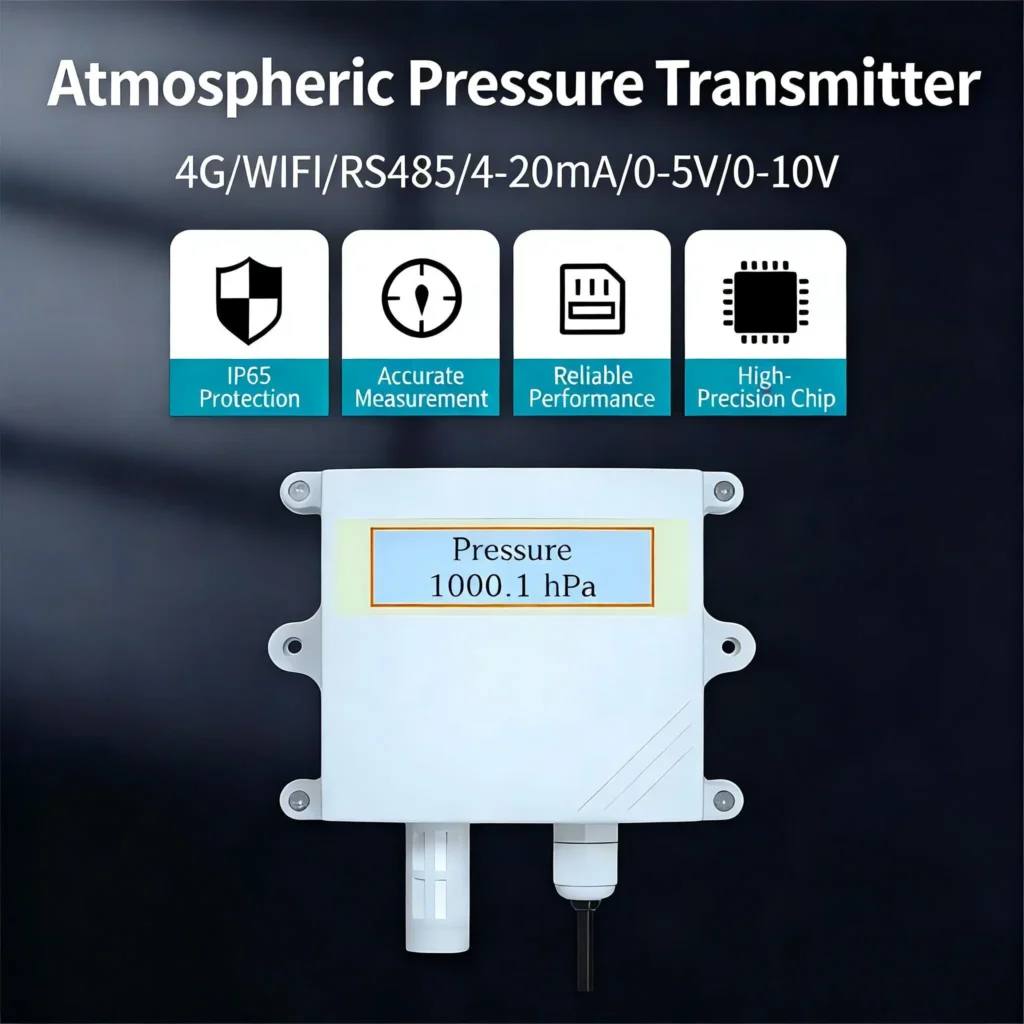
- Digital Barometers: These modern devices use electronic sensors to measure pressure. They then show it on a digital display. They are accurate and compact.
They often include extra features, like temperature measurement and data logging. Digital barometers are widely used in both consumer and industrial applications.
Applications of Atmospheric Pressure Detectors
Atmospheric pressure detectors have many important uses.
Weather Forecasting: One of the most obvious uses is in meteorology. Changes in air pressure are a key sign of weather patterns. Falling pressure often signals approaching bad weather, while rising pressure indicates clearing skies.
Aviation and Maritime: Pilots and sailors rely on accurate pressure readings to navigate safely. Understanding air pressure helps you predict weather and measure flight altitude.
Industrial Processes: In industries like manufacturing, atmospheric pressure detectors help monitor and control pressure-sensitive processes. This covers the production of electronics, chemicals, and pharmaceuticals.
Health and Fitness: Atmospheric pressure sensors are used in wearables and fitness trackers. They can track elevation changes. This helps hikers and athletes who train at high altitudes.
Choosing the Right Atmospheric Pressure Detector
With many atmospheric pressure detectors available, choosing the right one can feel hard. Several factors matter, like intended use, needed accuracy, and environmental conditions.
For outdoor use, detectors must be durable and resist extreme heat, cold, and humidity. For industrial applications, factors like system compatibility and control system integration are crucial. Digital barometers are accurate and flexible. They are often the best choice for many uses.
Conclusion and Key Takeaways
Atmospheric pressure detectors do more than measure air pressure. They are tools that help us understand and interact with our environment. Whether it predicts weather, guides safe travel, or improves industrial processes, these detectors are vital.
As technology evolves, we can expect more accurate air pressure detectors to appear. They will grow in use and importance. The key takeaways from this guide include how atmospheric pressure detectors work and the main types.
They also include seeing their many uses. It also means knowing how to choose the right one. By using air pressure detectors, we can find new options in many fields. We can also improve daily life.