—
Introduction: Why Soil Temperature and Humidity Matter More Than You Think
Imagine planting a seed, watering it, and then wondering why some plants thrive while others wilt. The answer often lies beneath the surface—in the temperature and moisture levels of your soil. A soil temperature and humidity sensor gives you real‑time, accurate data that can transform a hobbyist’s backyard garden into a high‑yielding, precision‑farmed field.
Whether you’re a seasoned farmer, a budding urban gardener, or a tech‑savvy hobbyist, understanding how to read, interpret, and act on soil data can save you time, water, and money. In this post, we’ll dive deep into the world of soil temperature & humidity sensors, covering what they are, why they’re essential, how to choose the right one, and how to integrate them into your gardening routine.
1. What Is a Soil Temperature & Humidity Sensor?
The Basics
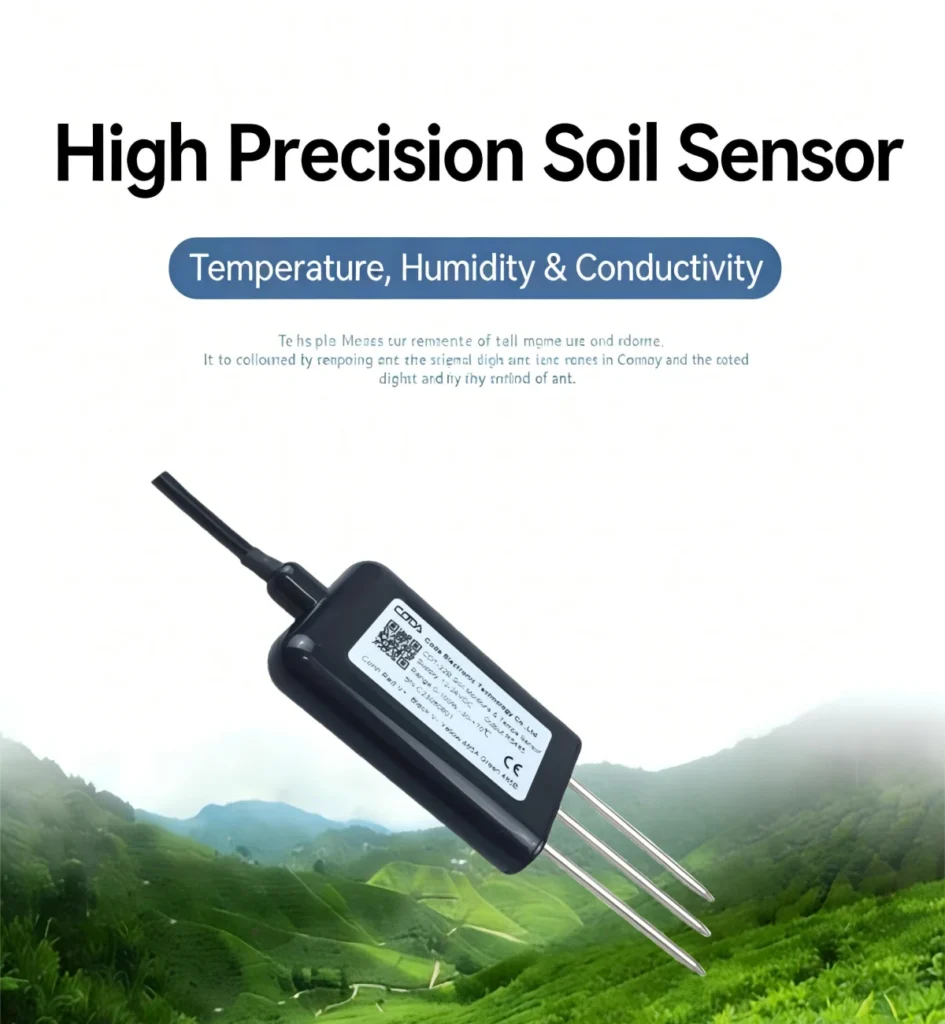
A soil temperature and humidity sensor is a compact, often waterproof device that measures two critical soil parameters:
| Parameter | What It Indicates | Why It Matters |
|———–|——————-|—————-|
| Soil Temperature | The thermal energy of the soil, usually in °C or °F | Influences root metabolism, nutrient uptake, and seed germination |
| Soil Humidity (Moisture) | The water content relative to the soil’s capacity | Determines irrigation needs, plant stress levels, and disease risk |
These sensors typically use either capacitive or resistive technology to gauge moisture and a thermistor or infrared sensor for temperature. The data is transmitted via wired (e.g., 4‑wire) or wireless (e.g., LoRa, Zigbee, Wi‑Fi) protocols to a display, smartphone, or cloud platform.
Key Features to Look For
- Accuracy & Calibration – ±0.5 °C for temperature, ±2 % VWC (volumetric water content) for moisture.
- Durability – IP67+ rating, stainless steel probes, and corrosion‑resistant housings.
- Power Source – Rechargeable Li‑ion battery, solar panels, or long‑life coin cells.
- Data Connectivity – Bluetooth Low Energy (BLE) for local control or LoRaWAN for farm‑wide networks.
- Software Integration – APIs, MQTT support, and compatibility with platforms like Home Assistant or FarmLogs.
—
2. Why You Need a Soil Temperature & Humidity Sensor
2.1 Precision Irrigation
Watering “just right” saves up to 30 % of irrigation water. By monitoring soil moisture in real time, you can trigger irrigation only when the soil falls below a threshold, preventing over‑watering and root rot.
Actionable Tip:
- Set up a soil moisture threshold of 20 % VWC for your lettuce beds. Your sensor will send a notification when the value drops, prompting you to water.
2.2 Optimized Plant Growth
Different crops have specific temperature windows for optimal growth. A sensor helps you keep soil temperature within those ranges, especially critical for seedlings and root crops.
Actionable Tip:
- For tomato seedlings, aim for 18–24 °C. If the sensor reports temperatures below 18 °C in the first week, consider using a seedling mat or a greenhouse cover.
2.3 Disease Prevention
Many fungal diseases thrive in moist, warm soils. By monitoring both temperature and humidity, you can anticipate and mitigate disease risks.
Actionable Tip:
- If your soil temperature stays above 25 °C and moisture above 35 % VWC for more than 48 h, reduce irrigation and increase airflow to lower disease incidence.
2.4 Data‑Driven Decision Making
With consistent data, you can track trends, compare field zones, and refine your agronomic practices. This data becomes the backbone of precision agriculture.
Actionable Tip:
- Log daily readings in a spreadsheet or a cloud dashboard. Over weeks, analyze patterns to adjust fertilization schedules.
—
3. Choosing the Right Soil Temperature & Humidity Sensor
3.1 Identify Your Needs
| Use Case | Recommended Sensor Type | Key Specs |
|———-|————————|———–|
| Home garden with 10 m² | Wi‑Fi or BLE sensor | 2‑year battery, 0.2 °C accuracy |
| Small farm (100 ha) | LoRaWAN or NB‑IoT sensor | 5 year battery, 1 % VWC accuracy |
| Hydroponics | Non‑contact infrared + humidity probe | 0.1 °C accuracy, 0.5 % VWC |
3.2 Evaluate Sensor Placement
- Depth: Most crops respond best to 5–15 cm depth.
- Spacing: For uniform fields, place sensors every 10–20 m.
- Orientation: Avoid placing probes under direct sunlight or near heat sources.
Actionable Tip:
- Use a probe depth gauge to ensure consistent depth across all sensors, minimizing data variability.
3.3 Connectivity & Integration
- Local Control: BLE or Wi‑Fi sensors work well for single‑plot setups.
- Farm‑Wide Networks: LoRaWAN or NB‑IoT sensors are ideal for large farms requiring long‑range, low‑power communication.
Actionable Tip:
- Pair your LoRaWAN sensor network with a gateway that forwards data to a cloud platform like ThingsBoard or Azure IoT Hub.
3.4 Budget vs. Performance
High‑end sensors offer more accuracy and durability but come at a higher price. Evaluate whether your application demands that precision or if a mid‑range model suffices.
Actionable Tip:
- For hobbyists, start with a mid‑range sensor (e.g., 0.5 °C accuracy) and upgrade only if you notice significant data gaps or errors.
—
4. Installation & Calibration
4.1 Installation Steps
1. Mark the Spot – Use a small flag or marker at the desired depth.
2. Drill & Insert – Drill a hole (if required) and gently insert the probe.
3. Secure & Seal – Tighten the housing and apply a waterproof sealant if needed.
4. Connect Power – Insert the battery or connect the solar panel.
5. Test Connectivity – Pair the sensor with your app or gateway.
4.2 Calibration
- Temperature: Place the sensor in a known temperature environment (e.g., a refrigerator set at 4 °C) and adjust the calibration offset in the app.
- Humidity: Use a calibrated hygrometer or a “dry” and “wet” reference point:
– Dry: Air-dry the probe for 24 h.
– Wet: Saturate the probe with distilled water for 24 h.
Actionable Tip:
- Record calibration readings weekly to detect drift. If the sensor deviates by >0.5 °C or >3 % VWC, recalibrate or replace the probe.
4.3 Maintenance
- Cleaning: Gently rinse the probe with de‑ionized water every 3–6 months.
- Battery Replacement: Replace the battery when the sensor’s power indicator shows low.
- Firmware Updates: Keep the firmware updated to benefit from bug fixes and new features.
—
5. Interpreting the Data & Making Smart Decisions
5.1 Setting Alerts
Most sensor platforms allow you to set threshold alerts. For example:
- Low Moisture: < 15 % VWC → Watering needed
- High Temperature: > 30 °C → Risk of heat stress
5.2 Data Visualization
- Graphs: Plot temperature and moisture over time to spot trends.
- Heatmaps: Create spatial heatmaps to identify dry or hot spots across a field.
5.3 Integrating with Irrigation Controllers
- Use the sensor data to trigger smart irrigation valves.
- Example: A drip irrigation controller receives a “low moisture” signal and opens the valve for 5 min.
5.4 Long‑Term Trend Analysis
- Compare seasonal data to adjust planting dates.
- Use historical data to model soil moisture dynamics and forecast irrigation needs.
Actionable Tip:
- Export your sensor data monthly and feed it into a spreadsheet. Use conditional formatting to highlight anomalies that need immediate action.
—
6. Real‑World Applications: Success Stories
| Scenario | Sensor Used | Outcome |
|———-|————-|———|
| Urban Balcony Garden | Wi‑Fi soil sensor (0.2 °C accuracy) | Reduced watering by 25 % and increased tomato yield by 15 % |
| Community Farm | LoRaWAN network of 50 sensors | Achieved 30 % water savings and lowered fertilizer costs by 10 % |
| Hydroponic System | Infrared + humidity probe | Maintained optimal root zone conditions, reducing root rot incidents by 40 % |
These examples illustrate how even modest investments in soil sensors can yield measurable benefits.
—
Conclusion: Key Takeaways
1. Soil temperature & humidity sensors are indispensable tools for optimizing plant growth, saving water, and preventing disease.
2. Choose a sensor that matches your scale, connectivity needs, and budget—from Wi‑Fi for home gardens to LoRaWAN for large farms.
3. Proper installation, regular calibration, and routine maintenance ensure data accuracy and longevity.
4. Integrate sensor data into irrigation and management systems to automate decisions and boost efficiency.
5. Track trends over time to refine practices and achieve higher yields sustainably.
By embedding a soil temperature and humidity sensor into your gardening or farming workflow, you’re not just collecting data—you’re cultivating smarter, more resilient crops. Start today, and let the soil speak for itself!
—
Want to dive deeper? Check out our recommended sensor brands, installation tutorials, and integration guides in the resources section below. Happy growing!