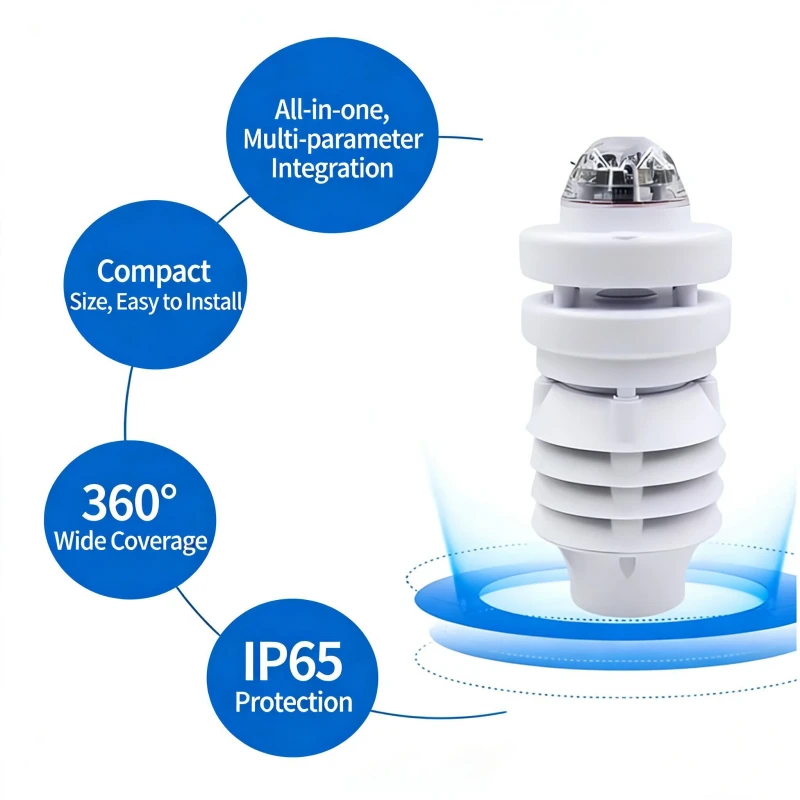
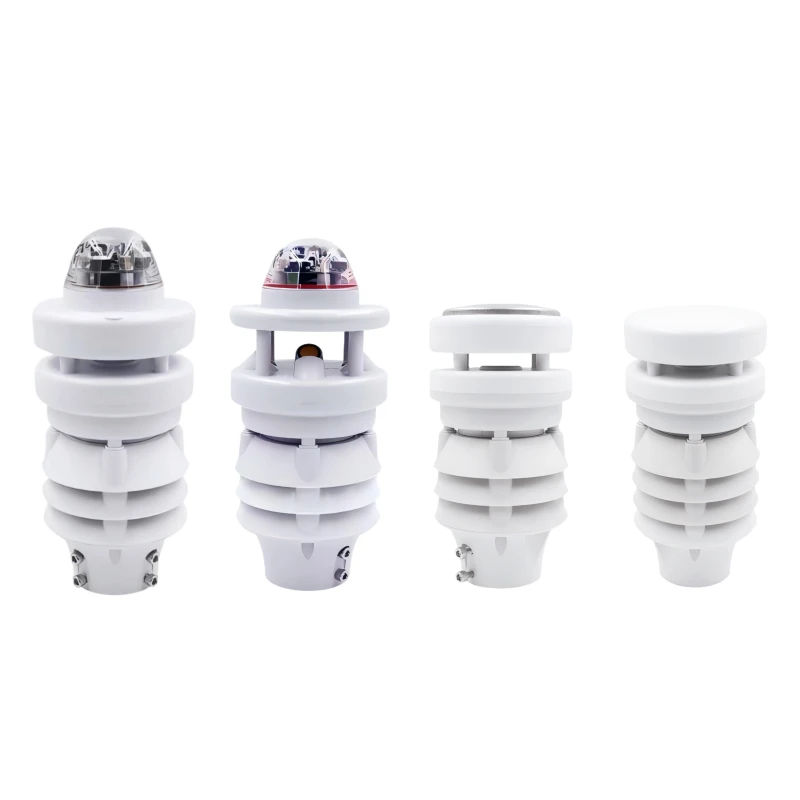
Six-Component Automatic Weather Station
A six-element weather station is an advanced system. It tracks and records six key weather elements on its own. These factors include temperature, humidity, wind speed, wind direction, precipitation, and air pressure.
This type of automatic weather station is widely used in modern weather observations. It provides continuous monitoring and recording of these six parameters. It also sends real-time data.
These stations help with real-time weather tracking, early warnings, and forecasting. They are widely used in many fields. These include meteorology, agriculture, forestry, water management, aviation, and environmental protection.
Overview of Six Weather Elements
1. **Temperature**:
This measures air temperature, usually shown in degrees Celsius (°C). Temperature is an important factor in daily life and work.
2. **Humidity**:
Humidity shows how much moisture is in the air. It is usually given as a percentage. It affects human comfort, farm irrigation, and many industrial processes.
3. **Wind Speed**:
This shows how fast air moves. It is expressed in meters per second (m/s) or in kilometers per hour (km/h). Wind speed affects renewable energy production, like wind power.
It also affects transportation, such as air travel and sea navigation. It influences safety measures for disasters, like wildfires.
4. **Wind Direction**:
This shows where moving air comes from. It is given in angles or cardinal directions (for example, north or east). Wind direction matters for aviation, maritime operations, and agricultural spraying.
5. **Precipitation**:
This is the amount of water, in liquid or solid form, that falls from the air. It is measured in millimeters (mm). It is a key factor for farming, water management, and city drainage systems.
6. **Barometric Pressure**:
Barometric pressure is the force of the atmosphere pressing on a specific area. It is measured in hectopascals (hPa) or millimeters of mercury (mmHg). Fluctuations in this parameter are closely tied to changing weather patterns and are key to forecasting.
Working Principle of the Six-Element Weather Station
The operation of a six-element automatic weather station relies on the following steps:
1. **Data Acquisition**
– **Temperature Measurement**: Temperature sensors use thermocouples or thermistors to measure the air temperature around them.
– **Humidity Measurement**: Relative humidity sensors use capacitive or resistive technology to measure moisture in the air.
– **Barometric Pressure Measurement**: Barometric pressure sensors use strain, resistance, or pressure sensing to measure real-time atmospheric pressure.
– **Wind Speed and Direction Measurement**: Wind speed sensors measure wind speed in real time.
– They use spinning parts or ultrasonic waves to do this. Wind direction is measured with mechanical sensors or wind compasses.
Each measurement is captured all the time with high accuracy. It provides valuable data for meteorology, resource planning, and environmental monitoring. It also supports disaster prevention and helps people make better decisions in transport and agriculture.
With the widespread use of automated systems like the six-element weather station, these industries get reliable weather data. This helps them reduce risks and improve operations.
Precipitation Collection: The precipitation sensor uses a tilting mechanism or photoelectric principles to measure rainfall levels in real time.
2. Data Conversion and Processing:
The sensor captures analog signals. An analog-to-digital converter then turns them into digital signals.
These signals are then processed and calibrated by the data processing unit. It includes a microprocessor, memory, and a program control unit. This helps ensure accurate and reliable data.
3. Data Transmission:
The processed data is sent immediately. It goes to a central data center, a cloud server, or a monitoring platform. It uses wireless technologies like GPRS, 3G, 4G, 5G, or LoRaWAN.
4. Data Storage:
After the data is sent to the right place, it is stored. It is kept in a central database. It may also be stored in a cloud storage system. This makes it easy to access, analyze, and compare past data trends.
5.Data Analysis and Visualization:
Meteorological data is analyzed in real time with specialized software. The results show as charts, curves, or other visuals in data visualization tools. This helps users understand current weather conditions clearly.
In conclusion, accurate sensors and advanced logging systems help the automated six-element weather station. It captures and records key parameters, including temperature, humidity, pressure, wind speed, wind direction, and rainfall.
This system delivers precise weather data that is vital for forecasting, climate studies, and resource management. It gives real-time data that helps make forecasts more accurate. And it also supports climate change research. It also guides resource decisions and helps reduce disaster risks.
As science and technology advance, these stations keep improving their capabilities to meet rising demand for full meteorological services.
Applications of the Six-Element Automatic Weather Station
The data from these stations provide useful insights across many fields. Below are some detailed examples of how they can be used:
1. Agriculture:
– Crop Growth Monitoring: Temperature, precipitation, humidity, and other weather station data are key for crop growth models. These models forecast crop development and yields.
– Irrigation Optimization: Precipitation data analysis helps farmers plan irrigation schedules and choose the right water amounts.
– Disease Prevention: Weather station data can help predict crop disease outbreaks caused by fungi or viruses. This allows farmers to act early.
2. Aviation:
– Flight Planning: Accurate air pressure and wind readings are key for planning routes and keeping flights safe.
– Airport Operations: Weather station insights help airport managers make operational decisions during bad weather.
– Accident Investigations: Meteorological data plays a key role in aviation accident analysis. It helps assess how weather may affect incidents.
3. Water Management:
– Flood Warnings: Weather station data feeds flood alert systems to warn nearby communities and relevant authorities of potential risks.
– Hydrological Modeling: Meteorological data are key inputs for predicting river flows and reservoir capacity.
– Resource Allocation: Precipitation and evaporation data help guide decisions for efficient use of water resources.
4. Architecture and Engineering:
– Structural Design: Architects and engineers use weather station data, like wind speed and snow depth, to design strong structures.
– Construction Scheduling: Weather data helps plan construction work to reduce delays from bad weather.
5. Transportation:
– Road maintenance: Weather stations give temperature and precipitation data. This helps transportation departments choose the best times for snow removal and road maintenance.
– Public transportation: Weather forecasts from weather stations help bus companies plan routes and assign vehicles well.
6. Environmental protection:
– Atmospheric pollution monitoring: Weather stations give air pressure and wind speed data. This data helps track and predict how air pollution spreads.
– Climate change research: Weather stations collect long-term weather data. This data helps scientists study climate trends and patterns. It supports climate change research.
These examples show the value of weather station data in many fields. It boosts efficiency and safety. It also reduces risks and losses from weather events. With new technology, weather station data will be used in more ways.