Automatic Weather Station for Agriculture
An automatic weather station is a device that detects and measures weather data. It converts these observations into electrical signals or other types of signals based on specific rules.
These signals are processed, sent, and stored to meet different information needs. This article looks at portable weather stations and agricultural weather stations. It talks about their roles and features.
1. Portable Weather Station
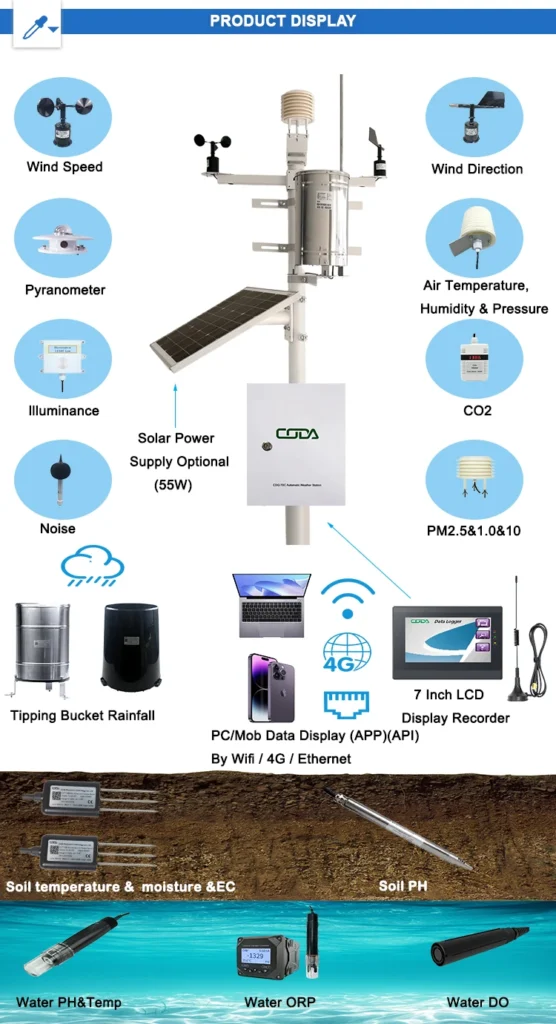
The main purpose of a portable weather station is to track important weather factors that affect farming. These stations give accurate weather data. This helps farmers get ready for weather challenges.
It also encourages them to try new types of crops. They can save money and increase their profits. Portable weather stations are very helpful for improving modern farming. They offer many benefits.
The sensors found in portable weather stations usually include:
– Air pressure sensor
– Light intensity sensor
– Temperature and humidity sensor
– CO2 sensor
– Wind direction sensor
– Wind speed sensor
– Noise sensor
– Particulate matter (PM) sensor
2. Agricultural Weather Station
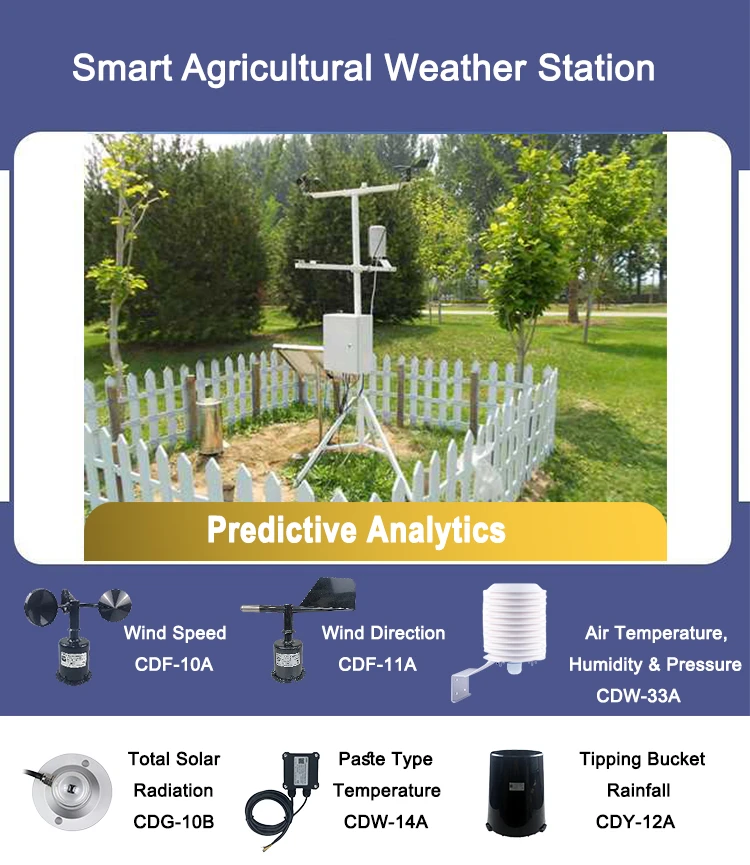
Agricultural weather stations check the weather on farms in real-time. Their main focus is on the environment and soil factors. This includes weather conditions and soil features.
These properties can be both physical and chemical. These stations help make choices in irrigation systems and bigger farming information networks.
Components of an Agricultural Weather Station:
– **Weather Sensor**: This part measures different weather factors.
It checks wind speed and direction.
And it also measures PM2.5 levels, light levels, and carbon dioxide levels.
It also checks air pressure, rainfall, temperature, humidity, and soil conditions.
Finally, it tracks precipitation, including rain and snow. You can choose specific sensors based on your agricultural needs.
– **Support Framework**: Provides structural stability for the station.
– **Data Collector and Transmission Module**: Gathers and sends collected data to a central system for analysis.
– **Solar Panel and Battery**: Provides a reliable power source for ongoing operation.
– **Computer Terminal**: It serves as the main control unit for storing, displaying, and analyzing data.
Where to Buy Weather Stations?
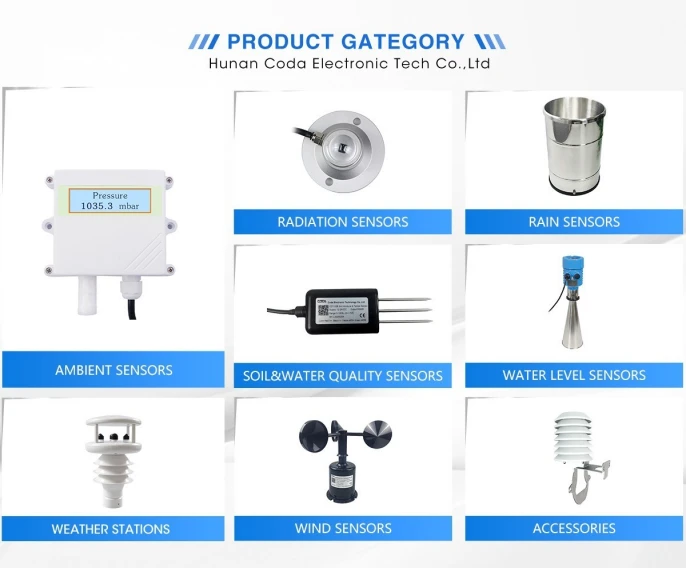
Coda is a well-known high-tech company. It provides a wide range of innovative products, services, and expert help in environmental monitoring. The company provides advanced sensing solutions backed by cutting-edge research and technology.
Unique Advantages of Coda Sensors:
– **Low Power Use**: Most sensors run on solar power or need little energy. This makes it easy to supply power in remote areas.
– **High Protection Standards**: These sensors have an IP65 rating or higher. They resist water, moisture, and dust. This makes sure they work well for a long time.
– **Easy Installation**: The sensors are designed simply, which makes them easy to install. This is very helpful in rural areas where people might not have technical skills. Also, troubleshooting and maintenance are easy. This helps lower overall maintenance costs.
– **Corrosion Resistance**: The sensors are made of stainless steel. They are made to work in tough farming conditions. And they are rust-proof and resist corrosion from electrolytic reactions. They also stand up to salty or alkaline soils, ensuring they last in different conditions.
conclusion
In summary, automatic weather stations are very important. This includes both portable ones and those made for farming. They provide useful data that helps improve productivity and sustainability. Coda is a leading provider of strong, dependable, and user-friendly sensors for farming.