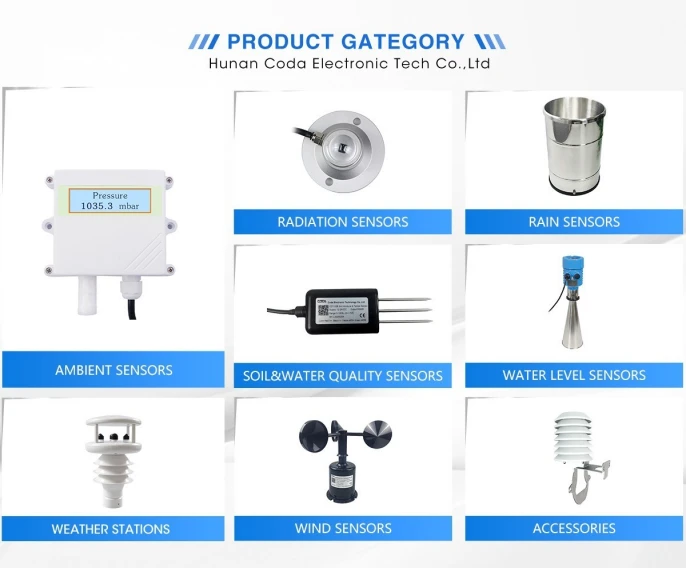
Dust Monitoring Equipment and Types
At construction sites, a lot of dust is created by workers and machines. This dust spreads into the air. It moves and turns into fine particles. These particles can be easily inhaled.
These particles cause air pollution and reduce visibility. They often have harmful substances. These include carbon, hydrogen, sulfur, chlorine, fluorine, heavy metals, and even bacteria. Breathing in these particles can harm human health.
The dust monitoring system has special tools and a cloud platform. You can access it from anywhere. It collects and analyzes data.
It also sends alarms when dust levels are too high. This system allows you to check outdoor dust levels all day, every day.
Understanding the Dust Monitoring System
The dust monitoring system uses Internet of Things (IoT) and artificial intelligence. It gathers information from sensors. These sensors measure various factors.
They check PM2.5, PM10, noise levels, wind speed, and wind direction. They also check temperature, humidity, atmospheric pressure, and Total Suspended Particles (TSP).
This information shows up in real-time on LED screens. It is also uploaded to a monitoring platform. You can review it on PCs or mobile apps.
The system allows for remote monitoring and quick decision-making. This helps to detect and prevent dust pollution accurately.
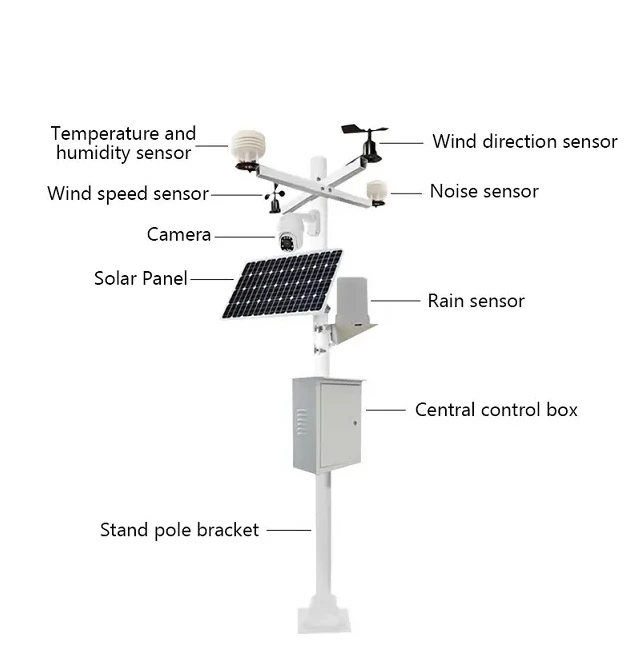
Components of a Dust Monitoring System
Detection Components
– **Dust Monitoring**:
The system has PM2.5 and PM10 sensors. It automatically checks dust levels all the time. Data is collected every minute. It is then uploaded right away for analysis and reporting through server programs.
– **Noise Monitoring**:
The system has outdoor noise sensors. These sensors help keep things safe and monitor them. They also provide accurate data, even in outside conditions.
– **Weather Monitoring**:
It has sensors for wind speed, direction, and solar radiation. This gives us important weather information. It helps scientists predict how dust moves based on wind patterns.
Data Processing
The processing unit is the system’s main hub. It collects data from all sensors and analyzes it based on needs.
Then, it uploads the refined data to a cloud platform. It also shows local environmental data. This data is synced with video surveillance images.
Data Visualization
Real-time monitoring results are shown on LED display screens for quick viewing. These alerts help construction workers and nearby residents. They allow quick action when pollution or noise is too high.
Data Platforms
This is usually a cloud platform for tracking and analyzing dust online.
Types of Dust Monitoring Equipment
Different environments need different types of dust monitoring devices. These devices are mainly divided into two categories. The first is pump-suction dust monitoring equipment. The second type is equipment for monitoring dust through diffusion.
Pump-Suction Dust Monitoring Equipment
Pump-suction systems use laser scattering principles. They offer more accuracy than diffusion-type devices. A pneumatic flow pump lowers dust buildup and keeps performance steady over time.
These devices have straight-through measurement cavities. This design helps prevent particle buildup inside over time. The electric control box has dehumidification systems. These systems effectively stop moisture-related errors or false alarms.
This equipment is very durable. It is made for outdoor use and has strong weatherproof housing. This design ensures it works well in tough conditions. They can be placed in open areas or put on poles for better coverage.
Monitoring Capabilities Include: PM2.5, PM10, noise levels, temperature, humidity, wind parameters (speed/direction/power), atmospheric pressure, CO, NO2, SO2, O3.
Key Features:
1. Uses high-precision PM sensors (PM2.5/PM10/TSP) with filtration and dehumidification for accurate readings.
2. Weatherproof casing protects electronic parts from damage caused by the environment. This helps them last longer.
3.It allows easy data uploads to software using GPRS or 4G connections. It also supports external LED screens for real-time data display.
These solutions improve monitoring and give useful insights to reduce pollution on construction sites.
Installing Coda dust monitoring equipment needs careful attention to detail. This ensures it works well and performs at its best.
Here is a guide. It covers the main points of installing the diffusion dust monitoring device. It also highlights key features and benefits.
Overview of Diffusion Dust Monitoring Equipment:
This equipment works by using laser scattering. It has a fan that serves as its power source. This design allows for efficient operation with low energy use.
This structure is made for outdoor use. Its pole-mounted design can handle windy conditions well. A strong, waterproof LED display shows real-time environmental data clearly. It quickly highlights important values.
Details of the Bracket:
The bracket for this monitoring equipment has two options: single beam and double beam. This allows for flexible installation based on the needs of your environment.
Measurement Capabilities:
This system can monitor many different parameters. These include PM2.5, PM10, noise levels, temperature, humidity, wind speed, wind direction, TSP (Total Suspended Particles), and atmospheric pressure.
Key Features:
– Designed with a channel to collect solar radiation data. This helps monitor temperature, humidity, noise, PM2.5, PM10, air pressure, and TSP.
– The system has one channel for wind speed, one for wind direction, and one for four gas measurements.
– It has a relay output channel. This connects to other control systems, like fog cannons, to manage particle levels smartly.
– It has a 485 slave output channel. It also supports data uploading to monitoring platforms using GPRS or 4G.
– You can connect to an external LED screen that is 54cm by 102cm. This screen shows environmental data live.
Notable Design Advantages:
The device uses laser scattering technology and a fan system to measure particles accurately. A built-in insect-proof net prevents interference with sensor readings caused by small insects. The system measures levels of particulate matter from 0 to 1000 µg/m³.
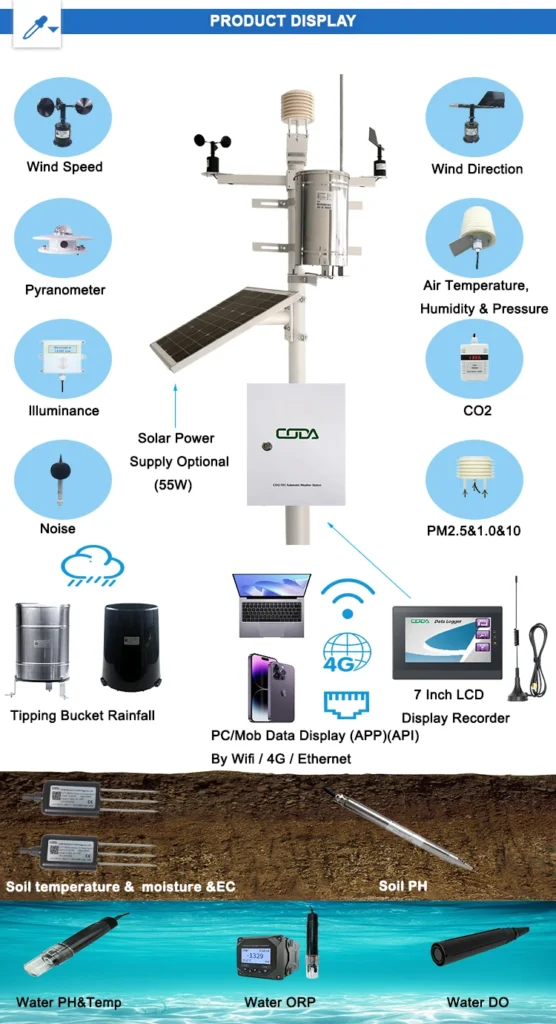
System Benefits:
1. **Automatic Collection**:
High-precision sensors keep track of PM10, PM2.5, TSP, wind speed, wind direction, and other important data all the time. It works smoothly all day and night with very few mistakes, providing dependable results.
2.**Data Analysis**:
A strong cloud platform serves as the monitoring tool. It shows real-time values with numbers or interactive dashboards.
Historical data is saved automatically. This allows for detailed analysis and visualization using curves or graphs. Users can download data that fits their needs.
3. **Remote Monitoring**:
The system allows access from different devices. This includes PCs, mobile apps, and platforms like WeChat public accounts. This feature lets users check real-time data easily. It also offers editing tools for changing settings from afar.
4. **Over-limit Alerts & Intelligent Linkage**:
When environmental levels go above set limits, the system sends alerts.
These alerts can be text messages, phone calls, or notifications from WeChat. It also sends commands to turn on fog cannons and other devices. These help keep dust levels low in the air. This makes the environment healthier.
Installing Coda dust monitoring equipment improves environmental tracking. It also helps operations run smoothly with advanced automation and a user-friendly design.