



What is a Personal Weather Station?
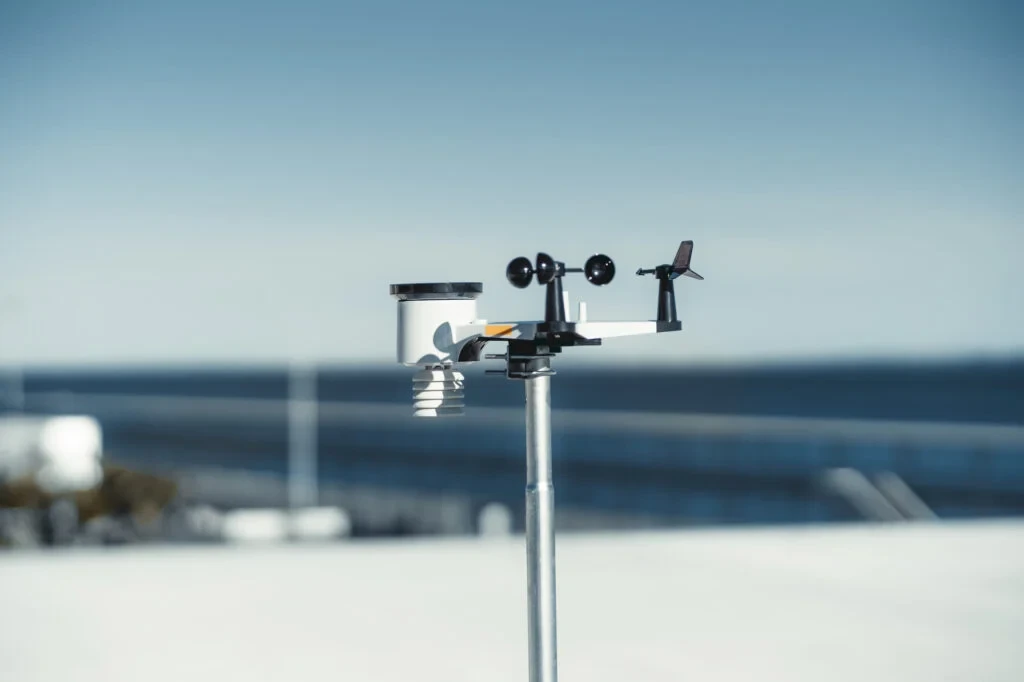
A personal weather station is a set of weather tools you can install at home or at work. While the number and type of instruments can change, most stations measure temperature. They also measure humidity and air pressure.
And they measure rainfall too. They also measure wind speed and wind direction. Below is a clear breakdown of these sensors and what they do:
**Temperature: Thermocouples, RTD Probes, Thermistors**
– **Thermistors**: These include a temperature-sensitive resistor made from metal oxides. It is sealed in epoxy or glass. The resistance changes with temperature, and advanced thermistors provide a linear response across their measurement range.
– **Thermocouples**: Made by joining two different metals, thermocouples produce a voltage. This happens when the junction and reference temperatures differ. This voltage links to the temperature difference through the electromotive force in the metals.
– **RTD Probes (Resistance Temperature Detector Probes)**: Made from pure metals like platinum. These probes measure temperature because electrical resistance increases as temperature rises. A small positive change in resistance indicates a one-degree rise in temperature.

**Relative Humidity: Hygrometer**
Hygrometers often use capacitor-based sensors to measure relative humidity. These sensors use a polymer coating that captures water molecules from the air.
It does this through a thin metal electrode. The absorbed water alters the capacitance, which in turn reflects changes in relative humidity. To provide precise data, the humidity sensor is typically placed near the temperature sensor. This placement helps link relative humidity to temperature to calculate values like the dew point.
**Pressure: Barometer**
Electronic pressure sensors rely on a force collector that measures deformation caused by an applied force over a specific area. This deformation changes a semiconductor’s or metal’s electrical resistivity. This change is then converted into digital data from an analog voltage output.
**Rainfall: Rain Gauge**
Most rain gauges at home weather stations use self-emptying tipping bucket technology. These devices have an 8-inch collection area for high accuracy.
They measure rainfall in 0.01-inch steps. A seesaw-shaped collector tips when it fills. Protective measures, such as debris and insect meshes, are included to ensure reliable operation.

**Wind Speed and Direction: Anemometer**
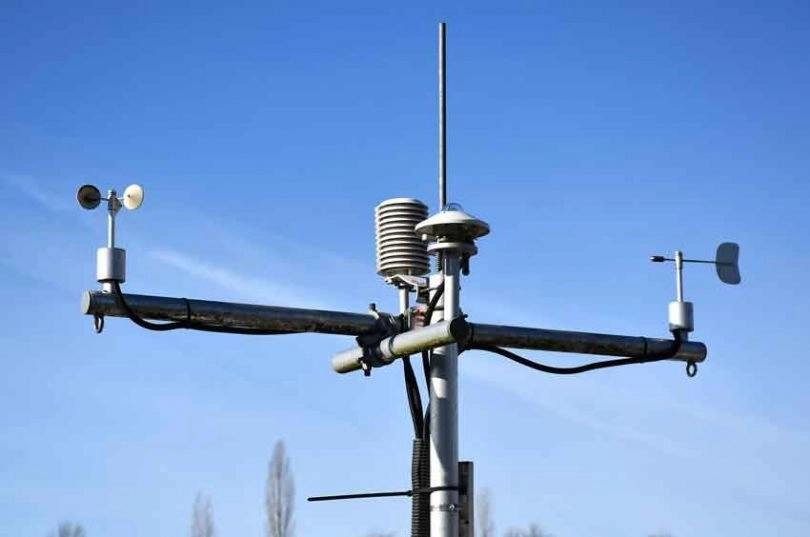
Anemometers come in many designs. They measure wind speed and direction.
1. **Cup Anemometer with Wind Vane**:
This device has three cups to measure wind speed. It also has a wind vane to show wind direction. It provides continuous readings.
The vane detects wind direction by pointing into the wind.
It outputs an analog signal that matches the azimuth angle. Meanwhile, the cups rotate at varying speeds based on wind intensity. The output voltage is scaled for accurate speed readings, based on cup size and rotation diameter.
2. **Propeller or Vane Anemometer**:
This instrument uses a four-blade propeller and a wind vane. It measures wind speed and direction. The vane turns to face the wind, showing its direction through an analog signal. The propeller’s rotation rate is directly linked to wind speed, and the speed is recorded.
3. **Sonic Anemometer**:
Using ultrasonic sound waves, this instrument measures wind speed. It does this by timing sound pulses between ultrasonic sensors. It can capture three-dimensional wind speed and can measure up to 20 Hz. This makes it ideal for detecting turbulence.
Personal weather stations give real-time data. This helps you understand local weather better.
It also helps you make informed choices based on weather patterns. Whether for personal interest or professional use, these tools offer valuable insights into the dynamics of your environment.