


Advantages and disadvantages of soil moisture sensors
Soil moisture sensors check how much water present is in the soil. They give important information for irrigation, managing crops, and checking the environment.
Farmers, researchers, and other users gain a lot from these technologies. They give important details about how wet the soil is.
Different types of sensors are available. Each type uses its own way to measure soil moisture. Here are some common types:
1.Tensiometers are sensors:
That measure soil moisture. They do this by checking the tension needed to pull water from the soil. They have a ceramic cup that is porous.
This cup is linked to a tube filled with water and a vacuum gauge. As the soil dries, the tension goes up. The gauge measures this change.
2. Capacitance Sensors:
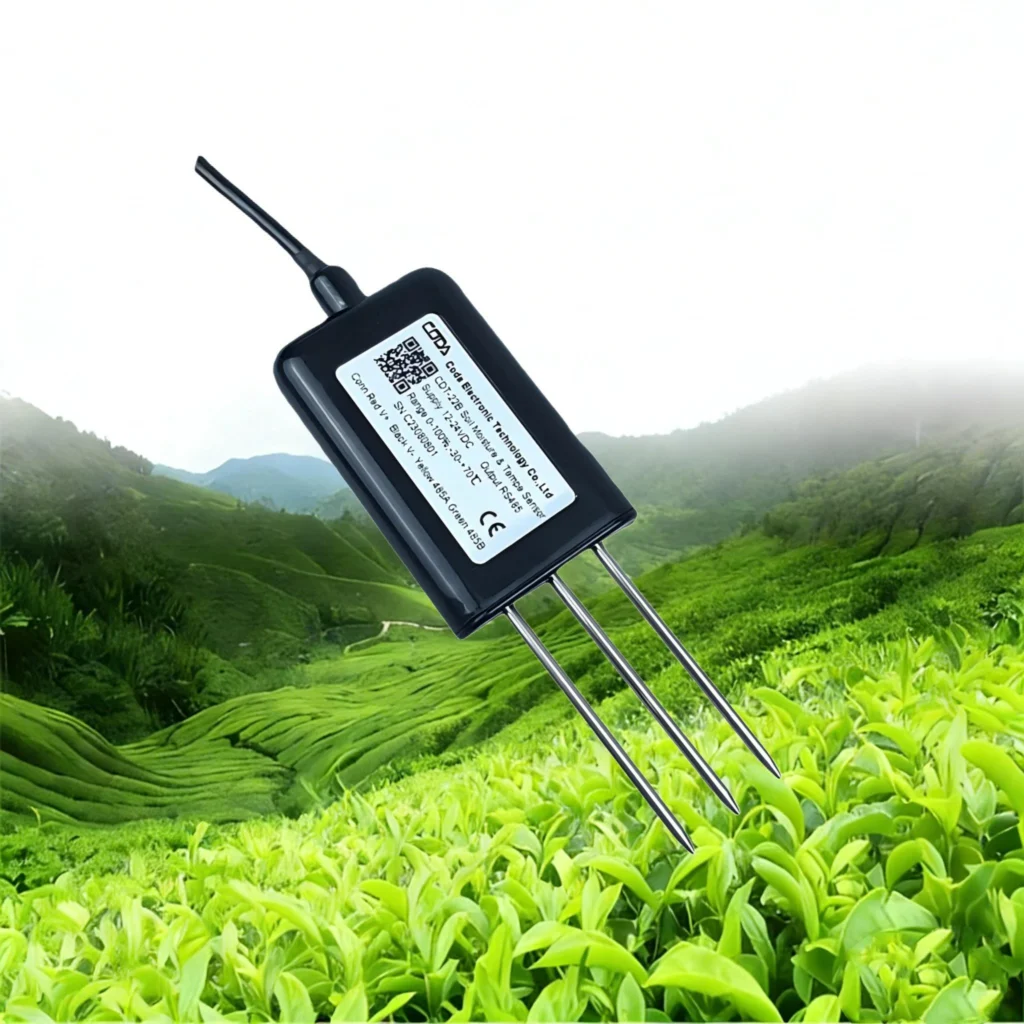
These devices measure soil moisture by checking the soil’s dielectric constant or electrical conductivity. Capacitance sensors usually have two metal electrodes. They detect changes in soil’s electrical properties due to different moisture levels.
3. Time Domain Reflectometry (TDR) Sensors:
TDR sensors measure soil moisture. They do this by timing how long an electromagnetic pulse takes to travel through the soil using a probe.
As soil moisture changes, it affects the soil’s dielectric properties. This change affects how long the pulse takes to travel. This helps us estimate moisture levels.
4. Frequency Domain Reflectometry (FDR) Sensors:
FDR sensors, like TDR sensors, use specific frequencies. They measure the electrical resistance signals reflected by the soil. These signals show how much moisture is in the soil.

**Advantages of Soil Moisture Sensors**
1. **Water Conservation:**
These sensors provide accurate, real-time data on soil moisture levels. This helps farmers water their crops only when needed. This cuts down on water waste and supports sustainable practices.
2.** Improved Crop Health and Yield:**
Sensors help crops receive the right amount of water at the right times. This helps plants grow better, lowers their stress, and boosts overall yield.
3. **Improved Resource Efficiency:**
Soil moisture sensors help fine-tune irrigation schedules, avoiding overwatering or underwatering. This conservation extends beyond water to energy and fertilizers as well.
4. **Cost Savings:**
These devices help lower costs by using less water and managing resources better. This lowers costs for water, energy, and fertilizer.
5. **Time-Saving:**
Real-time moisture data cuts down the need for manual soil sampling and lab tests. This gives quicker insights for faster decisions.
Downsides of Using Soil Moisture Sensors:
1. Initial Cost:
Installing soil moisture sensors requires a significant upfront investment. This includes buying the sensors and any needed data loggers or monitoring systems. This financial need may create problems for farmers with limited budgets.
2. Maintenance and Calibration:
Regular upkeep and calibration are essential to maintain the accuracy of soil moisture sensors. This may include regular recalibration, cleaning, and checking sensors for damage or faults. This adds to the overall effort needed.
3. Variability Among Sensors:
Not all soil moisture sensors provide the same level of accuracy or reliability. Choosing a sensor that fits a specific soil type and environment is important for getting reliable measurements.

4.Soil characteristics can influence sensor readings.
Factors like soil texture, type, and compaction level play a role. As results may vary across different soil conditions, users need a clear understanding of sensor limitations in specific scenarios.
5. Installation Complexity:
To ensure accurate data, it is important to install soil moisture sensors correctly. This process can be tough and needs skill to ensure proper placement. It also needs good contact with the soil and few disruptions from roots or other objects.
Soil moisture sensors have some drawbacks, but they offer many benefits. They help use water more efficiently. They also promote resource conservation.
These sensors improve crop health and lower costs. Choosing the right sensors and taking good care of them can enhance their benefits in agriculture.