


A Beginner’s Guide to Understanding Anemometer measures
An anemometer is a tool that measures the speed of the wind. It is a common tool found in weather stations. All anemometers come in different types.
Anemometer work by measuring the wind force on a moving part. Meteorologists rely on these tools to analyze weather patterns and better predict storms. Anemometer is an instrument are used to measure both average wind speed and gusts.
Gusts are short, strong bursts of wind. They come in manual and digital versions. You can view the outputs on the device or on a computer.

Why Anemometers Are Essential
Anemometers play a crucial role in understanding and predicting weather conditions. They measure wind speed to provide details about the direction and strength of the wind.
This data is important for predicting storms and other weather events. Anemometers do more than help predict the weather. They are also useful for looking at places for wind energy projects.
Selecting the Right Anemometer
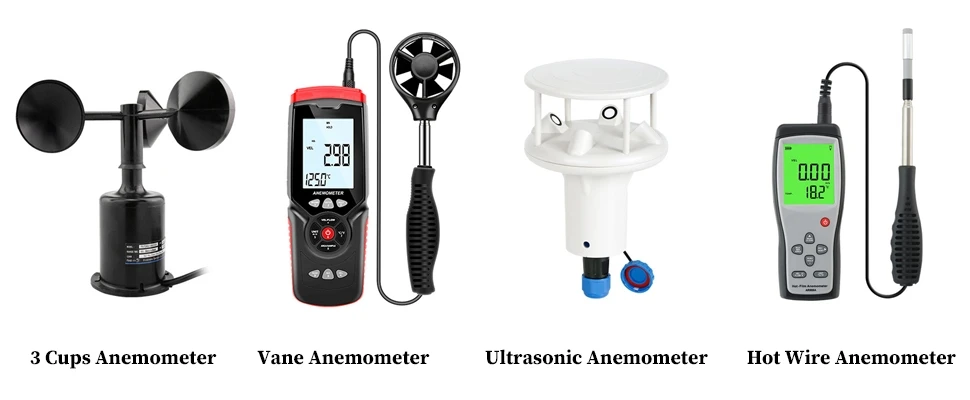
There are many types of anemometers. They all work by measuring how the wind impacts a moving or spinning object. Different models meet different needs.
They have specific features made for various uses. Here are descriptions of some of the most common types:
**Cup Anemometer**
A cup anemometer is used to measure wind speed. It has a simple and effective design. This type features three or four cups attached to horizontal arms mounted on a vertical axis.
As the wind blows, the cups spin faster when the wind is stronger. You can find these tools in weather stations and in aviation. Some new models can measure how fast the wind blows and which way it goes.
Cup anemometers have several benefits. They are cheap and give accurate readings, even when the wind is low. However, they might not work well in strong winds and can get damaged in bad weather.
Cup anemometers are still very popular for measuring wind. They are reliable tools that are also easy on the budget.


**Hot Wire Anemometer**
Hot wire anemometers serve as a valuable tool in meteorology. They use a hot wire to check how fast the wind is blowing. This method is very accurate. It can find small changes in wind speed.
The process cools the hot wire with air as the wind blows over it. This creates temperature changes that show wind speed. The sensors change the constant temperature shift into an electrical signal. This signal is then processed to find the wind speed.
Hot wire anemometers are cheap, easy to use, and very accurate for measuring low speeds. However, they do not work well in very bad weather or strong winds. These devices can be used in HVAC systems to check airflow.
**Pressure Tube Anemometer**
A pressure tube anemometer is made to measure wind speed and wind vane. It is a long tube with openings at the end. It is attached to a pole or mast.
As the wind blows, the air pressure in the tube goes up. This makes the liquid inside go up. The higher liquid level shows how to measure the wind speed.
Pressure tube anemometers are very accurate and work well in many wind conditions. They can handle light winds and strong gusts.
However, they usually need to be used with a manometer to get readings. They are often used in weather stations and in aviation. They are a reliable choice for professional use.
**Ultrasonic Anemometer**
An ultrasonic anemometer uses sound waves to measure how fast the wind blows and which way it goes. Ultrasound signals move between two transducers.
The device measures how long it takes for the signals to come back. It uses this time to find the wind speed. Wind direction comes from studying signal changes in different pulses.
This type of anemometer has no moving parts. It is resistant to wear from rain and strong winds. Ultrasonic anemometers are precise, dependable, and simple to use.
They are popular for checking the weather. They also help improve industrial processes and evaluate wind energy projects.


Uses of Anemometer
An anemometer is a useful tool that measures how fast the wind blows and which way it goes. It is used for weather forecasting and to find the best conditions for wind power generation. In fields like aviation and shipping, anemometers are very important tools. They help keep people safe by providing real-time wind data.
A special type of device, called a sonic anemometer, is used in research. It helps measure air temperature and turbulence. The construction industry standard for wind uses anemometers to help keep workers safe.
This is important when they put on roofs and build skyscrapers. Anemometers are useful tools that measure the speed of the wind. They help with many important tasks.
Key applications of anemometers include:
– Assessing wind speeds helps with weather forecasts and climate studies.
– Observing wind conditions for building projects or open-air events
– Looking at how air moves in ventilation systems.
– Assessing wind velocities for generating renewable energy with wind turbines.
– Finding wind speeds is important for activities like sailing, windsurfing, and kitesurfing.
– Researching how wind moves and behaves.
Best Anemometers
1. **Cup Anemometer with Barometer/Humidity and Temperature Sensors**
This handheld anemometer has extra sensors for barometer, humidity, and temperature. It is designed for users who need many functions and precise wind speed measurement.
2. **Ultrasonic Wind Speed & Direction Sensor**
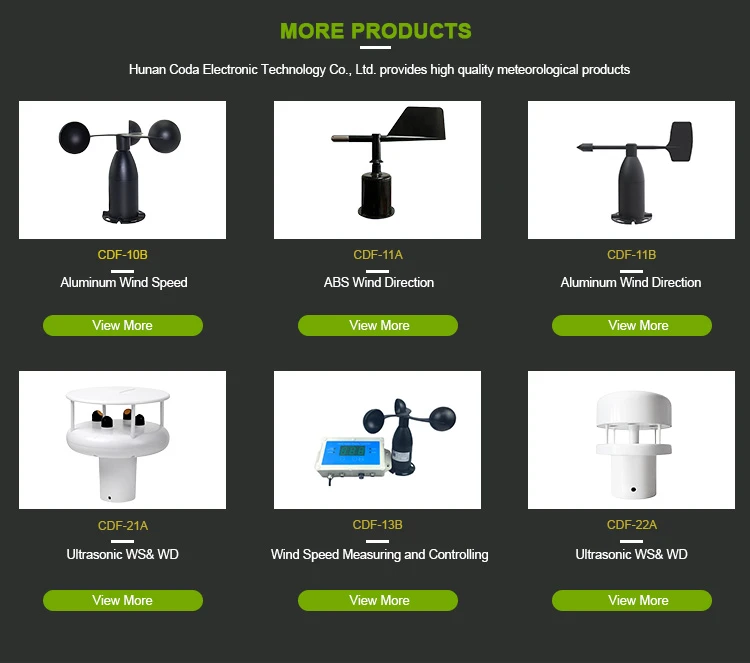
The CDF-21A Economical Ultrasonic Wind Sensor is a precise digital device. It uses sound waves to measure how fast the wind blows and which way it goes. It has a built-in signal processing unit. This unit gives accurate and quick wind data based on user needs.
3. **Handheld Anemometer**
This handheld anemometer is made from metal that has no iron in it. It is strong and tested in a wind tunnel for better accuracy. It comes with a protective carrying case for ease of use and portability.